IN Brief:
- Volex has acquired the remaining 64.3% of Kepler SignalTek for up to $89.4m.
- Kepler SignalTek supplies patient-connected products for monitoring, surgery, cardiac therapy, and ultrasound.
- Full ownership moves Volex further into regulated medical-device manufacturing and lifecycle support.
Volex has acquired the remaining 64.3% of Kepler SignalTek, taking full ownership of the medical-products manufacturer in a transaction valued at up to $89.4m.
Kepler SignalTek produces single-use and reusable patient-connected cables and devices for clinical monitoring, surgery, cardiac therapy, and ultrasound. The transaction extends Volex beyond internal equipment interconnects into products that form the direct electrical and physical interface between medical systems and patients.
Revenue at Kepler SignalTek reached $51.8m in the year to 31 March 2026, following organic growth of 10%. Volex expects the acquisition to contribute immediately to earnings and is targeting a return on capital employed above 15% within two years.
Patient-connected products occupy a demanding position within medical-electronics design because they must carry low-level physiological signals or therapeutic energy while meeting requirements for electrical isolation, mechanical durability, biocompatibility, cleaning, sterilisation, and protection against incorrect connection.
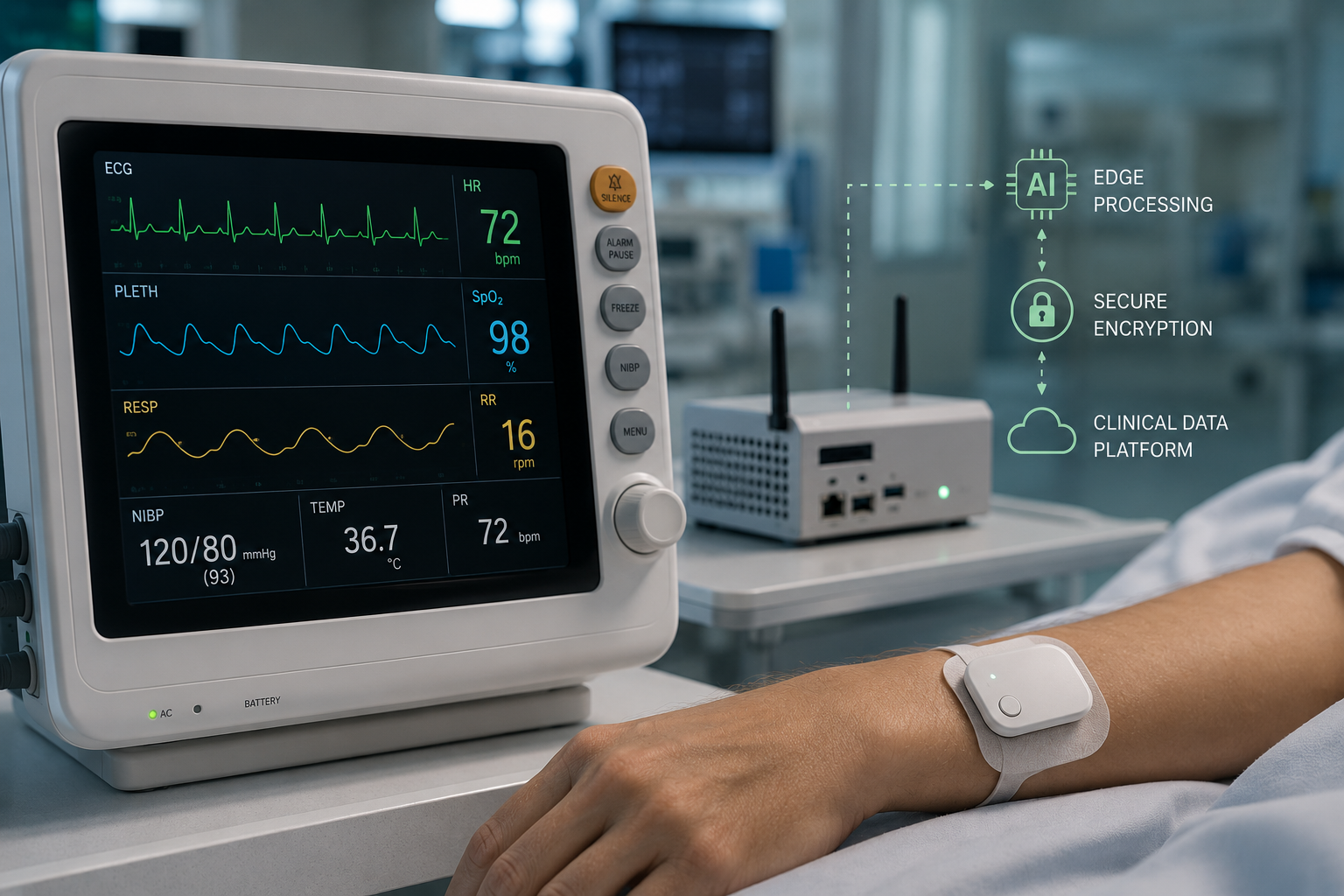
A monitoring lead may appear less complex than the instrument to which it connects, yet its electrical and mechanical performance can determine the integrity of the complete measurement chain. Contact resistance, shielding, cable motion, connector wear, fluid ingress, and repeated flexing can introduce noise or intermittent behaviour that downstream signal processing cannot reliably correct.
Products used during surgery or cardiac therapy face additional stresses. Conductors and insulation may be exposed to disinfectants, temperature cycling, bodily fluids, tight bending radii, and repeated connection, while single-use assemblies must be produced consistently at high volume and packaged under controlled conditions.
Full ownership gives Volex direct control over product development, manufacturing investment, customer relationships, and the integration of Kepler SignalTek with its existing medical operations. It also increases exposure to a regulated market where changes to materials, suppliers, production equipment, or factory location can require formal risk assessment and additional validation.
The transaction forms part of wider consolidation across medical contract manufacturing and device engineering. Kimball Electronics has acquired a Dutch medical contract-development and manufacturing organisation, adding design-transfer and regulated-production capability within Europe.
Kepler SignalTek brings a different type of asset because its products sit at the patient interface rather than providing general manufacturing capacity. Earlier involvement in medical-device programmes can allow cable construction, shielding, connector geometry, strain relief, disposable interfaces, and equipment inputs to be designed as a coordinated system.
That approach can remove compromises introduced when an interconnect is selected after the instrument enclosure and electronics have been fixed. Signal quality, cleaning access, handling, and mechanical retention are easier to resolve before the device architecture reaches verification.
Medical products often remain in service longer than the commercial components and materials used to manufacture them. A connector insert, polymer, shielding material, or semiconductor can become unavailable while the certified device remains in production, forcing manufacturers to maintain approved alternatives or undertake a controlled redesign.
Analysis of medical-device manufacturing resilience has placed greater emphasis on traceability, dual sourcing, and documented change control. These disciplines become more exacting when an assembly is supplied across several instrument generations or regulatory markets.
Production scale also depends on qualified processes rather than ordinary factory capacity. Crimping, moulding, cable preparation, soldering, cleaning, sterilisation compatibility, and electrical test must remain within validated limits, while manufacturing records need to connect each batch with materials, equipment, operators, and inspection results.
Regulated manufacturing capacity is expanding elsewhere in the UK, including the certification of ESCATEC’s medical-electronics facility. Such investments reflect demand for factories capable of combining conventional electronics assembly with controlled documentation, process validation, and product-history records.
Integrating Kepler SignalTek will require Volex to preserve specialist knowledge accumulated around tooling, materials, validation evidence, and customer-specific processes. Consolidating systems too quickly could disrupt programmes whose production methods have been refined over many years and cannot be reconstructed easily from drawings alone.
The acquisition gives Volex a larger presence in patient-connected electronics, where the interconnect is becoming part of the clinical function rather than a peripheral accessory. Growth will depend on maintaining the quality and regulatory controls already established while using the wider group’s sourcing, engineering, and manufacturing scale without weakening product continuity.