
IN Brief:
- US Army Contracting Command has placed a $473m order for 40 additional M109A7 sets, including M992A3 ammunition carriers.
- The M109A7’s move to an all-electric architecture, including a 600-volt system, is central to its future growth margin.
- Vetronics design priorities are shifting toward higher onboard generation, cleaner power distribution, and modular electronics refresh cycles.
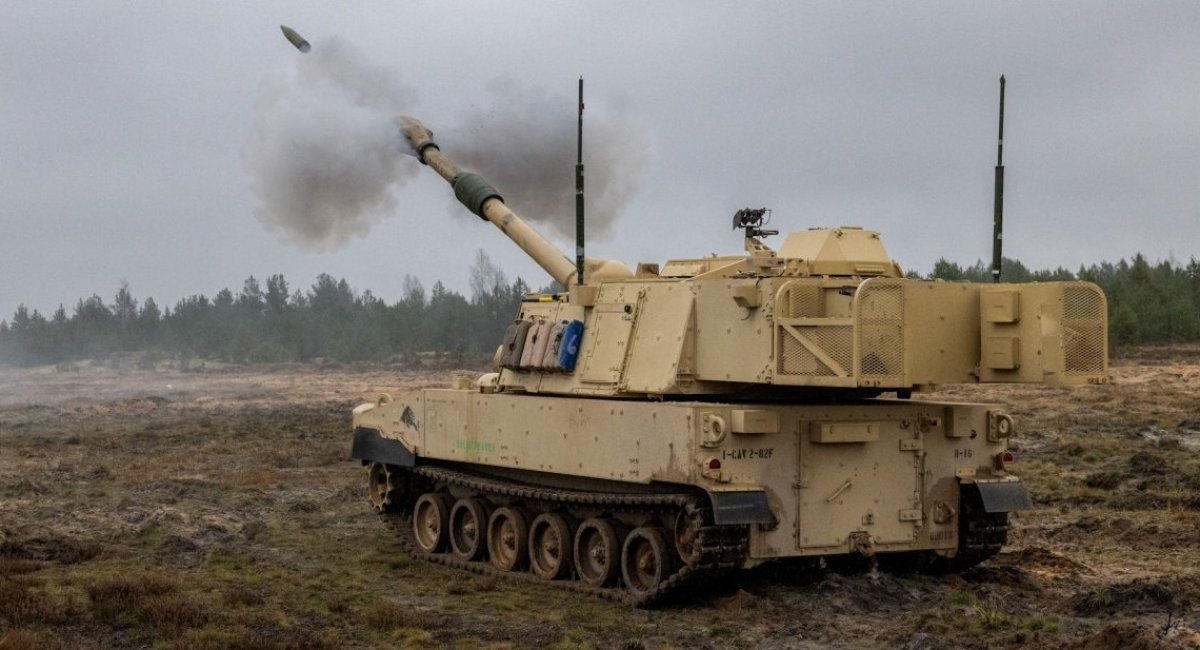
The US Army has modified its Paladin production programme with a $473m contract award to BAE Systems for 40 additional M109A7 Self-Propelled Howitzer sets, including the paired M992A3 Carrier Ammunition Tracked vehicles. The order sits squarely in the steady churn of artillery modernisation, but it is the electrical and electronic architecture that continues to do the heavy lifting: the M109A7 is less about the gun, and more about the platform’s ability to absorb new electronics without being turned into a rolling integration risk.
BAE said the award covers production plus support services, with work spread across York, Pennsylvania; Elgin, Oklahoma; and Anniston, Alabama. The company also described the order as the first under a five-year contract structure, a framing that matters more for supply chain and production planning than it does for the headline number.
From an embedded electronics perspective, the M109A7’s long-term value sits in its redesign away from legacy hydraulics and toward an all-electric system, aimed at improving reliability, maintainability, and power availability for future subsystems. In US Army reporting on early M109A7 deliveries, programme officials described an all-electric system replacing the hydraulic architecture of earlier Paladin variants, alongside a 600-volt system derived from the Non-Line-of-Sight Cannon effort, explicitly positioned to leave headroom for future technologies. That shift is not cosmetic: electric drives and higher-voltage distribution change the envelope for everything from actuation and stabilisation to onboard computing, comms, and defensive aids, while also reducing the fire and maintenance burdens that come with hydraulic circuits in confined spaces.
The Department of Defense’s test and evaluation documentation has also highlighted the vehicle’s high-voltage electrical system as a design feature in production howitzers, including controlled damage experimentation to understand the consequences of ballistic impacts on that electrical architecture. That is the unglamorous, critical detail behind “digital backbone” claims: survivable power and signalling are prerequisites for any meaningful growth in mission systems.
For engineers, the practical takeaway is that armoured platforms are being rebuilt around power budgets and electrical safety margins, not just payload lists. The Paladin’s upgrade path is a case study in why defence vehicle electronics now look more like a long-lived compute-and-power platform with a weapon attached, and less like a vehicle with a fixed, frozen set of black boxes.

