IN Brief:
- Infineon rad-hard devices operated aboard the Orion capsule throughout Artemis II’s ten-day mission.
- The company’s IR HiRel portfolio supported power supply, control, and data-communications functions.
- The mission adds fresh in-flight validation as space programmes demand higher reliability under tighter SWaP constraints.
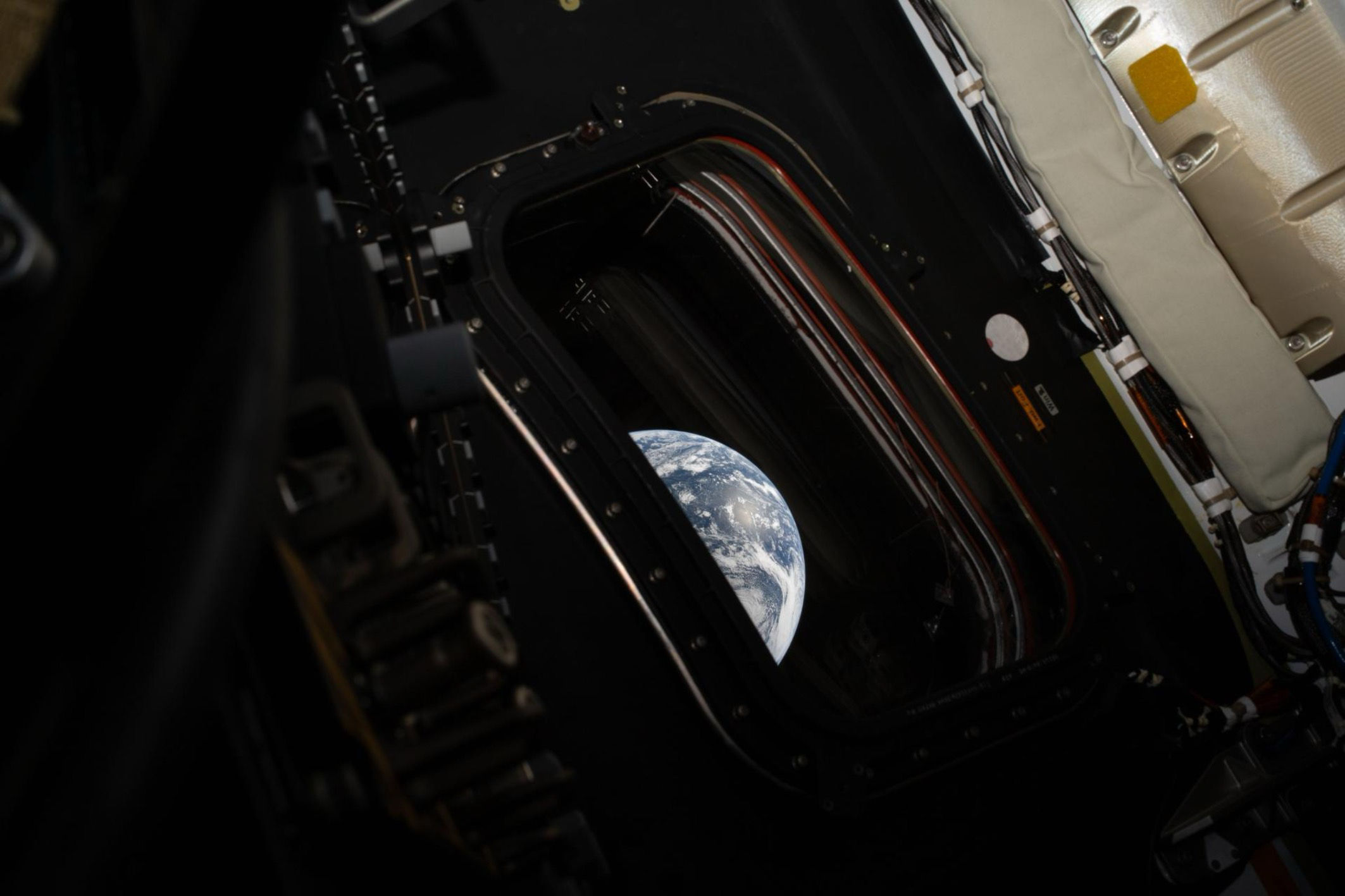
Infineon has come out of NASA’s Artemis II mission with fresh in-flight validation for its radiation-hardened semiconductor portfolio, after devices from its IR HiRel division supported electronic functions aboard the Orion capsule throughout the ten-day flight. The mission, which returned safely to Earth after travelling beyond low Earth orbit and around the Moon, placed the components in exactly the kind of environment that no qualification campaign can fully replicate: deep-space radiation, long-duration exposure, and absolute intolerance for electronic failure.
Infineon’s role in Orion covered critical onboard electronics spanning power supply, control systems, and data communications. That is a significant spread. It means the validation is not confined to a single niche device category, but extends across several of the semiconductor building blocks that underpin spacecraft electrical architecture. Space programmes have always demanded long-term reliability, but the pressure on those electronics has increased as missions become more data-intensive, more power-aware, and more constrained by size, weight, and thermal budgets.
Artemis II therefore serves as more than a heritage reference. It puts contemporary rad-hard design under operational stress and confirms that older assumptions about mission assurance still need to hold even as spacecraft electronics evolve. Infineon is also using the moment to underline the depth of its space portfolio, including its JANS-qualified internally manufactured rad-hard gallium nitride transistor technology. That sits alongside a longer record in radiation-hardened components dating back to the 1970s, when predecessor companies supplied devices into earlier NASA and ESA missions.
The broader industry backdrop makes the timing especially useful. Space electronics is entering a phase where volume is rising, but tolerance for compromise is not. Crewed lunar missions, cislunar infrastructure, military space assets, deep-space probes, and commercial satellite programmes all pull in slightly different directions on cost and performance, yet they converge on a similar problem: how to deliver more electrical capability without eroding reliability margins. That is driving renewed attention to power conversion efficiency, fault tolerance, packaging, and qualification discipline, particularly as higher levels of onboard processing and sensing increase both system complexity and energy demand.
Radiation hardening is also becoming a more layered design problem than it once was. It is no longer enough to think only in terms of survival under dose and single-event effects. Designers are increasingly balancing resilience against switching speed, efficiency, integration density, and thermal behaviour. Power electronics is part of that shift, which is why wide-bandgap devices are attracting so much interest in high-reliability applications. At the same time, mission planners want supply continuity and qualification evidence that extend over programme lifetimes measured in decades rather than product cycles measured in quarters.
That is what gives Artemis II relevance beyond the symbolism of a successful lunar mission. For the space electronics chain, it is a rare live demonstration that rad-hard semiconductors can still meet the old demands while supporting the newer ones. The headline is reliability, but the subtext is more revealing: deep-space electronics is being asked to do more, in less space, with less margin for inefficiency, and without surrendering the kind of certainty that human spaceflight and high-value spacecraft still require.