IN Brief:
- TAIYO YUDEN has begun mass production of nine new MCOIL LSCN inductors.
- The line includes smaller case sizes for compact power-supply circuits.
- The devices target dense battery-powered electronics with higher current demands.
TAIYO YUDEN has started mass production of nine new multilayer metal power inductors in its MCOIL LSCN series, expanding the range with smaller package options for compact power-supply circuits.
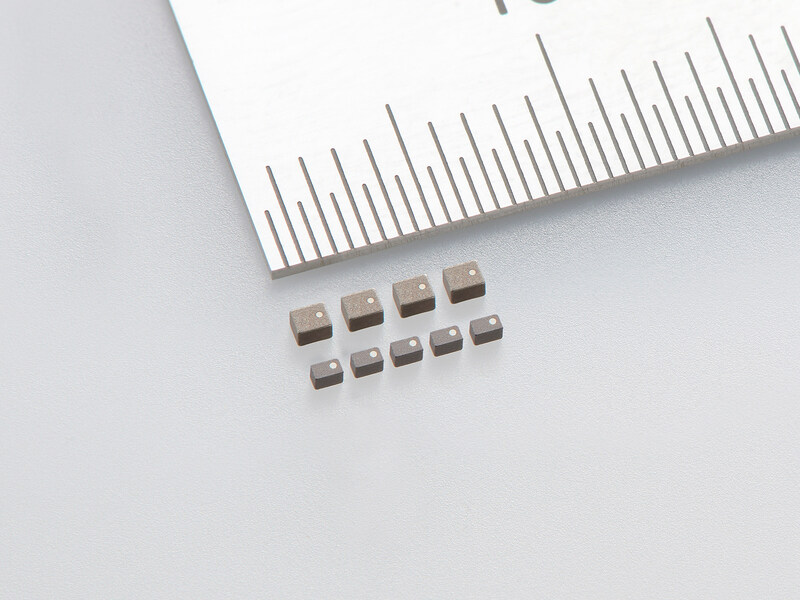
The new devices are available in four sizes and include the LSCND0805FET1R2MJ, measuring 0.8 mm x 0.45 mm x 0.65 mm, and the LSCND1008HKT1R5MF, measuring 1.0 mm x 0.8 mm x 0.80 mm. The parts are intended for use as choke coils in power-supply circuits where current handling and limited PCB area must be balanced.
Compared with TAIYO YUDEN’s previous smallest multilayer metal power inductor, which measured 1.0 mm x 0.5 mm x 0.33 mm, the LSCND0805FET1R2MJ reduces footprint by around 30%. The LSCND1008HKT1R5MF provides a nominal inductance of 1.5 µH and saturation current of 1.2 A, while reducing footprint by approximately 40% against the previous LSCNB1210EKT1R5MB with equivalent stated performance.
The devices use metallic magnetic materials to combine reduced case size with DC saturation performance. Mass production began in April 2026 at WAKAYAMA TAIYO YUDEN, with samples priced at 50 yen per unit.
The immediate applications include compact battery-powered electronics such as smartphones, smartwatches, and true wireless stereo earphones. Those products continue to add sensor functions, audio processing, wireless connectivity, battery management, and local compute inside tightly constrained board areas.
The same design pressure is visible across embedded electronics. Industrial handhelds, medical wearables, asset-tracking devices, compact cameras, and sensor nodes all need more processing and sensing capability without increasing board size, heat, or battery drain. Power inductors sit close to the centre of that trade-off because they shape the current capability, transient response, efficiency, and physical layout of DC/DC converter stages.
Miniaturisation only works if electrical performance survives the package reduction. A power inductor must maintain saturation current, acceptable DC resistance, mechanical reliability, and predictable behaviour under pulsed load. If the part saturates too early, the converter can lose regulation, generate excess heat, or require conservative derating that removes the benefit of the smaller footprint.
The expansion of the LSCN range fits into a wider component trend in which passive devices are being optimised for the same density race that has reshaped processors, sensors, and RF devices. As more functionality moves into compact edge products, the supporting power architecture has to shrink without becoming the limiting factor in efficiency or reliability.
For dense battery-powered hardware, smaller inductors can free board area for sensing, RF, shielding, or thermal design. The engineering gain depends on maintaining current handling and stability in the smaller package, which is where material selection and magnetic structure become central to the component’s value.