IN Brief:
- L3Harris will feature VAMPIRE and related counter-UAS capabilities at SOF Week.
- The system uses modular architecture, mission software, sensors, and kinetic effectors.
- Layered counter-drone defence is driving demand for integrated electronics and software.
L3Harris will highlight counter-uncrewed aerial system technology, tactical communications, electro-optical/infrared systems, night vision equipment, tethered ISR, and its Red Wolf vehicle at SOF Week, with the VAMPIRE system forming a central part of its counter-UAS display.
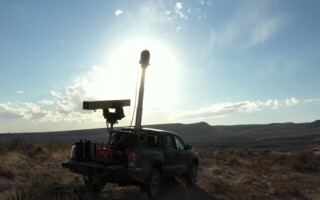
VAMPIRE is a modular kinetic effector system for counter-UAS operations, designed to be scaled according to mission requirements and integrated with wider layered defence architectures. The system fires the Advanced Precision Kill Weapon System round and combines sensors, mission management software, communications, and effectors in a vehicle-mounted architecture.
The system can operate either as a standalone capability or as part of a broader network of counter-UAS assets. L3Harris has built the platform around open standards and software-based plug-and-play integration, including the use of its WIDOW mission-management software to connect VAMPIRE into layered defence environments.
Counter-UAS requirements are changing rapidly as small drones, loitering munitions, and improvised airborne threats become more common across military operations. A single sensor or effector is rarely sufficient across different ranges, flight profiles, autonomy levels, and attack costs. Defence systems increasingly combine detection, identification, tracking, electronic warfare, and kinetic defeat options within the same operational architecture.
The electronics challenge sits in the integration of those functions. EO/IR sensors, radio-frequency detection, tactical data links, mission software, and fire-control elements must exchange data quickly enough to reduce operator workload and shorten engagement timelines. Open interfaces and modular software become important when forces need to add new sensors, effectors, or command links without rebuilding the whole system.
Cost per engagement is also shaping counter-UAS design. Low-cost drones can be deployed in numbers, making expensive interceptors difficult to sustain as the only answer. Vehicle-mounted, modular systems offer a way to combine mobility, reloadability, and integration with existing mission networks while preserving tactical flexibility.
Counter-UAS platforms increasingly resemble distributed embedded systems rather than isolated weapon stations. Edge processing, sensor fusion, rugged communications, software-defined mission tools, and power electronics must all operate in environments where latency, electromagnetic resilience, and reliability affect performance.
SOF Week is bringing autonomous systems, electronic warfare, counter-drone technology, and mission software into the same operational discussion. L3Harris’ focus on layered counter-UAS reinforces the direction of defence electronics: connected, updateable systems that can absorb new sensors and effectors as the threat environment changes.