
IN Brief:
- TDK has launched the FS3303, a 3A micro point-of-load DC/DC module for dense low-voltage rails.
- The device measures 2.5mm x 2.5mm with a 1.2mm height and supports output voltages from 0.4 V to 3.3 V.
- Compact POL conversion is becoming a board-level constraint in AI edge modules, optical networking, ASICs, SoCs, and DSP platforms.
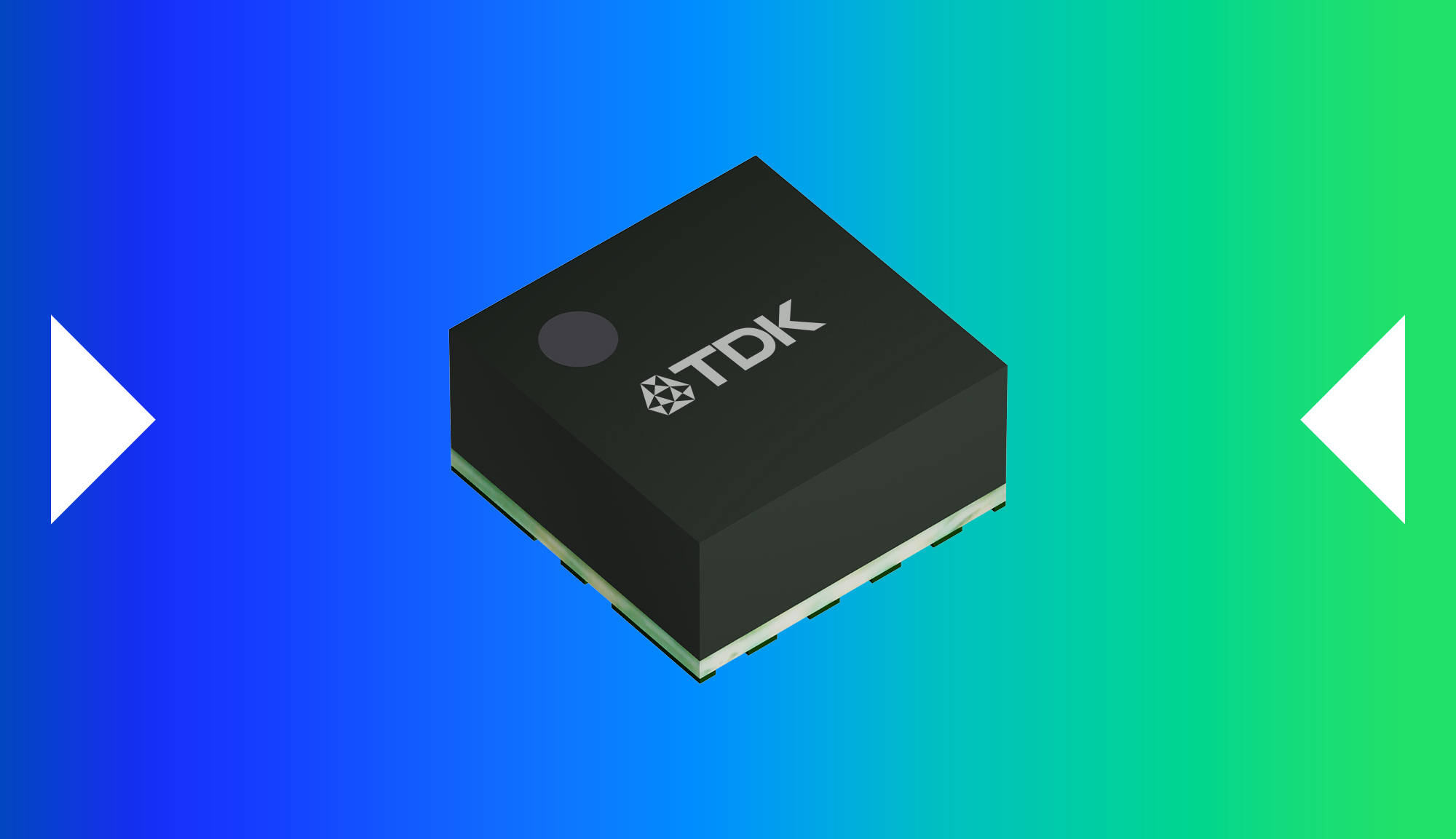
TDK has expanded its micro point-of-load power module portfolio with the FS3303, a non-isolated DC/DC converter for optical modules, AI edge systems, ASICs, SoCs, DSPs, and other space-constrained electronics.
The FS3303 delivers 3A from a 2.5mm x 2.5mm footprint with a 1.2mm height, giving designers a compact option for local low-voltage conversion where board area and component height are already under pressure. The device supports input voltages from 2.7 V to 6 V and output voltages from 0.4 V to 3.3 V, with peak efficiency of around 95%.
The module operates at ambient temperatures up to +90°C, or up to +125°C with derating, and integrates the controller, driver, MOSFETs, and inductor inside TDK’s 3D chip-embedded package. With those elements contained in the module, external component count is reduced and the power stage can be placed closer to the processor or low-voltage load.
The first device, the FS3303-0400-AL, is in full production and available for sampling through major distributors. TDK is also planning a wider high-performance POL converter family covering 3A to 80A outputs across 0.3 V to 3.3 V rails, with package heights between 1.2mm and 1.7mm.
Modern system boards rarely contain one difficult rail. AI accelerators, optical transceivers, FPGAs, communications ASICs, and DSPs all require multiple tightly regulated supplies, often placed near the load to control transients and reduce distribution losses. As those devices draw more current at lower voltages, the physical distance between conversion and compute becomes more costly.
Optical networking and AI edge hardware show the pressure clearly. Optical modules are moving from 10Gbit/s-class designs towards 800Gbit/s and 1.6Tbit/s generations, while edge AI platforms are trying to put more inference performance into sealed, fanless, or thermally constrained enclosures. In both cases, power density shapes the board layout, thermal margin, reliability model, and final system size.
Higher-power front-end conversion faces a similar design squeeze, with TDK-Lambda’s 1500W AC-DC industrial modules showing how monitoring, density, input range, and sealed-enclosure suitability are being brought together at system level. The FS3303 applies the same pressure at the opposite end of the chain, where low-voltage rails have to sit within millimetres of high-performance silicon.
Discrete converter designs still offer flexibility, but they can consume layout time, introduce loop-stability work, complicate thermal modelling, and increase procurement complexity. A fully integrated POL module can shorten the path to a stable rail, especially where the same power requirement is repeated across several product variants.
Thermal behaviour will remain central to adoption. Locating conversion close to the load improves transient response and voltage accuracy, but it also places the converter in a crowded heat environment near processors, memory, and optical components. Efficiency, derating, package height, and assembly compatibility therefore become part of the device selection process, not peripheral details.
The FS3303 reflects a wider shift in board power design: conversion is moving closer to the silicon, packages are becoming more integrated, and power delivery is being treated as an active part of system architecture rather than a set of supporting rails placed around the edge of the PCB.

