IN Brief:
- Infineon has integrated its OPTIGA TPM SLB 9672 with NVIDIA Jetson Thor.
- The TPM provides hardware-protected key storage, measured boot, remote attestation, and signed update support.
- Physical AI security is moving toward auditable hardware roots of trust as regulation and quantum-era cryptography requirements develop.
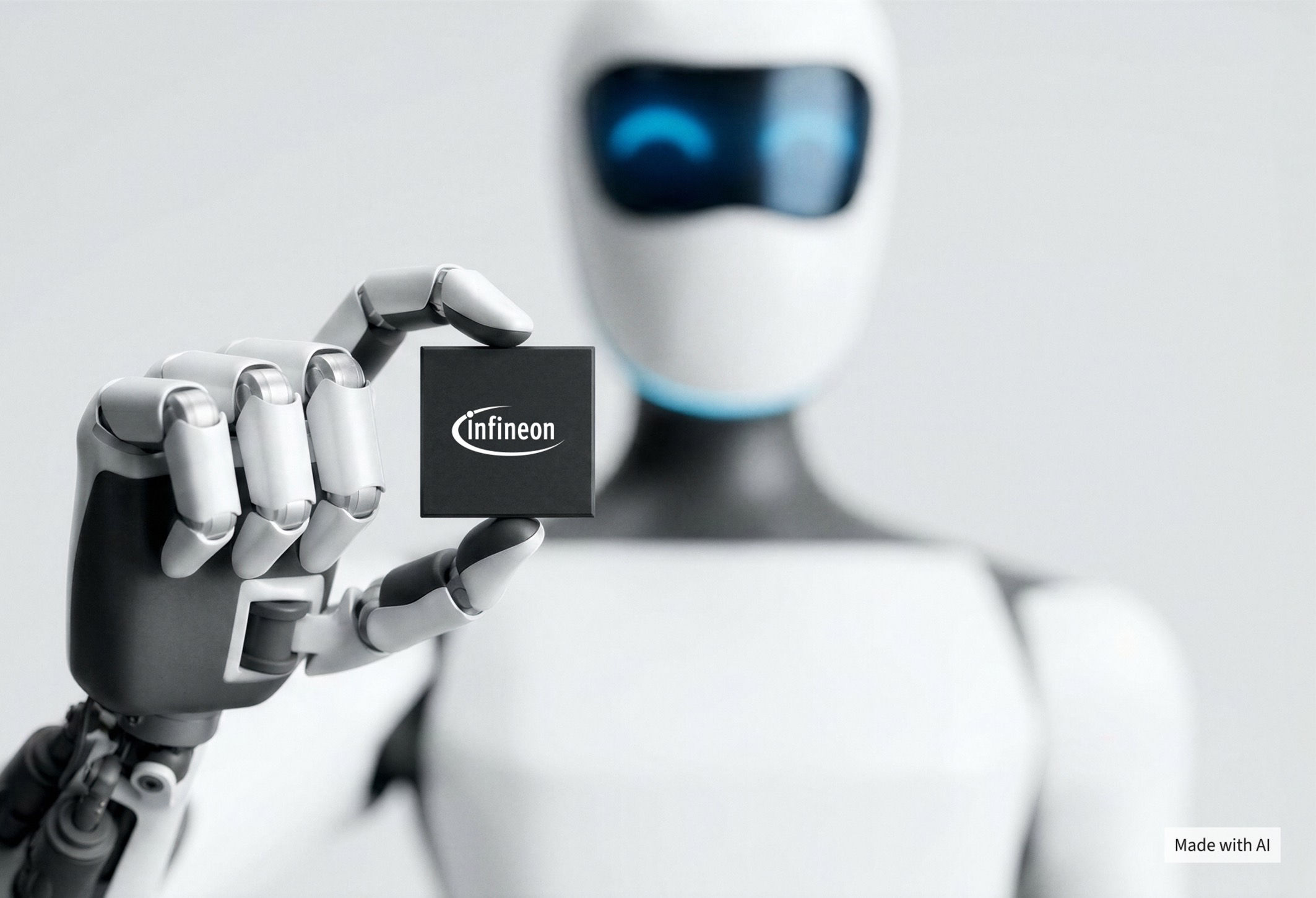
Infineon Technologies has integrated its OPTIGA Trusted Platform Module SLB 9672 with NVIDIA’s Jetson Thor platform, adding a certified hardware root of trust for robotics and physical AI systems.
The TPM securely stores cryptographic keys and verifies system integrity at chip level. It provides measured boot, remote attestation, hardware-protected storage for AI model keys, encrypted communications, and cryptographically signed over-the-air updates. The device is physically isolated from the application processor and carries FIPS and Common Criteria certification.
Infineon has also built post-quantum protection into the firmware update mechanism of the OPTIGA TPM. Its roadmap to full post-quantum security includes a next-generation TPM embedding ML-KEM and ML-DSA algorithms, which were standardised by the US National Institute of Standards and Technology in 2024.
“Robots that sense, think and act in the real world are only as trustworthy as the security foundation they are built on,” said Dr Stephan Zizala, Division President of Connected Secure Systems at Infineon. “Infineon’s OPTIGA TPM brings a hardware root of trust to the NVIDIA Jetson Thor platform that has been proven across hundreds of millions of devices. This integration meets the long-lifecycle and real-time demands of robots operating safely and securely at scale. Post-quantum cryptography designed into our solutions enables a foundation which remains protected not just for today’s deployments, but for the full life of every robot that relies on it.”
Physical AI changes the security burden because the system is not only processing data. Robots, autonomous machines, and industrial edge systems sense, decide, and act in the physical world, so a compromised platform can create operational disruption, safety exposure, IP loss, and regulatory liability. Long service lives add another layer, as industrial and robotic systems are rarely refreshed at the pace of consumer electronics.
“Physical AI systems operate in the real world, where security is foundational,” said Deepu Talla, Vice President of robotics and edge AI at NVIDIA. “Infineon’s certified OPTIGA TPM for NVIDIA Jetson Thor helps developers protect keys, verify software integrity and securely provision robot fleets at scale, establishing a hardware-based root of trust for secure and resilient autonomous systems.”
Hardware security is moving closer to the centre of system architecture as regulation and cryptographic risk evolve. The EU Cyber Resilience Act, EU AI Act, IEC 62443, and sector-specific rules in healthcare and automotive environments are pushing security evidence toward device-level assurance. Software controls remain necessary, but they are easier to undermine if the platform cannot prove that its boot chain, firmware, keys, and update process remain intact.
The Jetson Thor integration also sits within a wider build-out around edge AI hardware. Cadence’s autonomous AI design and verification workflow and Longsys’ edge AI memory modules both show how compute, memory, verification, and deployment architecture are becoming more tightly linked. Security now belongs in the same design conversation, particularly for systems that will operate as fleets.
Infineon estimates semiconductor content of around $500 per humanoid robot across sensing, actuation, power management, connectivity, and security functions. As robotics moves from pilots to deployed assets, TPMs and related security components are likely to take a larger share of that electronics content.
The reference design for OPTIGA TPM SLB 9672 is available now. For Jetson Thor-based physical AI systems, the integration gives security architecture a defined place at design-in, where lifecycle protection, remote attestation, fleet provisioning, and post-quantum readiness can be built into the platform before deployment.