IN Brief:
- OMRON has released G3VH SiC-MOSFET relays with 3,300V and 1,800V voltage ratings.
- The devices target industrial drives, automation, renewables, energy storage, and ATE for wide-bandgap power semiconductors.
- Higher-voltage power systems are increasing demand for compact, fast, solid-state switching components.
OMRON Electronic Components Europe has introduced G3VH SiC-MOSFET relays with voltage ratings of 3,300V and 1,800V, extending solid-state switching capability into higher-voltage industrial, energy, and test applications.
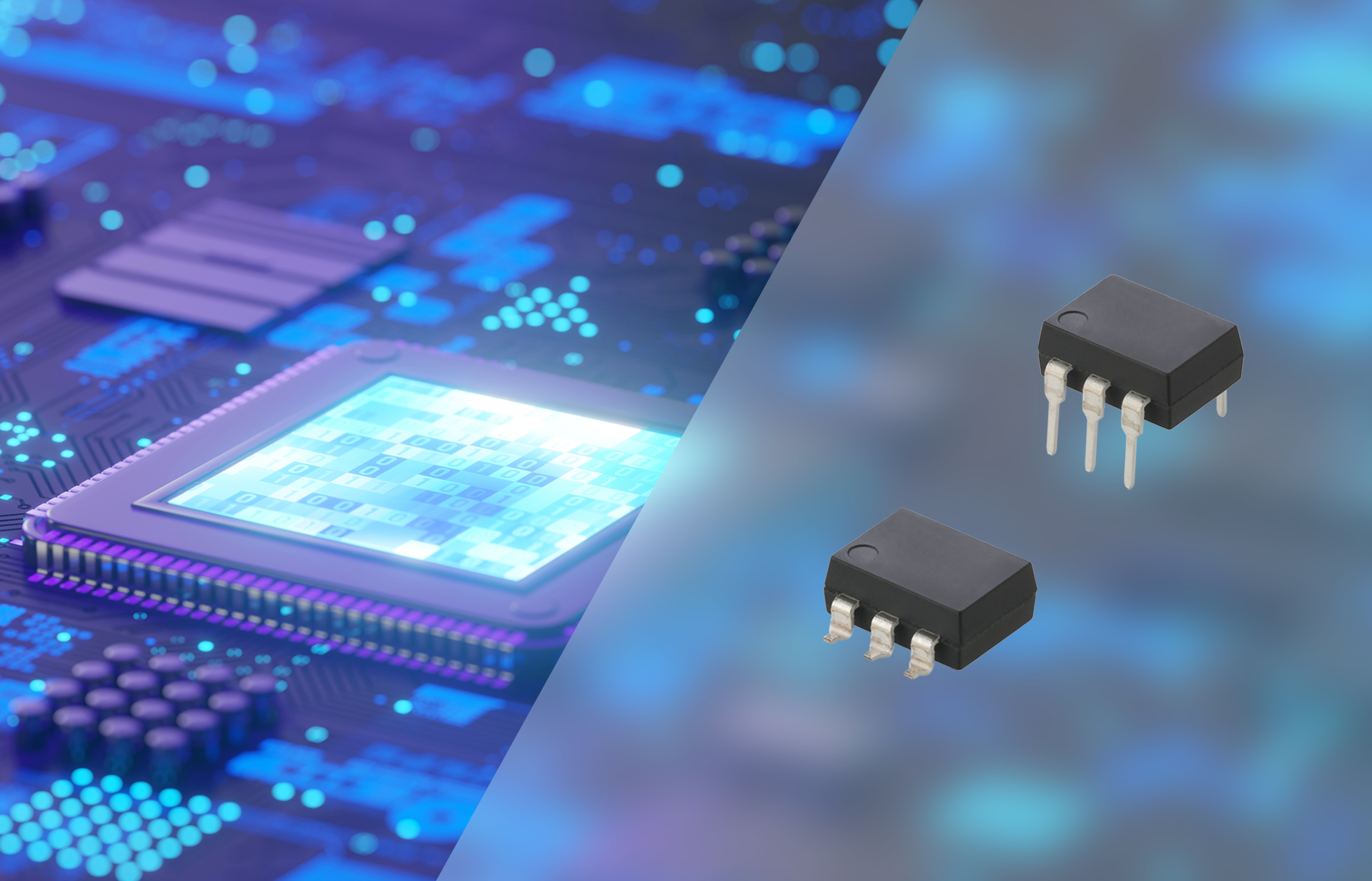
The devices are designed for bus and battery voltages of 1,000V and above, where conventional silicon-based relays and mechanical reed relays can become harder to use without additional derating, board area, or system complexity. OMRON has integrated back-to-back silicon carbide MOSFETs with an optically isolated gate driver inside a compact six-pin dual inline package outline.
Two series are included. The G3VH-331 is rated at 3,300V, with a continuous load current of 300mA and a pulse-on current of 900mA. The 1,800V G3VH-181 series handles up to 30mA continuous current and 80mA pulse current. The relays are normally open, type 1a SPST devices, and are in production in surface-mount and through-hole package styles.
Target applications include industrial drives and automation equipment, solar and wind generators, energy-storage systems for ground-fault detection, and automated test equipment used with high-voltage wide-bandgap power semiconductors. In test systems, faster relay response can reduce switching delay and improve throughput, while in energy and industrial systems the compact high-voltage switching format supports denser protection, monitoring, and control designs.
The release sits within a broader move towards solid-state power management. SiC-based semiconductor circuit breakers are already being developed for microsecond-range protection in DC grids, data centres, factories, and battery storage systems. OMRON’s relays operate in a different power class, but they reflect the same shift away from purely mechanical switching in high-value electrical systems.
SiC is also spreading beyond the main power transistor in a converter. The material’s voltage tolerance, temperature capability, and switching behaviour make it useful in supporting components where isolation, package size, and lifetime determine the practical design. Relays, breakers, modules, and packaged switches are being redesigned around higher voltage, lower losses, faster response, and reduced mechanical wear.
Those requirements are becoming more pronounced as energy storage, renewable generation, EV charging, industrial drives, and AI infrastructure converge around higher DC voltages. Higher voltage can reduce current for a given power level, allowing smaller conductors and lower I²R losses, but it also increases the demands on insulation, protection, creepage, clearance, and fault management across the system.
Compact high-voltage solid-state relays give designers another route where mechanical contact wear, package size, acoustic noise, bounce, and switching cycle life would otherwise constrain the design. Solid-state devices still require careful assessment of leakage, thermal behaviour, off-state capacitance, and fault conditions, but they can simplify systems that need predictable switching over long operating lives.
Packaging development is moving in parallel. Top-side-cooled SiC MOSFET packaging has shown how thermal and assembly constraints are being addressed at the component level for higher-density conversion. OMRON’s relay range adds another piece to that ecosystem, where wide-bandgap devices are no longer confined to the main switching bridge.
As electrical systems become denser and more DC-heavy, high-voltage switching is being pulled into smaller, faster, and more integrated formats. The G3VH relays give engineers an additional option for isolation and switching where mechanical devices have limited room to scale.