
IN Brief:
- element14 Community has announced three technical webinars for engineers.
- The programme covers regulated product quality, PMIC validation, and Matter-enabled devices.
- The sessions draw in Emerson, NI, Microchip, Tektronix, and Nordic Semiconductor.
element14 Community has announced three technical webinars covering product quality in regulated industries, modern embedded and datacom PMIC validation, and Matter-enabled connected-device development.
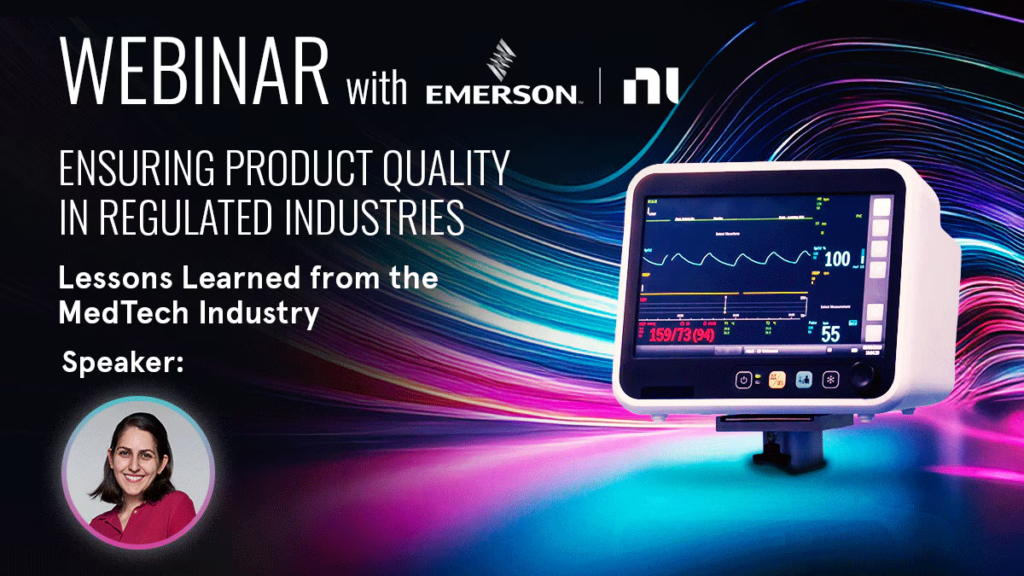
The first session, run with Emerson and NI, is scheduled for 16 July and focuses on product quality in regulated industries, using lessons from MedTech. It will cover test and measurement in medical technology, principles for designing high-quality regulated products, and a case study built around a smart patient monitor.
A second webinar, with Microchip Technology and Tektronix, is scheduled for 23 July and addresses validation of modern embedded and datacom PMIC designs. The session focuses on compact, efficient, and reliable power delivery in systems where power-rail behaviour, sequencing, transients, and validation quality can determine whether a design performs outside the lab.
The third session, with Nordic Semiconductor, is scheduled for 30 July and introduces development of connected smart devices using the Matter standard. The webinar will cover the basics of Matter and demonstrate how devices can be developed within a unified connected ecosystem.
The three subjects sit across different parts of the same electronics design problem. Regulated product development demands evidence, traceability, and repeatable test. PMIC validation determines whether embedded systems and datacom platforms can maintain stable power under real operating conditions. Matter development adds the interoperability, firmware, security, and commissioning requirements needed for connected products to operate across ecosystems.
Power validation is becoming more difficult as embedded and datacom designs grow denser. PMICs may support processors, memory, sensors, RF sections, interfaces, and always-on functions, each with different sequencing, noise, load-step, and thermal requirements. A schematic can be correct while the physical product still fails under transient load, start-up stress, or temperature variation if validation is too narrow.
Connected-device development carries a similar burden. Interoperability standards such as Matter reduce ecosystem fragmentation, but they do not remove the engineering work around RF performance, firmware stability, security, commissioning, certification, power consumption, and update support. A device still has to move from standard compliance to dependable operation in varied installations.
The MedTech-themed quality session also has value beyond healthcare electronics. Regulated product methods expose design weaknesses earlier because requirements, test coverage, risk controls, production evidence, and change control have to be formalised. Those habits are becoming more relevant in industrial, automotive, energy, and connected-device markets as assurance expectations rise.
The same movement is visible in the UK’s connected-device resilience work, where secure lifecycle control, patching, product support periods, and vulnerability handling are being pulled into the design process. Training that joins hardware, software, power, test, compliance, and security disciplines is becoming more practical than narrowly product-specific instruction.
element14’s programme reflects the design pressures now building across electronics development. Power integrity, regulated quality, and connected-device implementation are no longer peripheral engineering subjects; they are becoming part of the core route from concept to maintainable product.

