IN Brief:
- Lantek has added two bevel machining features to Lantek Expert V45.
- Users can now combine standard and 3D bevels on the same part.
- A shared cutting function for Y bevels can reduce material use and machining time.
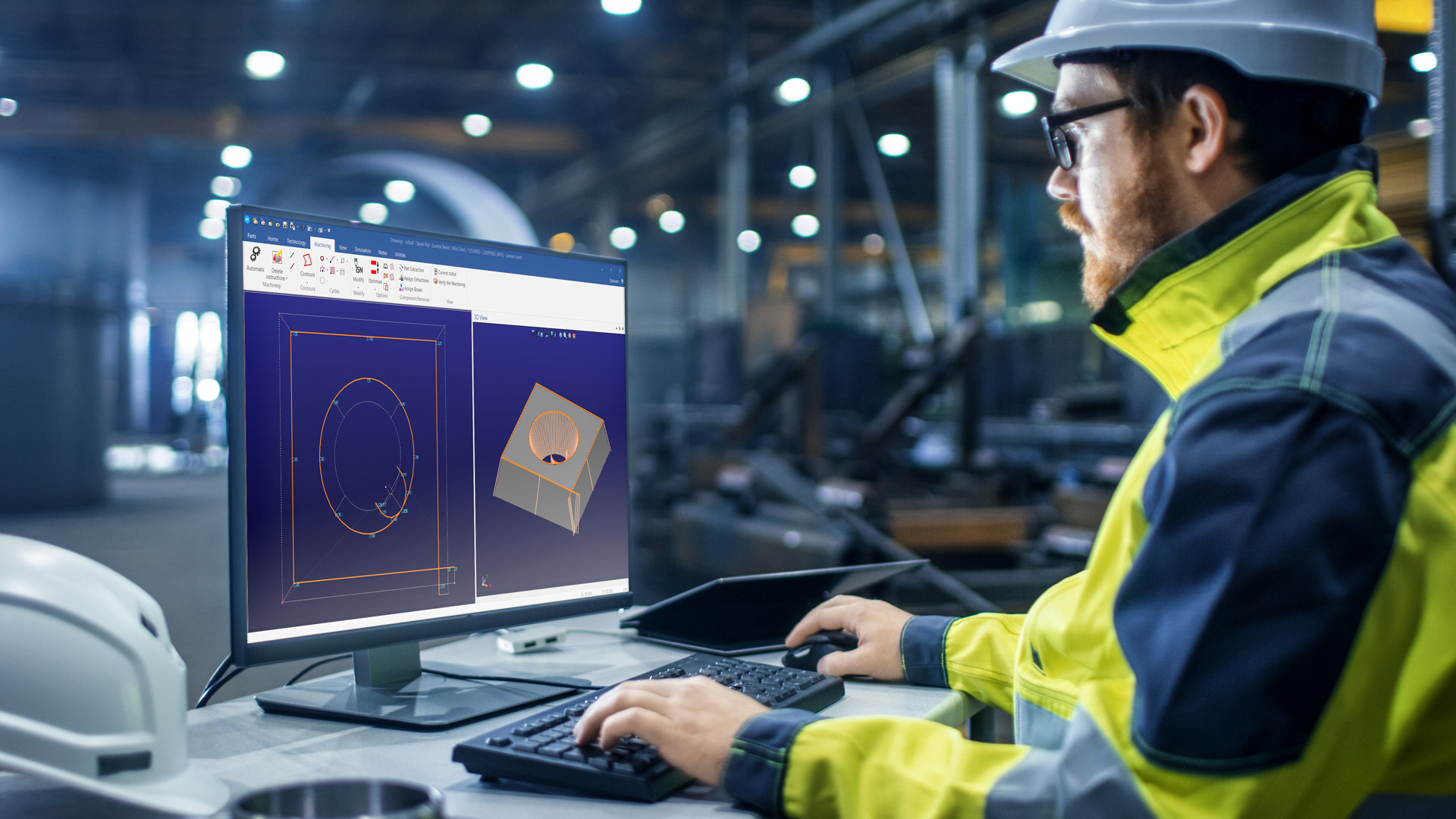
Lantek has introduced two new features in Lantek Expert V45 to simplify component design with complex edge geometries and improve cutting efficiency in sheet metal fabrication.
The first update allows users to work with both standard bevels and 3D bevels on the same part from the drawing module. Earlier workflows required users to handle constant and variable bevel strategies separately, limiting the ease with which complex geometries could be designed and prepared for machining.
The second feature adds shared cutting for parts with Y bevels. When a part with a Y-bevel geometry is placed next to another component, the software checks whether both workpieces can be cut at the same time. Where the operation is feasible, Lantek Expert automatically adjusts the distance between the parts so the bevelled edges can be cut in a single operation. The capability also extends to V joints.
Bevels are used to improve weld durability and increase structural strength by enlarging the contact area between parts. In fabrication workflows, accurate bevel cutting can remove the need for secondary processing after cutting, reducing handling, rework, and production time. The difficulty is that bevel geometry adds programming and nesting complexity, particularly where different edge conditions exist within the same component.
CAD/CAM systems are increasingly being judged by how well they translate design freedom into production efficiency. Complex edges can improve part performance, but manual workarounds, separate programming routes, and inefficient nesting quickly erode the manufacturing benefit. Automating more of the bevel decision process reduces the gap between design intent and machine execution.
Shared cutting is particularly valuable where material utilisation and machine time have a direct effect on margin. Sheet metal production can be sensitive to nesting efficiency, cutting path length, part spacing, and the number of operations required to complete a job. Reducing duplicate cuts and unnecessary movement can improve throughput without new capital equipment.
The update is relevant beyond sheet metal subcontracting because electronics products increasingly depend on the quality of surrounding mechanical systems. Enclosures, cabinets, machine frames, test fixtures, battery housings, charging infrastructure, and production equipment all require accurate fabrication. Power density, sealing, cooling, service access, and structural integrity often depend as much on the fabricated assembly as on the electronics inside it.
The wider productivity challenge in UK engineering has already been underlined by research into the adoption of robotics, automation, data integration, IoT, sensors, AI, digital twins, cybersecurity, additive manufacturing, and immersive tools. CAD/CAM workflow improvements sit within the same practical problem: mature software capability has to reach everyday production before it changes cost, throughput, or quality.
Lantek Expert V45’s bevel features address a specific manufacturing bottleneck. By allowing mixed bevel strategies on the same part and automating shared cutting decisions, the software reduces programming friction around parts that would otherwise require more manual handling. As fabrication becomes more connected, the software layer is becoming the point where design complexity either turns into efficient production or becomes another source of delay.