IN Brief:
- The prototype combines a Raspberry Pi 3, CurrentRanger, and an embedded device under test.
- Firmware deployment, execution, and current acquisition are coordinated through an HTTP-controlled workflow.
- Future development could add voltage, temperature, frequency measurement, and finer event-level synchronisation.
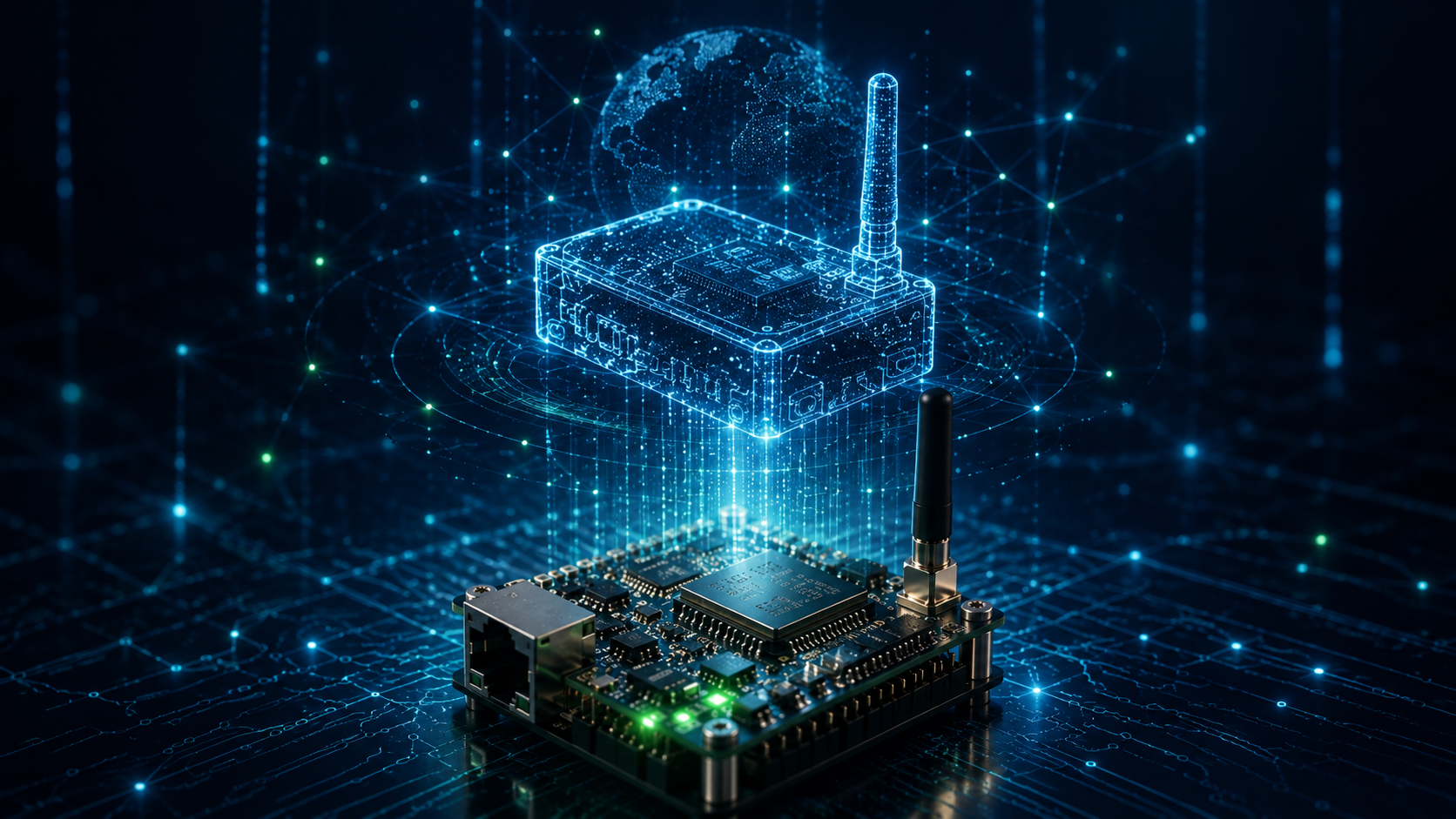
Researchers at the University of Stuttgart have developed an open hardware platform that combines firmware deployment, embedded-device execution, and supply-current measurement within an automated test workflow. The prototype uses a Raspberry Pi 3 as the controller, a CurrentRanger measurement device, and an ESP32 as the device under test, with current sampled at around 1,200Hz during program execution.
The work by Linus Bantel, Sarah Rottacker, and Dirk Pflüger addresses a practical gap between manual bench measurements and repeatable automated experiments. Conventional source measurement units, oscilloscopes, and digital multimeters can provide high measurement accuracy, but integrating them into automated firmware-testing pipelines can require expensive equipment or substantial custom control work.
In the Stuttgart system, a Python control server on the Raspberry Pi manages firmware upload, flashing, execution control, and data collection. Remote clients communicate through an HTTP interface, allowing firmware binaries to be submitted to the test station without manual intervention. The controller then programmes the target device, resets it, begins execution, and coordinates the current measurement.
The CurrentRanger sits directly in the device supply path and streams timestamped current samples to the Raspberry Pi. Measurement data is stored locally in CSV format, while the software can return derived metrics and results to the remote client. For the ESP32 implementation, the Raspberry Pi also controls reset and boot-mode pins through its GPIO interface, giving the system a repeatable reference point between firmware start-up and measurement acquisition.
That coordination is useful when comparing software variants because the electrical trace can change even when the hardware remains identical. Firmware can alter processor activity, peripheral use, communications behaviour, sleep periods, and power-management states. Automating the sequence makes it easier to test multiple binaries under the same procedure rather than relying on an engineer to reproduce each measurement manually.
The researchers evaluated the platform using multiple generated C programs executed on the ESP32. Recorded traces showed a consistent device start-up pattern for approximately the first 350ms before diverging according to the code being run. Several programs caused the ESP32 to crash and restart, producing a repeating start-up signature that became visible in the averaged current data.
The experiment illustrates how supply-current traces can provide information beyond a simple energy-consumption figure. A recurrent electrical pattern can expose resets or changes in execution behaviour, while automated comparison across firmware versions can identify regressions that affect power-management performance. The same approach could be used to compare compiler configurations, algorithm implementations, communications workloads, or low-power modes.
The current prototype has clear measurement limits. Despite the paper’s broader power-testing description, the hardware presently records supply current rather than electrical power directly. Calculating power also requires voltage, and the researchers note that supply-voltage variation can make current-only measurements less representative for higher-power devices.
Temperature is another uncontrolled variable. Preliminary observations found that changes in temperature can influence device current, potentially reducing repeatability between experiments. The researchers propose adding voltage monitoring, temperature sensing, and processor-frequency measurements, while future versions could also control supply voltage, ambient temperature, or device frequency programmatically.
Synchronisation could also be made more precise. The present implementation aligns measurements around the device start-up sequence, whereas signalling through GPIO or serial connections could mark individual events or code sections in the electrical trace. That would allow power behaviour to be associated more closely with specific firmware operations rather than broad execution periods.
The prototype is therefore closer to an extensible development and research tool than a substitute for production automatic test equipment. Its contribution is the integration of measurement with firmware deployment and execution control using accessible hardware and open software. The next development steps — additional electrical and environmental measurements, tighter synchronisation, and parallel test stations — would determine how far the same architecture can be extended towards more demanding semiconductor and embedded-system characterisation.