IN Brief:
- Ray Tech has opened a Chennai demonstration and customer centre for industrial X-ray inspection systems.
- The company says it has installed around 20 systems in India and is targeting electronics, semiconductor, battery, and automotive manufacturers.
- A prospective Indian factory could add about 600 systems of capacity, but investment remains under evaluation.
Ray Tech has expanded its industrial X-ray inspection operation in India with a new technology, demonstration, and customer centre in Chennai, while evaluating a later move into local manufacturing. Electronics, semiconductor, battery, automotive, and other manufacturers are among the markets being targeted.
The Sholinganallur facility gives customers access to equipment demonstrations and local technical support. Ray Tech entered the Indian market in August 2025 and says it has installed around 20 systems in the country, with its local operation employing approximately 15 people.
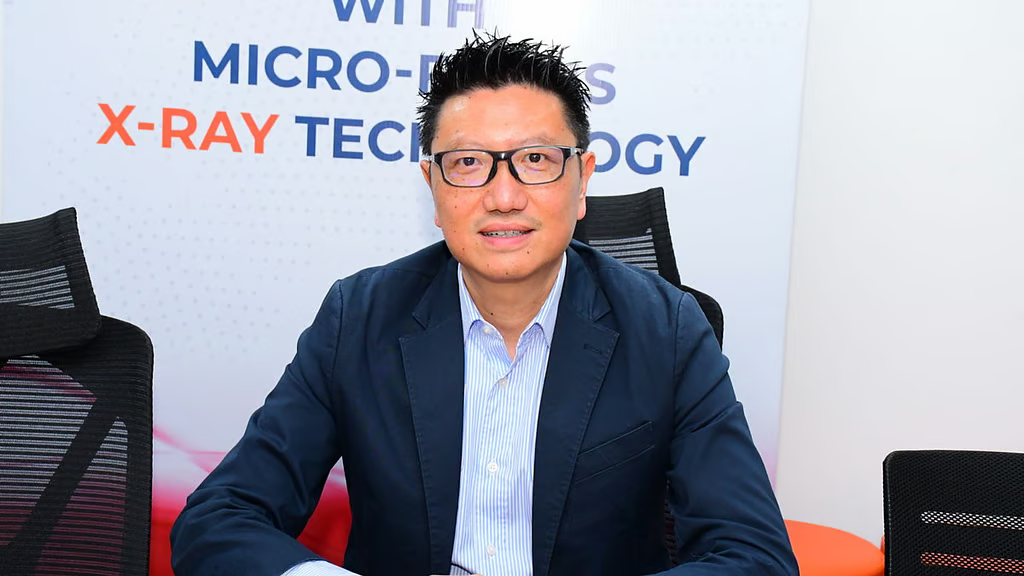
The immediate development is a customer and application centre rather than a new factory. Managing director Sean Lyu said the company would consider establishing manufacturing in India after domestic sales move beyond roughly 200 systems a year, with greenfield construction, brownfield investment, acquisition, and joint venture among the possible routes.
A plant built at the scale discussed by management could add around 600 machines of annual capacity and require investment of approximately $10 million. Neither the factory nor that investment has yet been committed, so both remain prospective rather than part of the Chennai opening.
Industrial X-ray inspection has become increasingly important in electronics manufacturing as more electrical and mechanical interfaces disappear beneath packages. Optical inspection cannot directly assess solder joints underneath BGAs, QFNs, power devices, and other area-array components, leaving X-ray techniques to identify voids, bridging, insufficient solder, alignment problems, and internal structural defects.
Greater packaging density makes that task harder. A two-dimensional projection can contain several overlapping structures, particularly in double-sided assemblies or complex semiconductor packages. Angled inspection, computed tomography, and three-dimensional reconstruction separate those features more effectively, although they increase equipment complexity, data processing requirements, and inspection time.
Ray Tech and its wider Unicomp group supply micro-focus X-ray equipment spanning conventional electronics inspection and more advanced CT configurations. The company’s current equipment portfolio includes systems for semiconductor and SMT manufacturing, with automated motion, image-processing software, and inspection architectures intended to operate either offline or within production flows.
The distinction between laboratory inspection and production inspection is significant. An X-ray image may expose a defect clearly to an experienced operator, but high-volume manufacturing requires consistent recipes, repeatable positioning, automated analysis, acceptable false-reject rates, and cycle times that fit the production process.
Inspection data can also become part of process control rather than simply a final pass/fail check. Repeated solder voiding, die-attach defects, misalignment, or structural variation can indicate changes elsewhere in printing, placement, reflow, component handling, or materials. The inspection system then becomes a measurement tool for the manufacturing process itself.
That makes application engineering and service important parts of an inspection supplier’s local presence. Equipment has to be configured around particular packages and assemblies, operators require training, and production teams may need assistance adjusting acquisition parameters or defect algorithms when products change.
Ray Tech estimates the Indian industrial X-ray inspection market at around $300 million and is aiming for a 20% share over three to five years. Those are company estimates and ambitions rather than independent market figures, but the target reflects India’s continuing investment in electronics, semiconductor-related manufacturing, batteries, and automotive production.
The proposed manufacturing plant would represent a larger industrial commitment if it proceeds. Management has put the possible additional capacity at around 600 systems, comparable with the 500–600 units it says its existing factories can produce collectively. That would make an Indian operation more than a small localisation exercise.
For now, the new Chennai centre is the fixed point in the expansion. Local demonstrations and support can help convert equipment sales in a market where buyers need to inspect their own assemblies before committing capital; a $10 million factory remains conditional on Ray Tech reaching the volume needed to justify it.