IN Brief:
- The UltraFLEXplus S24 has 24 instrument slots in a compact single-module test system.
- IG-XL software, instrument modules and test programme libraries are shared with the larger Q series.
- The platform supports engineering and production testing across three temperature conditions, subject to configuration.
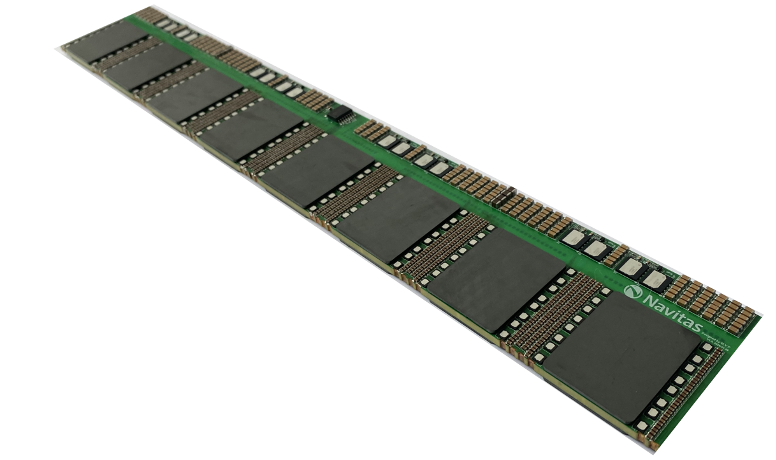
Teradyne has launched the UltraFLEXplus S series of automatic semiconductor testers, with the 24-slot S24 as its first model. The single-module system is intended for integrated device manufacturers and outsourced assembly and test providers handling a changing mix of microcontrollers, multimedia processors and edge AI devices. It shares the instrument and software architecture used by the larger UltraFLEXplus Q series, but occupies a different position in the company’s production test range.
A semiconductor test cell occupies considerably more than the footprint of its electrical tester. The installed arrangement can also include device handlers, wafer probers, load boards, temperature-conditioning equipment and access space. That is a particular concern in factories handling shorter production runs, where the next device may require different instruments and a new interface. Changeover time and reuse of installed instruments consequently affect how much productive test capacity a single cell can provide.
The S24 is a single-module system alongside the four-module UltraFLEXplus Q range. Its 24 slots describe the available tester instrument architecture; they do not represent a promised number of simultaneous device tests. The achievable parallelism depends on the selected instruments, device interfaces, power requirements and the test programme. Teradyne has not released a universal footprint reduction, throughput benchmark or list price, so an economic comparison with the Q systems must be application-specific.
Both ranges use the IG-XL software environment, the UltraFLEXplus instrument ecosystem and the existing test programme library. That common foundation can preserve work already invested in developing stimulus patterns, power sequences, measurement limits and timing relationships. A test programme cannot necessarily be transferred unchanged, however: its hardware resource map, contactor or load board, thermal conditions and site configuration still need checking against the selected tester.
The shared architecture also offers a route between silicon characterisation and volume production. During development, test engineers may vary voltage, frequency and temperature to establish operating margins and identify process-sensitive behaviour. Once the device is released, production testing applies qualified limits within a time budget while controlling false failures and missed defects. Maintaining software continuity reduces one source of migration work, but does not replace production correlation or qualification.
Teradyne identifies tri-temperature testing among the S series capabilities, including applications in automotive and industrial semiconductors. Leakage current, oscillator frequency, analogue offsets and switching timing can vary as the die temperature changes, making thermal testing a necessary part of many qualification programmes. Supported temperature ranges and device configurations depend on the selected handler and other test-cell hardware; no universal limits are specified for the S24.
Test infrastructure designed around edge processors has to accommodate a broad variety of electrical functions. A microcontroller may combine analogue conversion, digital I/O, clocks, memory and communications, while a multimedia or AI processor brings different compute, memory-interface and high-speed signal requirements. In each case, the test system needs appropriate instruments and an interface design suited to the device. Teradyne has not represented one fixed S24 configuration as suitable for all the applications mentioned.
High-mix production introduces another constraint: tester utilisation may fall when handlers are changed, programmes reloaded or batches held while a process issue is investigated. Overall equipment effectiveness combines availability, productive performance and output quality, making the number of completed good units per unit of plant space more useful than peak speed alone. Teradyne is positioning the S24 on those terms, but has not published an independent cost-per-test comparison.
Teradyne’s recent extension of the Titan HP burn-in system addresses a separate semiconductor assurance activity. Burn-in applies defined stresses to expose potential early-life reliability problems, whereas automatic test equipment measures functional and electrical compliance at engineering or manufacturing stages. A production flow can incorporate both, with different time, power and handling requirements.
The S24 is the first announced model in the new series, with demonstrations planned at SEMICON West in San Francisco on 13–15 October and at the IEEE International Test Conference in San Antonio on 11–16 October. Production deployment will depend on matching instrument loading, device handling and temperature control to the actual parts and test volumes on the line.