IN Brief:
- The PCTB101 is designed to harvest power from European 868MHz RF sources without an onboard battery.
- Powercast specifies a 1.2mm profile, temperature measurement from –40°C to +85°C, and humidity accuracy of ±1.5% RH.
- The manufacturer states a wireless powering distance of up to 25 metres, depending on the RF installation.
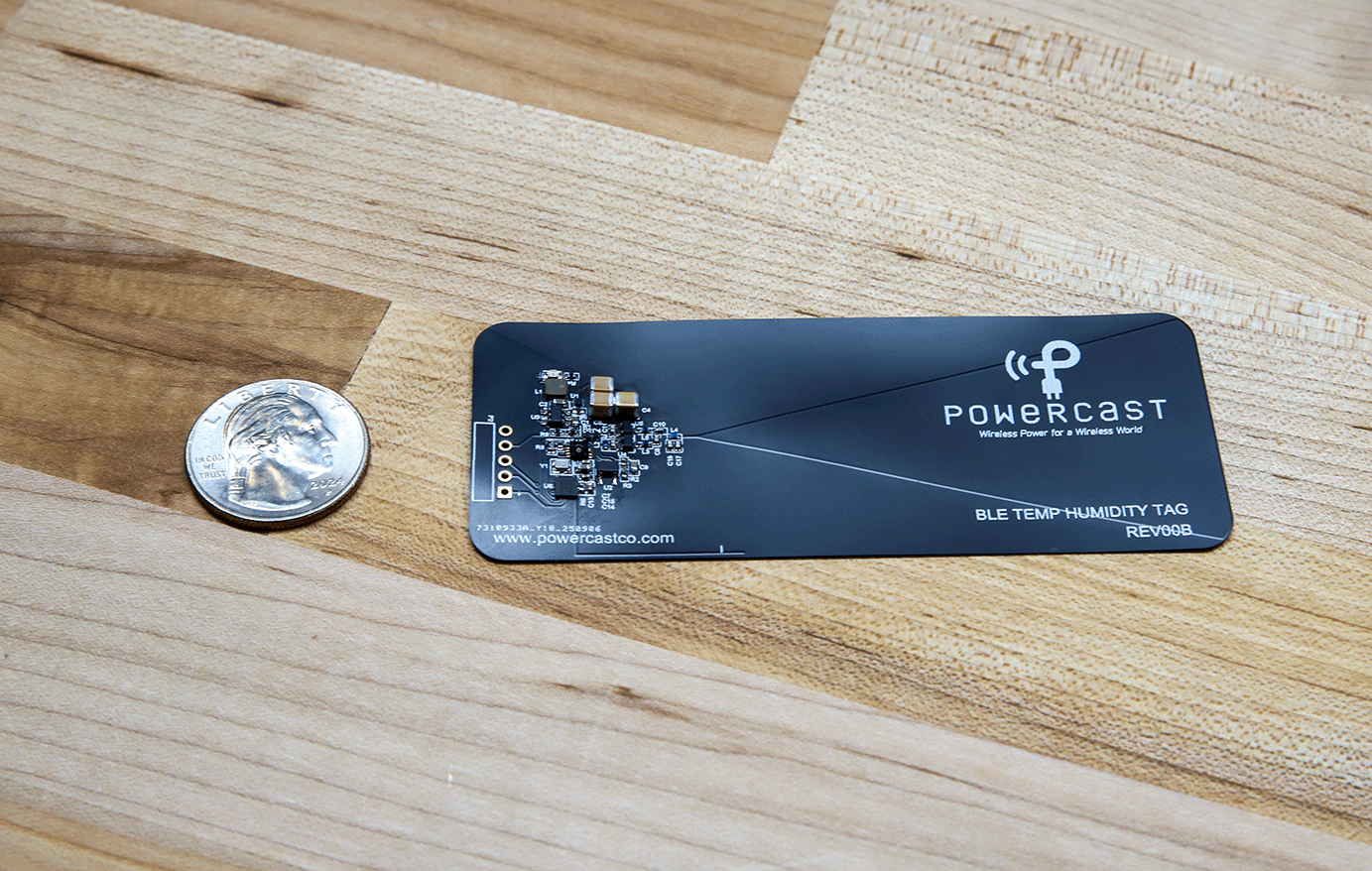
Powercast has introduced the PCTB101, a battery-free environmental sensor tag designed to operate with 868MHz wireless power sources in Europe. The device combines radio-frequency energy harvesting with Bluetooth Low Energy communication, allowing temperature and humidity measurements to be collected without an onboard battery or wired power connection.
Unveiled at electronica 2026 in Munich, the PCTB101 is a regional development of Powercast's existing PCTB100 platform. The earlier device uses RF power sources in the 902–928MHz range, while the new version is optimised for Europe's 868MHz environment. Both combine wireless power harvesting with separate Bluetooth communication, but their powering arrangements must be matched to the relevant regional installation.
The PCTB101 measures 1.2mm thick and has a footprint comparable to a conventional RAIN RFID tag. Powercast specifies a temperature measurement range from –40°C to +85°C, with stated accuracy of ±0.1°C, and humidity measurement accuracy of ±1.5% relative humidity. Each device also carries a unique identifier so that readings from multiple tags can be distinguished within the same monitoring system.
Wireless power harvesting allows the tag to operate without relying on the stored energy of a conventional battery. Its receiving antenna collects energy from a suitable RF source, which is converted into electrical power for the sensing and communication electronics. The available energy depends on the transmitter, antenna characteristics, distance, orientation, and losses introduced by the surrounding environment.
Powercast specifies operation at distances of up to 25 metres from an appropriate RF source. That figure represents the manufacturer's stated maximum rather than a guaranteed coverage radius. Machinery, metal structures, building materials, and the placement of equipment can influence how much power reaches a particular sensor location.
The amount of harvested energy also affects the practical frequency of measurements and transmissions. Although the tag does not need to conserve a battery's finite stored energy, it still requires sufficient incoming power to complete each sensing and communication operation. Powercast has not published a standardised measurement interval or guaranteed Bluetooth transmission rate for every operating distance.
Data transmission uses Bluetooth Low Energy rather than the 868MHz powering signal. This separates the mechanism that supplies the device's energy from the interface used to communicate its measurements. Compatible BLE gateways can receive the resulting packets, while Powercast also provides a smartphone application for monitoring information from multiple tags.
The distinction is important when designing a larger installation. A suitable RF transmitter must provide power to each tag, and the Bluetooth network must separately provide adequate reception. Coverage for one function does not automatically establish coverage for the other. The number of monitoring points, their physical arrangement, and the building's electrical environment therefore influence the equipment required.
Distributed temperature and humidity sensing can provide more detailed information about conditions within warehouses, manufacturing areas, and other controlled environments. A small number of room sensors may miss local variations caused by ventilation, equipment heat, storage arrangements, or differences between adjoining areas. Measurements taken closer to individual assets can reveal those variations, provided the sensors are appropriately positioned and their data is collected reliably.
Powercast also identifies pharmaceutical storage and cold chain logistics as potential applications. Temperature-sensitive goods can require documented monitoring throughout handling and storage, with limits determined by the particular product. Incorporating a sensor close to the relevant goods may support more detailed records, although any regulated monitoring system must still meet its applicable calibration, data integrity, and traceability requirements.
Battery replacement is a substantial maintenance consideration when large numbers of wireless sensors are installed. Eliminating onboard batteries removes that particular service requirement, together with the associated need to handle depleted cells. The trade-off is that the installation must maintain an appropriate wireless power infrastructure and verify that the tags receive sufficient energy under their intended operating conditions.
The unique identifier attached to each PCTB101 can also support asset-specific records. Powercast suggests that environmental measurements could be linked with digital product information and asset tracking systems. Such integration would require additional software and data management; the tag itself is not a complete digital product passport platform.
The manufacturer has not disclosed a confirmed volume-production date or published independent field measurements comparing the PCTB101 with conventional battery-powered sensing systems. Developers are being directed to contact Powercast for information about obtaining tags and reference designs.
The immediate change is the availability of a European-frequency implementation of the company's battery-free sensing architecture. Its suitability for a particular industrial installation will depend on wireless power coverage, measurement requirements, Bluetooth reception, and the operating characteristics of the complete monitoring system.