IN Brief:
- The Swiss organisations have formed a non-exclusive framework covering connected medical devices and wearables.
- CSEM contributes physiological sensing and algorithms; Cicor provides system integration and manufacturing capabilities.
- Individual customer projects will be contracted separately, with no jointly developed device yet announced.
Cicor and Swiss technology centre CSEM have agreed a non-exclusive framework for developing medical devices and health-monitoring wearables. The partners intend to combine research in physiological sensing and signal interpretation with electronic product engineering, industrialisation, and manufacturing, while negotiating individual customer projects separately.
CSEM contributes research and development capabilities in vital-sign sensing, physiological signal processing, algorithms, and digital health technologies. Cicor will contribute engineering services, system integration, electronic manufacturing, and work needed to take prototypes towards repeatable production. Neither organisation has identified a specific device that has entered joint development or announced a first manufacturing order under the new arrangement.
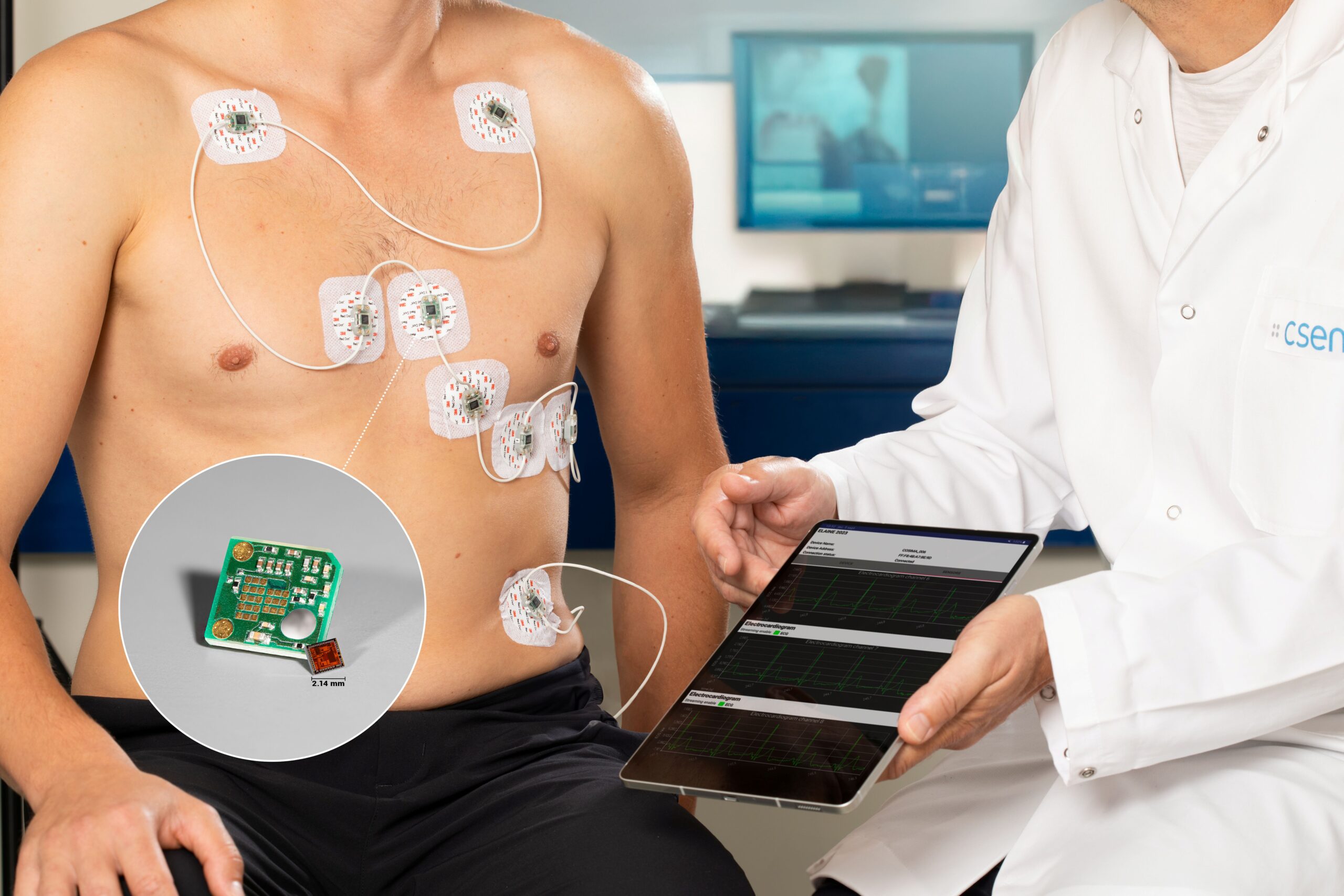
Wearable devices can acquire physiological signals through optical, electrical, mechanical, or other sensing techniques. Raw readings must be conditioned and converted before embedded software can analyse them. A complete system also has to manage noise, motion artefacts, calibration drift, power consumption, data transfer, and the physical interface with the wearer. Performance demonstrated in controlled research conditions does not necessarily carry over unchanged into routine use.
The sensing method and the physical design of a wearable have to be developed together. Sensor position and enclosure geometry can alter the signal arriving at an analogue front end, while board layout, power supply noise, and component tolerances influence the values delivered to software. Flexible assemblies, connectors, adhesives, and battery placement also determine how the device withstands repeated handling, cleaning, charging, and wear.
CSEM’s stated expertise covers the algorithms used to interpret the signals as well as the sensing hardware itself. Algorithm performance is linked to the characteristics of the acquisition chain: sample rate, analogue front-end range, filtering, and signal quality determine what information is available for processing. Changes to sensors, firmware, or component suppliers during industrialisation may therefore require fresh verification of the algorithm and its measurement outputs.
Cicor’s role spans product architecture, electronic assembly, integration, test engineering, and a route towards repeatable manufacturing. Bringing these disciplines into development before the design is frozen can expose enclosure, assembly, and quality-control constraints that are difficult to address later. The company can also build complete electronic devices, beyond the populated circuit board, where mechanical parts and interfaces require controlled integration.
Manufacturing test procedures must capture results consistently across batches. A working prototype can be calibrated individually by an engineer, whereas a commercial manufacturing process needs repeatable fixtures, traceable test records, and acceptance criteria for each assembled unit. Where a wearable measures physiological parameters, test methods must distinguish between an electronic channel functioning correctly and the overall measurement meeting its specified accuracy under intended conditions.
Device reliability depends on operating conditions as well as nominal electronic performance. Moisture ingress, corrosion, electrostatic discharge, cleaning or sterilisation exposure, skin-contact materials, and repeated flexing may be relevant to different designs. The applicable hazard analysis changes with the product’s intended use: a wellness tracker and a regulated medical device need not follow the same conformity and evidence requirements.
A strategic partnership does not itself confer regulatory approval for a medical device or certify a product. CSEM says its Medtech business unit is certified to ISO 13485:2016; that relates to an organisational quality management system, not to the regulatory status of every future product. Electrical safety, software lifecycle, risk management, and clinical evidence requirements will have to be established against the intended use and jurisdiction of each device.
Connected health systems introduce additional engineering interfaces. A wireless wearable has to balance transmission reliability and energy consumption, while protecting stored and transmitted information in line with the intended application. Firmware updates and configuration management must be controlled so that changing one part of a product does not unexpectedly alter measurement performance or its documented configuration.
The two organisations say the arrangement will be flexible, with project-specific work established according to customer needs. This structure enables a client to engage relevant capabilities without implying that all CSEM research platforms or Cicor manufacturing sites are part of one integrated production line. Intellectual property arrangements, production allocation, test responsibility, and commercial commitments remain matters for individual agreements.
Cicor and CSEM will agree the scope and responsibilities of each customer programme separately. Feasibility studies, prototype results, and qualification plans would provide the first evidence of work proceeding under the new framework; neither partner has yet identified a jointly developed product or production order.