IN Brief:
- The roughly SEK6m order covers front and corner automotive radar antenna prototypes and pre-series units.
- Gapwaves will tailor waveguide antenna structures for sensors supporting driver assistance functions.
- Deliveries are expected during 2026–27, with potential series production in 2029 subject to a separate agreement.
Swedish antenna manufacturer Gapwaves has received a development order worth approximately SEK6 million from an unnamed Asian automotive Tier 1 supplier for waveguide antennas used in front and corner radar systems. The assignment covers design, prototype delivery, and pre-series development for sensors intended to support advanced driver assistance functions, with initial deliveries expected during 2026 and 2027.
Gapwaves describes the customer as one of the world’s five largest automotive Tier 1 suppliers but has not disclosed its name or the vehicle maker expected to use the sensors. A-sample and B-sample development is covered by the current order; an early 2029 series production date remains only an estimate. A separate manufacturing and supply agreement would be required before any volume orders are confirmed.
The engineering work is split into two stages. During A-sample development, Gapwaves will adapt prototype antennas to the customer’s radar module. B-samples are intended to approach the production configuration, allowing the customer to assess the design with the broader sensor architecture and prepare for any subsequent manufacturing qualification. Neither stage establishes that a vehicle programme has been awarded to Gapwaves.
Automotive radar is commonly used in emergency braking, adaptive cruise control, and blind-spot detection systems. A radar transmitter emits radio-frequency energy, and the receiver analyses reflections from objects around the vehicle. The combination of antenna pattern, transmitted waveform, receiver performance, and signal processing determines how reliably the system can detect targets and estimate properties such as range and relative movement.
Forward-looking and corner radar modules place different demands on the radiating aperture. Longer-range forward detection generally benefits from high directional gain; corner modules need coverage across a wider angular region. Increasing gain can reduce beam width, so available aperture, angular resolution, field of view, and the radar’s processing architecture must be balanced within the space allowed by the vehicle design.
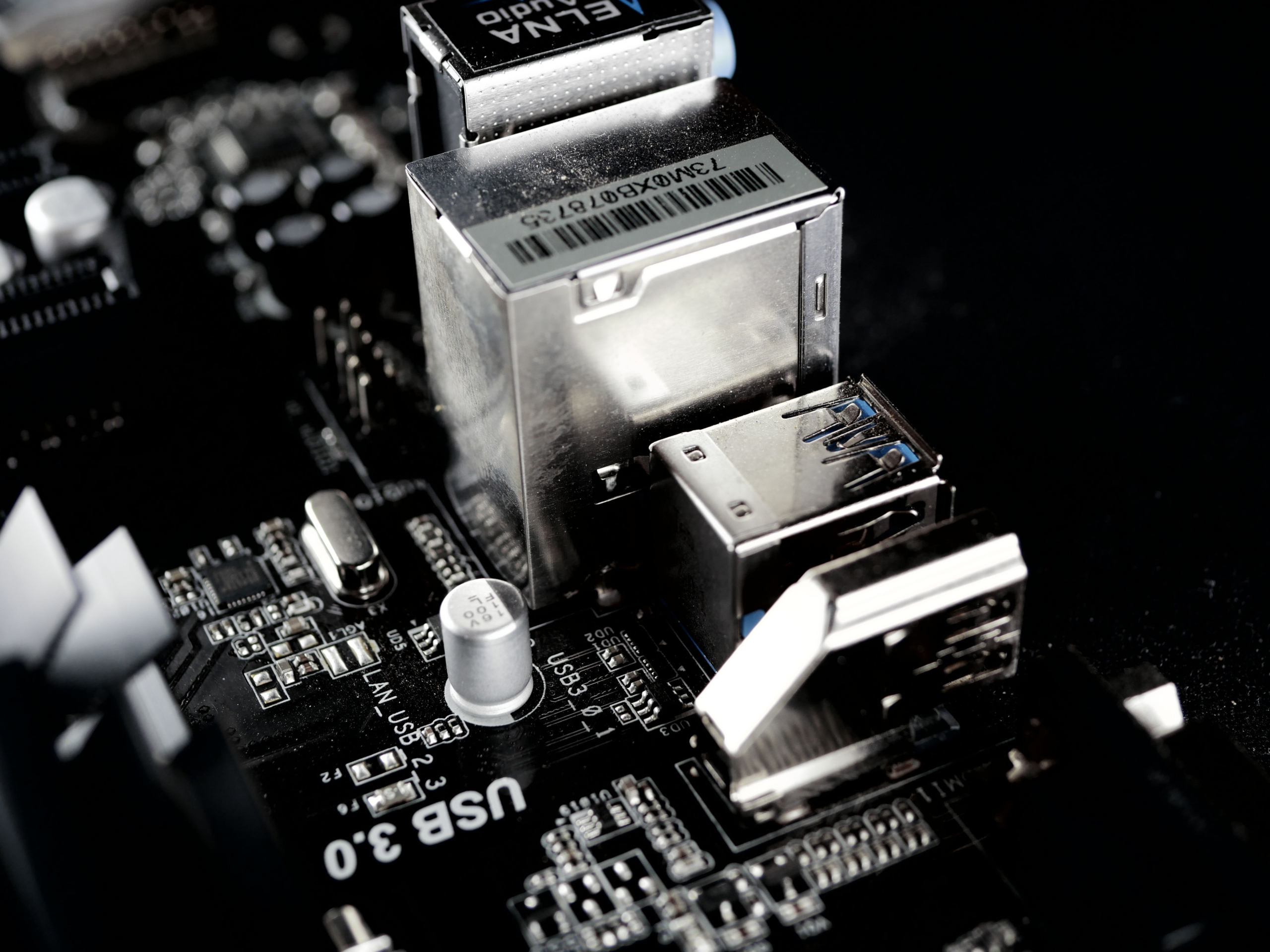
Gapwaves specialises in artificial-waveguide antenna structures. Its published technology uses an artificial magnetic conductor concept to confine and guide electromagnetic energy in engineered structures, allowing designs that differ from conventional printed circuit board antenna arrays. The company offers antenna implementations covering the automotive 76–81GHz band, although it has not disclosed the operating frequency, detailed pattern, or final material construction for this particular customer programme.
At millimetre-wave frequencies, seemingly small manufacturing and assembly variations can affect RF performance. Alignment between the transceiver and antenna, transitions between packages and waveguides, conductor losses, surface finish, and dimensions of the radiating structures can influence insertion loss and beam shape. Material expansion, vibration, and temperature cycling also have to be considered when the sensor is destined for a vehicle environment.
Gapwaves has developed approaches using metallised moulded plastic structures and supports both board-level launchers and launcher-in-package interfaces in parts of its antenna portfolio. These existing capabilities show the range of architectures available to it; the company has not said which one will be adopted in the newly commissioned front and corner sensors. Final design choices will depend on the customer’s radar chipset and the intended vehicle integration.
Measurements across the relevant frequency range, temperature conditions, and antenna field of view will be needed as the prototype configuration develops. Complete-system verification is a separate exercise: the vehicle radome, surrounding structures, electromagnetic interference, and calibration can all change radar behaviour relative to measurements on an isolated antenna. Gapwaves has not provided the customer’s test limits or acceptance criteria.
The approximately SEK6 million order covers the present development and pre-series phase. It cannot be extrapolated into a committed volume contract, even though Gapwaves has brought other radar antenna programmes into serial production. Future revenue would depend on the customer completing its development work, agreeing manufacturing terms, and launching the relevant sensor in vehicle production.
The proposed 2029 start of production remains several development phases away. The unnamed supplier must complete its sensor design, obtain the required vehicle programme approvals, and agree production terms before large-scale antenna deliveries can be treated as secured business. A separate agreement would also define manufacturing responsibilities, quantities, and the product configuration to be produced.
Gapwaves expects prototype and pre-series deliveries through 2027. Their measured performance and manufacturability will shape the customer’s next decision; the company has not announced a binding series production award, and its early 2029 estimate remains conditional on a separate agreement.