IN Brief:
- EPC Space has expanded its radiation-tolerant GaN HEMT portfolio with plastic QFN and hermetic packaging options.
- The range covers 100–200V devices, with continuous current ratings up to 133A and maximum on-state resistance as low as 1mΩ.
- Packaging and qualification options allow selection according to electrical, thermal, environmental, and mission requirements.
EPC Space has expanded its portfolio of radiation-tolerant gallium nitride power transistors with additional plastic QFN and hermetic packaging options, providing alternative component configurations for spacecraft power conversion and other high-reliability electronic systems.
The range comprises enhancement-mode GaN high-electron-mobility transistors rated from 100V to 200V, with continuous drain-current capabilities reaching 133A and maximum on-state resistance as low as 1mΩ in selected devices.
The packaging expansion was detailed on 18 November, a day after EPC Space announced a separate global distribution agreement with Mouser Electronics.
The two developments concern different aspects of the business. The distribution agreement expands component availability through an additional commercial channel, while the packaging announcement addresses the electrical and mechanical options available for spacecraft power systems.
Gallium nitride transistors are used in high-frequency power conversion because their electrical properties can support rapid switching and comparatively low losses under suitable operating conditions.
Enhancement-mode GaN devices are normally off in the absence of the appropriate gate drive voltage. They can be incorporated into converter circuits using control and protection arrangements designed for their switching characteristics.
High-electron-mobility transistors conduct through a channel formed at a semiconductor heterojunction. The resulting device behaviour differs from conventional silicon power MOSFETs, affecting gate driving, switching transitions, and the design of surrounding electrical connections.
GaN transistors typically have low gate charge and can switch with reduced energy loss in suitable circuit conditions. Their reverse-conduction behaviour also avoids the conventional body diode reverse-recovery charge associated with silicon MOSFETs.
These characteristics can allow converter designers to increase switching frequency while controlling losses. Higher frequencies can reduce the size of transformers, inductors, and other components, although the complete design must account for magnetic losses, thermal loading, and electromagnetic interference.
Spacecraft introduce additional constraints because power electronics may operate in radiation environments and must remain functional across demanding temperature and mechanical conditions.
The devices may also be required to operate for extended periods without maintenance. Semiconductor selection therefore depends on electrical ratings, environmental qualification, and the reliability of the complete assembly.
Radiation effects are a particular concern. Energetic particles and accumulated ionising radiation can alter device characteristics or affect their ability to operate within specified limits.
EPC Space offers radiation-tolerant and radiation-hardened technologies, but those classifications are not interchangeable. Their meaning and applicable qualification evidence must be established for each device and intended application.
The expanded portfolio includes both plastic quad flat no-lead packages, commonly called QFN packages, and hermetic packages.
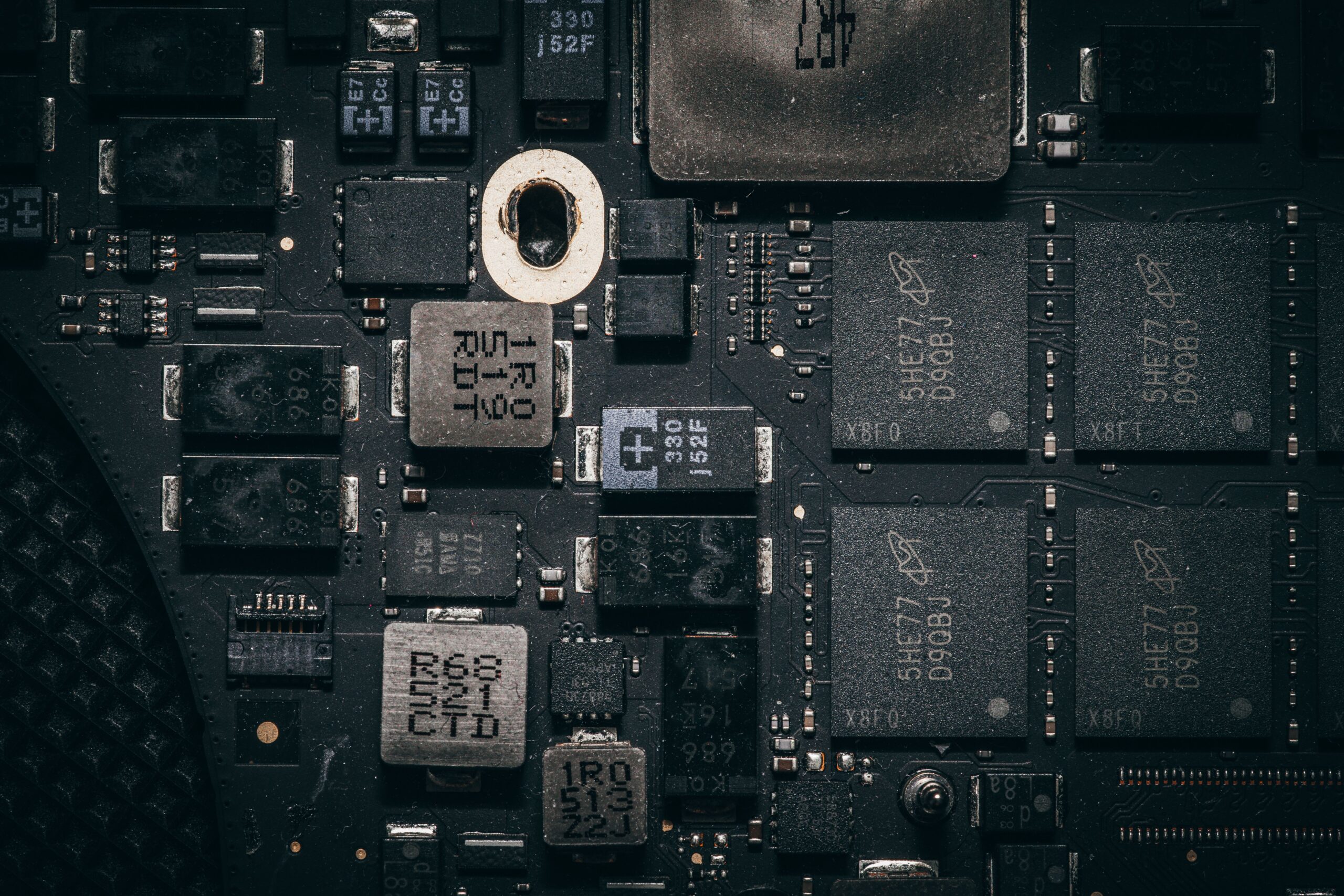
Plastic QFN devices provide a compact surface mount arrangement, with electrical terminals positioned beneath or around the package body. Their mechanical form can support dense printed circuit board layouts and comparatively short electrical connections.
Packaging contributes to circuit performance because unwanted resistance and inductance within electrical connections influence power losses and voltage transients during switching.
Reducing these parasitic effects can assist high-frequency converter design, although the complete switching loop includes the circuit board, gate driver, decoupling capacitors, and surrounding conductors.
Hermetic packages use a different construction intended to limit environmental exposure of the enclosed semiconductor device.
They may be selected where mission conditions and qualification requirements favour that packaging approach, but hermetic construction does not by itself demonstrate that a component satisfies every radiation, thermal, or reliability requirement.
The selected semiconductor die, package materials, screening procedures, and test evidence must be evaluated together.
Within its 100V range, EPC Space identifies the EPCS5007 and EPCS5001, both with continuous drain-current ratings of 133A. Their maximum on-state resistance values are specified at 1mΩ and 1.8mΩ respectively.
The EPCS5005 provides a 63A option with maximum on-state resistance of 3.1mΩ, while the hermetically packaged EPCS9001 is rated at 90A with a maximum value of 2.2mΩ.
The portfolio also includes 150V and 200V options with current ratings of 63A and 133A.
These ratings provide a range of electrical configurations, but the current and resistance specifications must be interpreted under the operating conditions defined in the relevant datasheet.
On-state resistance contributes to conduction loss when current flows through the device. That loss increases with the square of current, making thermal behaviour an important consideration in high-current converter designs.
Switching losses are affected by operating voltage, current, switching speed, frequency, and the control of the gate.
A device with a low quoted on-state resistance does not necessarily provide the lowest total losses in every application. The design must account for conduction and switching behaviour together.
Packaging also affects the removal of heat. Thermal resistance, mounting arrangements, and the available cooling path determine how effectively heat can pass from the semiconductor junction into the surrounding structure.
Spacecraft power electronics may operate with limited cooling options, making accurate thermal modelling and component qualification particularly important.
EPC Space identifies satellite power distribution, avionics, deep-space probes, high-speed DC-DC conversion, and motor controllers among the applications for the expanded range.
The company offers different engineering and space qualification options, although the applicable screening and supporting documentation vary by product.
No completed qualification for a particular satellite programme is established by the portfolio announcement. Device selection will continue to depend on the electrical and environmental requirements of the mission.
The expanded package range provides additional choices for integrating GaN devices into aerospace power circuits. Their value will depend on matching voltage and current ratings, switching characteristics, thermal construction, and verified qualification evidence to the completed power system.