IN Brief:
- ASMPT's SOLO placement head supports large processor BGAs on the SIPLACE SX surface mount assembly platform.
- Its published initial specification covers packages up to 240 × 240 mm and over 2 kg, with a maximum placement force of 200 N.
- The equipment provides tailored motion profiles, board inspection and optional solder-ball coplanarity measurement; handling up to 5 kg is planned.
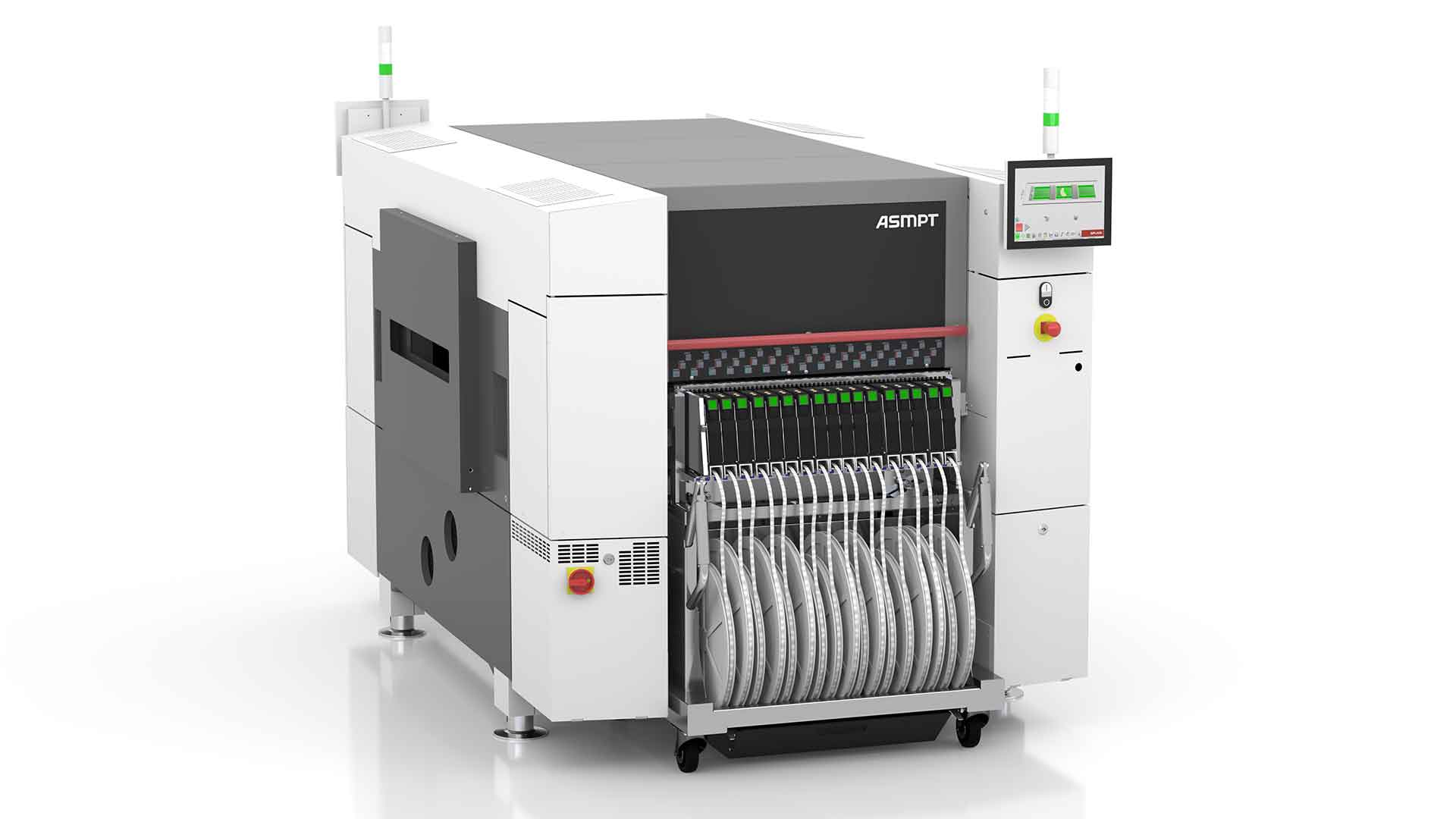
ASMPT has developed a placement head for large and heavy processor packages used in AI servers and high-performance computing equipment, extending its SIPLACE SX surface mount assembly platform. The SOLO head is designed to handle ball grid array packages measuring up to 240 × 240 mm and weighing more than 2 kg, with a future handling capability of up to 5 kg planned.
The equipment was detailed on 21 October as part of ASMPT SMT Solutions’ response to changing processor package dimensions. Highly integrated computing assemblies can contain multiple semiconductor dies, high-density electrical connections and substantial supporting structures, creating handling requirements beyond those of smaller integrated circuits typically installed by conventional placement heads.
SOLO uses a reinforced single-segment architecture, with strengthened connections between the head and its positioning mechanism. ASMPT has also modified the interface between the placement nozzle and the head to accommodate the mechanical loads associated with lifting, moving and positioning heavier components.
The published specification includes a maximum placement force of 200 N. The head is designed for the component size and weight range identified by ASMPT, although the available information does not establish a universal placement force suitable for every processor package. Actual handling parameters must be configured according to the component’s mechanical requirements.
The mass of a large package influences the forces generated when the placement equipment accelerates, stops or rotates it. A heavier component can impose greater loads on the pickup mechanism and gantry, while rapid movement may contribute to positioning errors or unwanted mechanical stress.
ASMPT allows acceleration and rotational movement profiles to be adapted to the component being installed. The objective is to account for mass and inertia during handling instead of applying identical movement characteristics to packages with substantially different dimensions and weights.
The placement nozzle must also contact an appropriate part of the component. Complex processor assemblies may contain surface features, exposed structures or regions that should not be loaded during pickup. ASMPT therefore configures its nozzles around the available contact areas, taking account of surfaces that must be avoided.
These arrangements are particularly important for advanced multi-die packages, where the mechanical assembly may contain several semiconductor and substrate elements. Although the completed processor is intended to withstand normal operating and installation loads, inappropriate localised forces during manufacturing can create stresses that differ from those encountered after the package has been mounted.
Correct handling is only one requirement for a successful placement. The processor’s solder-ball array must align with the corresponding pads on the printed circuit board, while the board and package must remain sufficiently stable during the operation.
Large server boards can themselves be mechanically demanding. Dense power distribution structures, connectors, heatsink mounting features and numerous electronic components increase their mass and complexity. An assembly machine must therefore transport and support the board without allowing excessive movement or bending during placement.
ASMPT uses heavy-duty conveyors on the SIPLACE SX platform, supported by its Smart Pin Support system. The support arrangement is intended to reduce board deformation and vibration, particularly in regions where substantial placement loads are applied.
Board stability can affect alignment because a component positioned accurately by the machine may still encounter an uneven receiving surface. Deflection or vibration can change the relative position of the package and solder pads during the placement process.
The equipment also checks selected board regions before installing the processor. ASMPT describes inspection for foreign material around the intended package location, together with verification that relevant spacers are present and correctly positioned.
Contamination or an incorrectly located support feature can prevent a large BGA from seating as intended. Identifying those conditions before the processor is placed may reduce the risk of defects requiring later investigation, although the manufacturer has not published a measured reduction in rejects attributable to this inspection process.
After pickup, optical inspection can examine the BGA connectors. An optional three-dimensional laser triangulation system is available to assess solder-ball coplanarity, measuring differences in the position of solder connections relative to a common plane.
Coplanarity affects the ability of solder balls to contact the corresponding PCB pads during assembly. Excessive variation can contribute to open connections or other joint defects during reflow, depending on the package design and soldering process.
The measurement is intended to identify certain problems before placement, but it does not replace solder paste control, appropriate reflow conditions or inspection after assembly. A package passing the coplanarity check can still experience defects associated with board movement, thermal processing or other aspects of the manufacturing sequence.
SOLO is designed to operate within an assembly line using several placement head types. ASMPT identifies CP20 for small components, CPP for a broad device range and TWIN VHF for larger or unusually shaped parts, with SOLO handling the particularly heavy processor packages.
The company describes placing expensive processor BGAs towards the end of the surface mount sequence, after smaller components have been installed. That arrangement limits the handling of the large package during earlier assembly stages and reduces the number of operations that must be completed after it is positioned.
ASMPT identifies processor packages costing more than US$20,000 as examples of the equipment SOLO is intended to handle. The stated value illustrates the potential cost of component damage or an assembly defect, but it is not evidence that the new head has achieved a particular placement yield.
Large BGA packages also create difficulties for later inspection and rework. Many electrical connections are hidden underneath the component after assembly, so verification of the completed solder joints may require inspection techniques beyond ordinary visual examination.
The announced SOLO capability is initially associated with packages exceeding 2 kg, while an increase to 5 kg remains planned. Although the mechanical construction has been developed with heavier components in mind, the October information does not establish that 5 kg operation has already entered qualified production use.
ASMPT has not published independently verified placement accuracy, cycle-time or production yield figures for the new head. Its defined contribution is a mechanical handling and inspection architecture designed around the growing dimensions and mass of advanced processor BGAs, with performance in an individual production line dependent on the package, board support, movement profile and downstream assembly process.