IN Brief:
- Neurophos and MIT's Julia Lab are collaborating to adapt numerical algorithms for the company's optical processing unit.
- The OPU architecture uses large arrays of optical processing elements to perform matrix operations, while electronic systems remain necessary for memory, control and data handling.
- Neurophos targets substantial improvements in computing efficiency and plans commercial systems for 2028, but the collaboration has not established independently verified end-to-end performance gains.
Neurophos is collaborating with the Julia Lab at the Massachusetts Institute of Technology to develop numerical algorithms for photonic AI processors, connecting mathematical computing methods with hardware that performs matrix operations using light. The research programme will investigate how algorithms can be adapted to the characteristics of Neurophos’ optical processing unit, or OPU, as the company works towards commercial systems in 2028.
The collaboration, announced on 21 October, brings together Neurophos’ photonic semiconductor development and the Julia Lab’s work in numerical linear algebra and scientific computing. The MIT research group is part of the Computer Science and Artificial Intelligence Laboratory, known as CSAIL, and has contributed to mathematical software and programming methods used in demanding computational applications.
Matrix operations form a substantial part of the processing required for artificial intelligence inference and many scientific workloads. Multiplication and accumulation across large arrays of numerical values are performed repeatedly as information moves through the layers of an AI model.
Conventional accelerators implement these calculations using electronic arithmetic circuits. Graphics processors and specialised AI chips contain many processing elements that can execute related operations concurrently, supported by memory and communication systems responsible for supplying the required data.
The performance of those processors depends on more than their arithmetic capability. Numerical values must be transferred from memory to the processing elements, while intermediate results and completed outputs must be retained or passed to subsequent calculations. Data movement can consume substantial energy and limit the rate at which useful work is completed.
Neurophos is developing an architecture in which selected matrix calculations take place through optical interactions rather than exclusively through electronic switching. The company uses photonic structures designed to manipulate light according to the numerical values involved in a calculation.
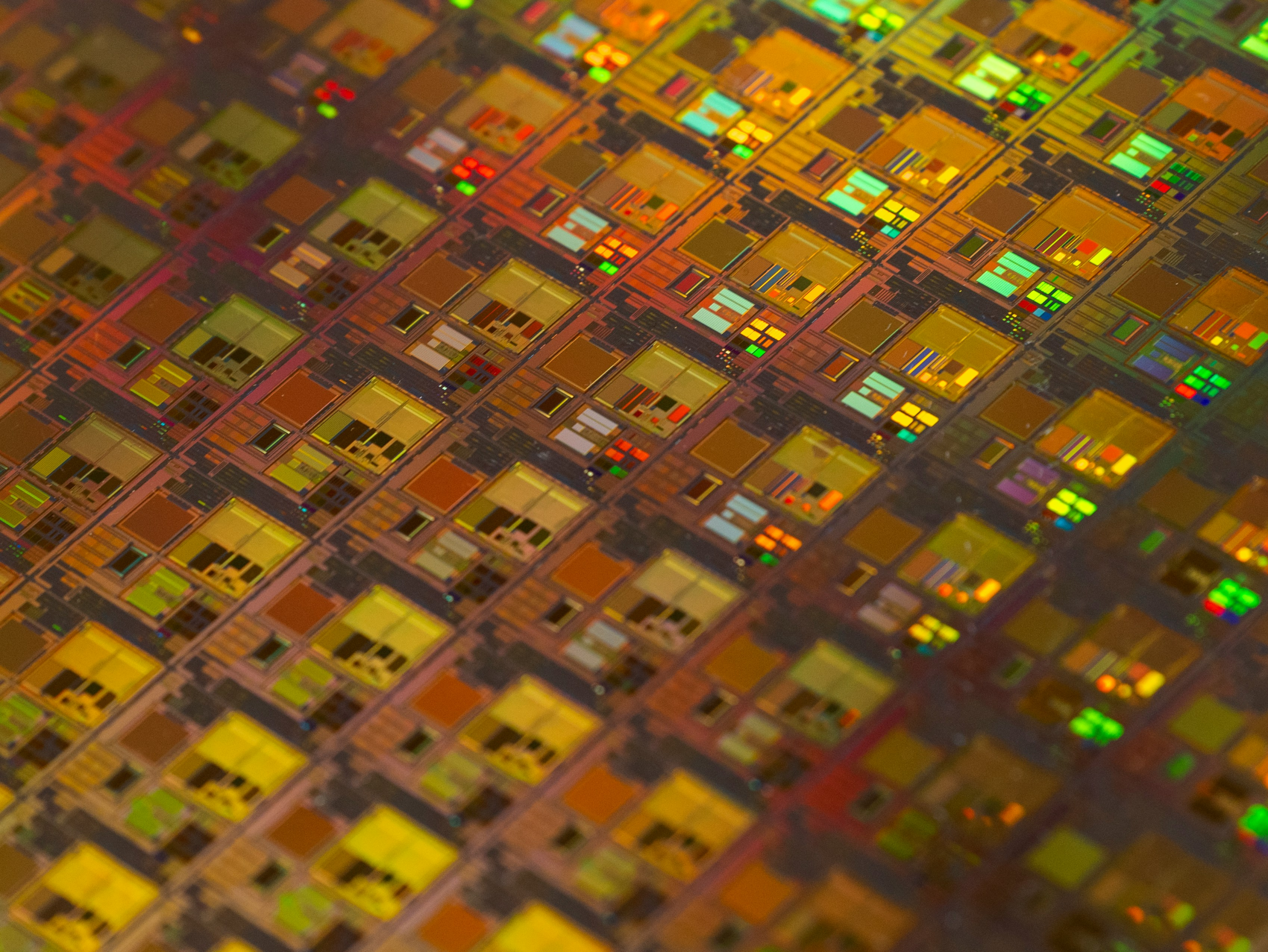
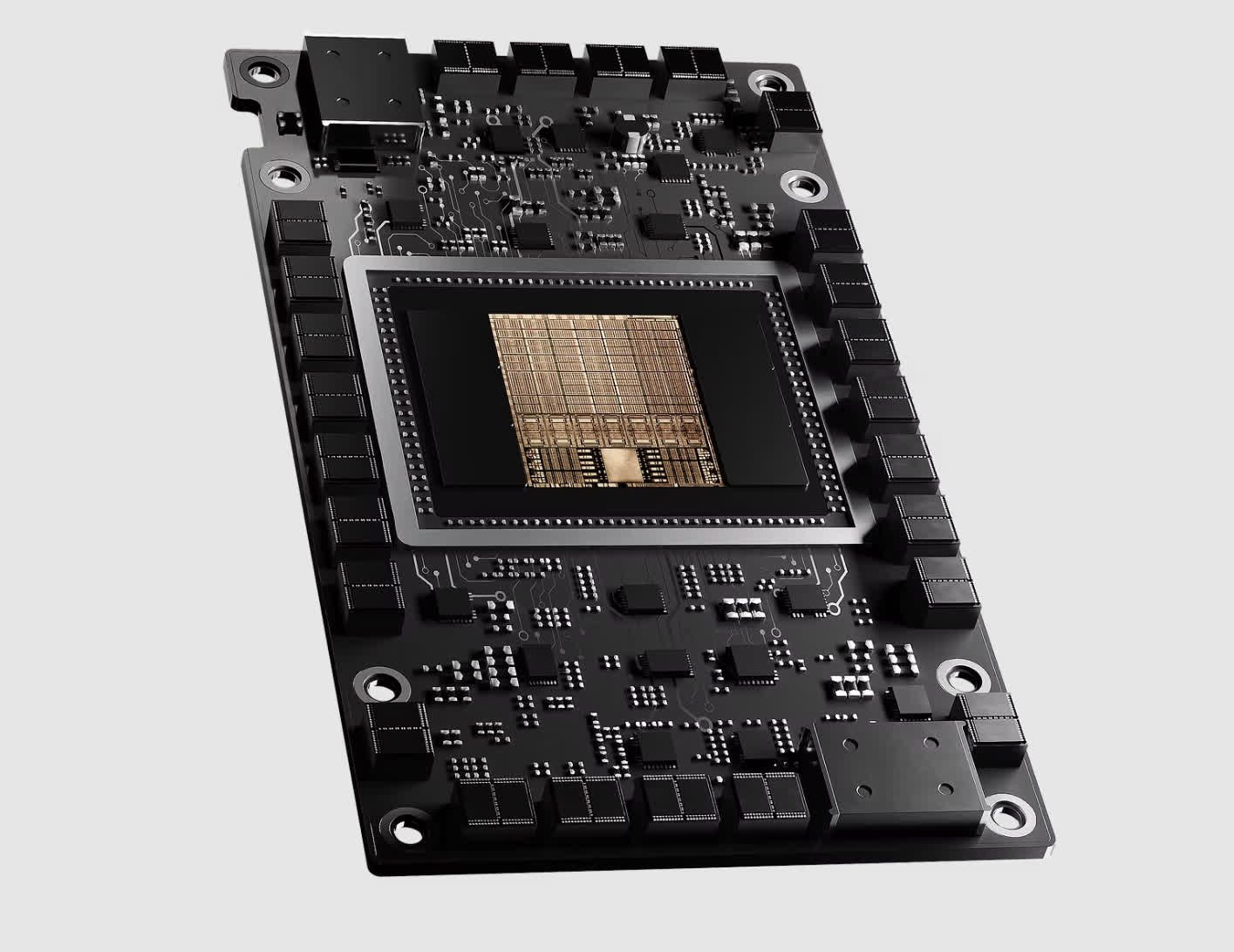
Its optical processing unit is intended to contain millions of optical processing elements within a semiconductor device. Neurophos describes an active metasurface architecture incorporating optical modulators far smaller than conventional Mach–Zehnder structures, allowing dense arrangements of light-controlling elements.
The company claims that its structures are approximately 10,000 times smaller than conventional Mach–Zehnder devices and that around one million elements can occupy a 5 × 5 mm area. These specifications describe the intended photonic implementation and should not be converted directly into a claim about finished processor performance.
High integration density may allow many optical operations to take place in parallel, but useful application throughput still depends on how numerical information enters and leaves the optical array. The surrounding electronics must provide control, memory access and interfaces to the rest of the computing system.
The company’s OPU architecture is designed around a systolic array arrangement, a computing structure commonly used for matrix calculations. In a systolic system, data moves through an organised network of processing elements, allowing repeated operations to be carried out using a regular flow of information.
Applying optical processing to that structure changes the physical mechanism used for some calculations, but it does not remove the need to organise data and map software operations onto the hardware. Algorithms must be arranged so that the processor can use its available optical elements efficiently.
The Julia Lab collaboration addresses that relationship between mathematical methods and physical computing architecture. Its research expertise includes numerical algorithms and techniques for expressing calculations in forms suited to particular processing systems.
An algorithm developed for conventional floating-point arithmetic may require modification when implemented on optical hardware with different numerical precision and signal characteristics. The order of operations, representation of values and treatment of intermediate results can all affect the accuracy of the completed calculation.
Quantisation is one aspect of this work. AI models often use reduced numerical precision during inference to lower the amount of memory and computation required. Representing values using fewer bits can improve processing efficiency, but approximation errors may change the model’s output.
The acceptable error depends on the application and the behaviour of the model. A numerical representation that performs adequately for one inference task may produce unacceptable results in another, making evaluation against relevant workloads necessary when selecting the precision used by the hardware.
Jake Chuharski, a researcher associated with the Julia Lab, is leading Neurophos’ quantisation and optimisation team. His work connects the numerical methods developed through the research collaboration with the constraints of the OPU architecture.
Optical computing introduces additional sources of variation beyond ordinary digital quantisation. Fabrication tolerances, optical losses, signal noise and the behaviour of modulators can affect the precision with which mathematical operations are represented.
Algorithms and supporting control systems may therefore need to compensate for physical characteristics that differ from an ideal mathematical model. The degree of correction required will depend on the optical architecture, the selected numerical format and the stability of the hardware under operating conditions.
Input and output conversion also contribute to system performance. Numerical information represented electronically must be applied to the optical processing elements, while the result must ultimately be recovered in a form that supporting electronic systems can use.
The associated conversion circuits, memory interfaces and control functions consume energy and processing resources. A reduction in the energy required for the optical calculation itself does not automatically produce the same reduction across the complete computing system.
Thermal behaviour is another consideration because optical components and the surrounding electronics operate within a shared physical assembly. Changes in temperature can affect optical characteristics, while the system must remove heat generated by its active components.
Neurophos has set a goal of reducing the resources required for AI computation by approximately fiftyfold with its first chip. The company also anticipates substantial improvements in speed and energy efficiency compared with conventional electronic accelerators.
Those figures remain company development objectives rather than independently established results from commercial production hardware. A meaningful comparison must identify the workload, numerical precision, measured power consumption and extent to which memory and communication overheads are included.
The same distinction applies to compute density. The number of optical processing elements within an array can indicate a potential architectural advantage, but the useful throughput of a complete application depends on whether those elements can be supplied with appropriate data and used consistently.
The Julia Lab’s numerical methods may also support scientific computing applications where matrix operations are central to simulation and mathematical analysis. Different workloads impose different requirements for numerical accuracy, data movement and the handling of intermediate results.
Neurophos plans to bring commercial systems to market in 2028. Before then, the company must establish how its optical processor operates with electronic memory and control hardware, demonstrate reliable numerical behaviour and measure the performance of complete workloads under reproducible conditions.
The MIT collaboration provides a route to develop algorithms alongside the intended processor architecture rather than treating software adaptation as a separate task after hardware development. Its results will depend on whether the mathematical methods and physical implementation together deliver measurable advantages in accuracy, execution time and energy consumption.