IN Brief:
- DBAG has agreed to acquire a significant minority stake in German thermal imaging manufacturer Vected.
- Vected develops electronic modules, calibration, image processing software, and complete thermal imaging systems at its German operation.
- The investment is intended to support production capacity, workforce growth, and a broader product range through 2030.
Vected is preparing to expand its German thermal imaging operation after Deutsche Beteiligungs AG agreed to acquire a significant minority stake, adding capital behind a business that develops sensor electronics, image processing, calibration, and complete optronic systems for defence and dual-use applications.
The transaction is being made through DBAG’s Long-Term Investments strategy and remains subject to regulatory approval. Financial terms have not been disclosed. Founder and managing director Wolfgang Schöberl will continue to lead Vected, which was established in 2012 and develops and manufactures its products in Germany.
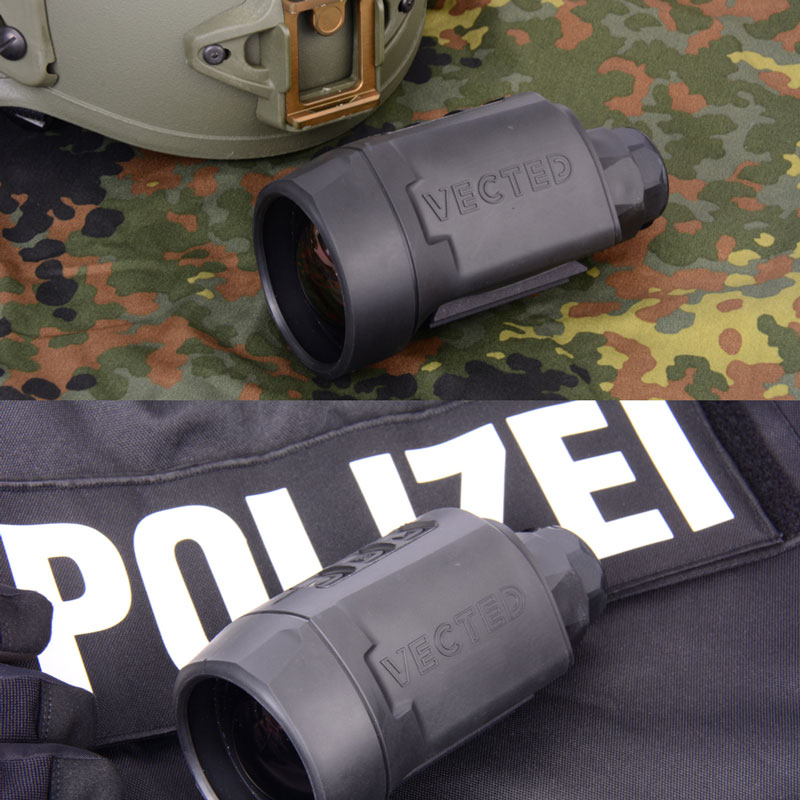
Vected’s work extends beyond finished handheld thermal imagers. The company develops electronic modules for optronic systems, performs calibration, writes image processing software, and integrates thermal imaging technology into products for vehicles, drones, law enforcement, and military use. It also provides customised designs for OEM customers, covering both component-level electronics and complete systems.
A thermal detector forms only one part of the signal chain. Detector performance has to be matched with analogue front ends, digitisation, non-uniformity correction, calibration data, image enhancement, display electronics, thermal management, and software. Vehicle and airborne systems add vibration, temperature change, latency, power limits, and interfaces to the wider platform.
DBAG says Vected controls much of that process internally and manufactures electronic modules and thermal imaging devices in Germany. The investor also points to regional sourcing for key components where possible, while Vected says its electronics and software are developed in house. That structure gives the company greater control over design changes, calibration, and production quality as programmes move from prototypes into repeatable output.
The investment is intended to support additional production capacity, workforce growth, and a broader product range. DBAG says Vected is already in a significant growth phase and expects the team to expand materially by 2030. Scaling calibrated imaging modules will require more than additional assembly space, with test equipment, controlled production processes, skilled electronics staff, optical alignment capability, and repeatable verification all increasing alongside output.
Demand is also being pulled by wider adoption of uncooled infrared imaging in systems where lower size, weight, power consumption, and cost are important. DBAG puts the European market for uncooled infrared systems at around €1.1 billion and cites expected annual growth of 12% through 2030, with stronger growth anticipated for vehicle-mounted systems.
Recent development elsewhere in the sector has placed similar emphasis on scalable uncooled sensing. Teledyne FLIR is participating in a US Army thermal sensor programme that combines imaging performance with lower size, weight, power, and cost while treating production scale as part of the engineering problem. Vected occupies a different market position, but its expansion faces the same need to preserve calibration and image quality as output rises.
Vected also uses artificial intelligence for image enhancement and object recognition. Adding algorithmic processing increases the importance of compute load, latency, software assurance, and predictable behaviour alongside optical and electronic performance. Those functions still depend on the quality of the underlying detector data and calibration.
Vected’s product range also includes systems intended for vehicle integration and fixed installations, so production expansion will have to accommodate different optical assemblies, enclosures, interfaces, and environmental requirements. A common electronics and software base can reduce duplication across those variants, but calibration and final test remain configuration dependent. Growth therefore places pressure on both engineering change control and production test capacity, not simply assembly throughput.
The immediate milestone is completion of the investment following regulatory review. Subsequent progress will be visible in production expansion, recruitment, and the rate at which new or enlarged programmes move through the German operation.
Thermal imaging remains a specialist electronics business in which manufacturing discipline is inseparable from image quality. The proposed investment gives Vected more room to scale, but the commercial value will depend on whether the company can increase output while maintaining the calibration, verification, and system integration work that distinguishes a production imager from a detector module alone.