IN Brief:
- European EMS production reached €56.859bn in 2025, increasing by 4.7%.
- One Foxconn operation in Hungary generated €4.464bn in additional annual revenue, substantially influencing the regional total.
- Among comparable companies, 54.6% recorded falling revenue despite overall industry growth.
European electronics manufacturing services production reached €56.859bn in 2025, an increase of 4.7%, although new figures compiled by in4ma show that growth was concentrated in a small number of large manufacturing operations rather than spread across the wider industry.
The research identifies a particularly substantial contribution from Foxconn’s hyperscale computing equipment manufacturing in Hungary. Revenue at one of the group’s Hungarian operations increased by €4.464bn during the year, an exceptional rise that materially influenced the reported performance of European electronics production.
Among more than 1,600 EMS companies included in the year-on-year comparison, 54.6% recorded falling revenue during 2025, while 45.4% achieved growth. The distribution demonstrates how an industry can report higher aggregate production value even when a majority of its individual businesses are experiencing weaker commercial conditions.
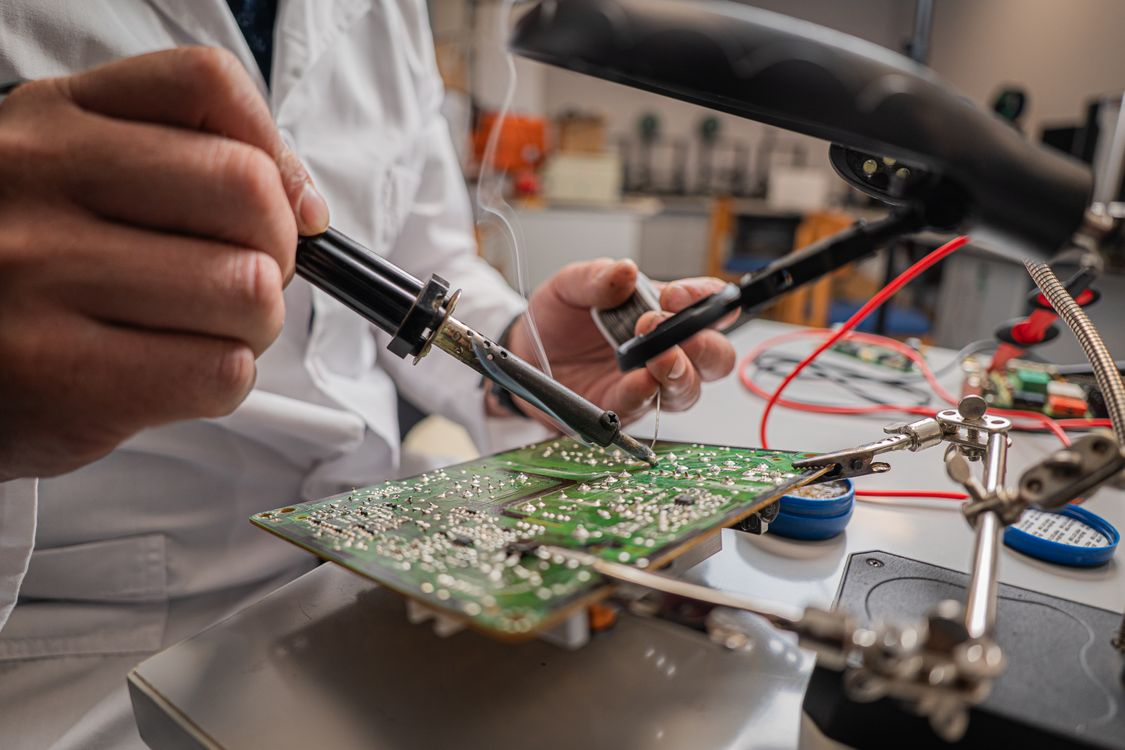
Electronics manufacturing services companies provide contract manufacturing for businesses developing electronic equipment. Their operations commonly include printed circuit board assembly, component placement, soldering, inspection, electrical testing, system integration, and the management of materials required for production.
The European EMS industry serves a broad range of markets, including industrial automation, medical devices, transport equipment, communications, computing, and specialist electronic systems. These markets operate with different production volumes, customer qualification requirements, and product replacement cycles.
High-volume computing infrastructure can create revenue concentrations that differ substantially from those of smaller electronics manufacturers. A facility producing complex server systems for large infrastructure customers may generate considerable sales through a limited number of manufacturing programmes.
By comparison, specialist EMS businesses frequently operate high-mix, low-volume production lines. They may manufacture many separate PCB assemblies for different customers, with each design requiring its own component list, manufacturing instructions, inspection criteria, and test procedures.
The economic performance of these manufacturing models is therefore not directly interchangeable. Large infrastructure programmes can increase aggregate revenue without producing a corresponding improvement in demand across industrial and specialist electronics manufacturing.
Foxconn generated €13.898bn in European EMS production revenue during 2025, representing 24.4% of the regional total. Its seven active European production sites include Cloud Network Technology Kft. in Hungary, which recorded revenue of €6.907bn.
The Hungarian operation’s additional €4.464bn was larger than the annual revenue of many European EMS groups. Its contribution illustrates the effect that a major hyperscale infrastructure programme can have on industry statistics when production value is concentrated within a relatively small number of facilities.
The distinction is also visible in the regional figures. Eastern European EMS production increased by 14.3% during 2025 when hyperscale business was included, but the increase was 5.9% after that activity was excluded.
Both figures represent growth, although their difference shows that the exceptional computing equipment programme contributed substantially to the regional recovery. Western and Eastern European EMS production had both declined during 2024, following the earlier industry downturn.
in4ma’s research also identifies increasing concentration among the largest manufacturers. Only four EMS groups generated more than €1bn in European production revenue: Foxconn, Flex, Zollner, and Jabil.
Their combined share of European production increased from 34.1% in 2024 to 41.9% in 2025. This shift reflected the growing contribution of the largest operations, particularly Foxconn, rather than a broad improvement across every company size.
Among smaller revenue bands, manufacturers generating between €100m and €250m recorded a modest increase. The research attributes that improvement partly to exposure to relatively resilient markets and acquisition activity, while other revenue bands generally continued to experience small declines.
The structure of the European industry remains dominated numerically by smaller businesses. Of the 1,912 EMS companies identified by in4ma, 1,374 generate less than €20m in annual revenue.
Collectively, these businesses account for approximately 11% of European EMS production value. Despite their comparatively limited share of total revenue, they provide manufacturing capacity and specialist processes for customers whose requirements may not fit the production models used by the largest contract manufacturers.
Small EMS providers often manufacture electronic products in modest batches, support changing design configurations, and undertake specialised assembly or testing. These operations require flexibility when moving between products, managing component substitutions, or accommodating customer-specific qualification requirements.
The research also identifies 223 legal entities that disappeared from the European EMS landscape during the preceding six years through closures, mergers, and other structural changes. That reduction coincided with a period involving difficult market conditions and consolidation across parts of the industry.
in4ma reports that European EMS demand began improving during 2026 as customers worked through excess component inventories accumulated after the semiconductor shortages of 2021 and 2022.
During those shortages, some electronics manufacturers increased purchasing commitments to protect their production schedules against uncertain semiconductor availability. When downstream demand weakened, the additional components remained in inventory, contributing to a prolonged period of reduced ordering.
As those inventories were consumed, component purchasing and manufacturing demand began returning towards the levels required by current production programmes. However, a reduction in excess inventory does not guarantee that every component can be procured when needed.
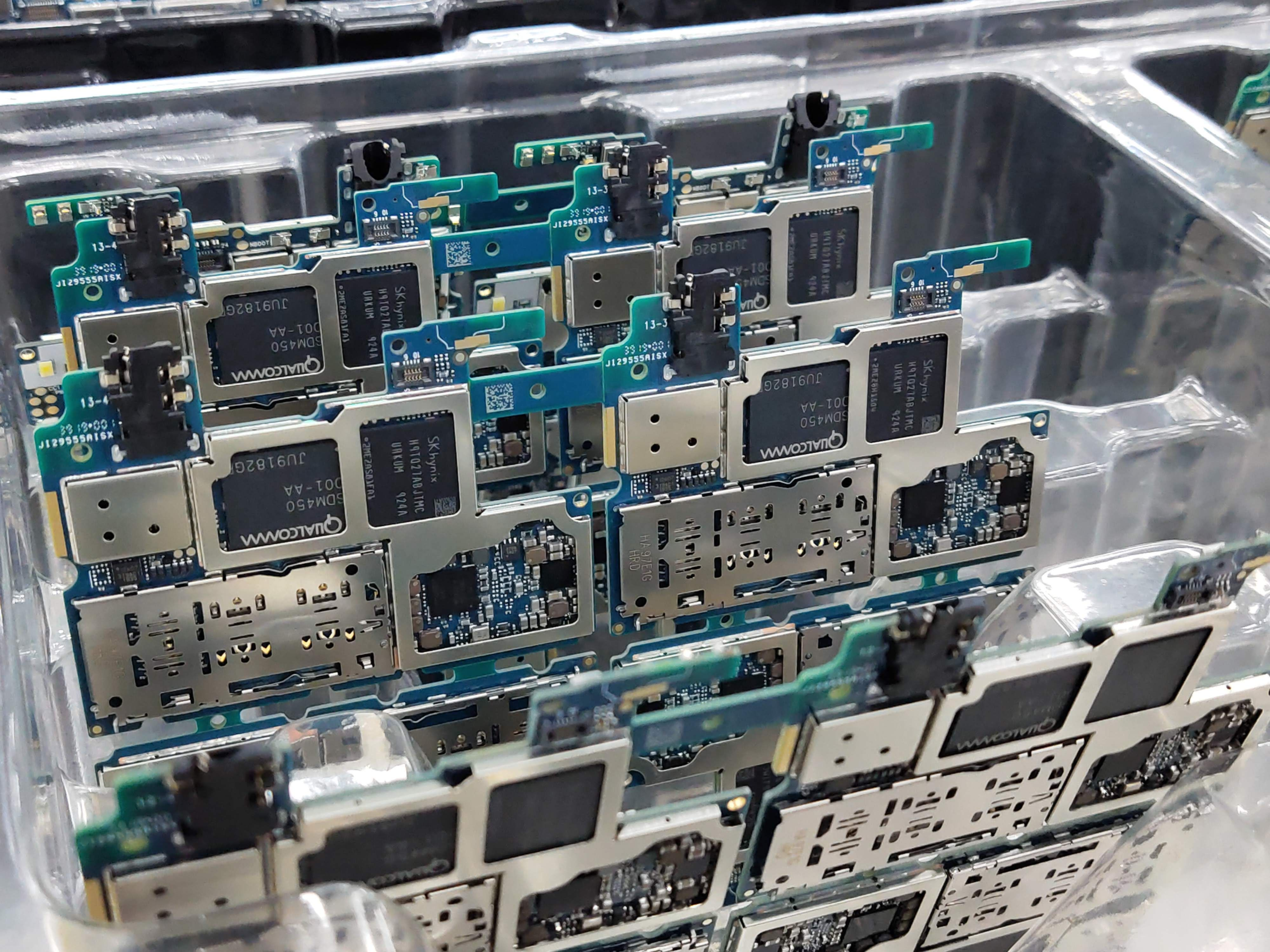
The research identifies renewed constraints affecting memory semiconductors and several printed circuit board categories, with higher prices and longer delivery lead times creating difficulties for manufacturing companies.
An electronic assembly may contain hundreds of distinct components, but production can be delayed by the absence of a single required device. Where an unavailable component has no approved substitute, a manufacturer may need to wait for delivery or obtain an engineering change before completing the assembly.
Alternative sourcing is not always straightforward because devices with similar electrical functions may differ in pin assignments, packaging, operating characteristics, or qualification status. Substituting a component can therefore require changes to the PCB, firmware, or testing process.
The resulting production delays can prevent customer orders from being converted into completed deliveries, even when manufacturing demand is improving. in4ma identifies these renewed component and material constraints as factors affecting the industry’s recovery during 2026.
The research company is preparing a fuller European EMS industry report, including analysis of the region’s largest manufacturers based on European production activity. Its completed 2025 figures establish a highly uneven manufacturing position, with aggregate growth driven by exceptional hyperscale production while declining revenues remained widespread among smaller and medium-sized providers.