IN Brief:
- Winbond will acquire Infineon's NOR Flash and F-RAM business for $1.12 billion on a cash and debt free basis.
- The acquired operation will become a standalone Silicon Valley-headquartered entity under Winbond following regulatory approval.
- Infineon will retain SRAM, HYPERRAM, nvSRAM, and SONOS-based radiation-hardened memory technologies.
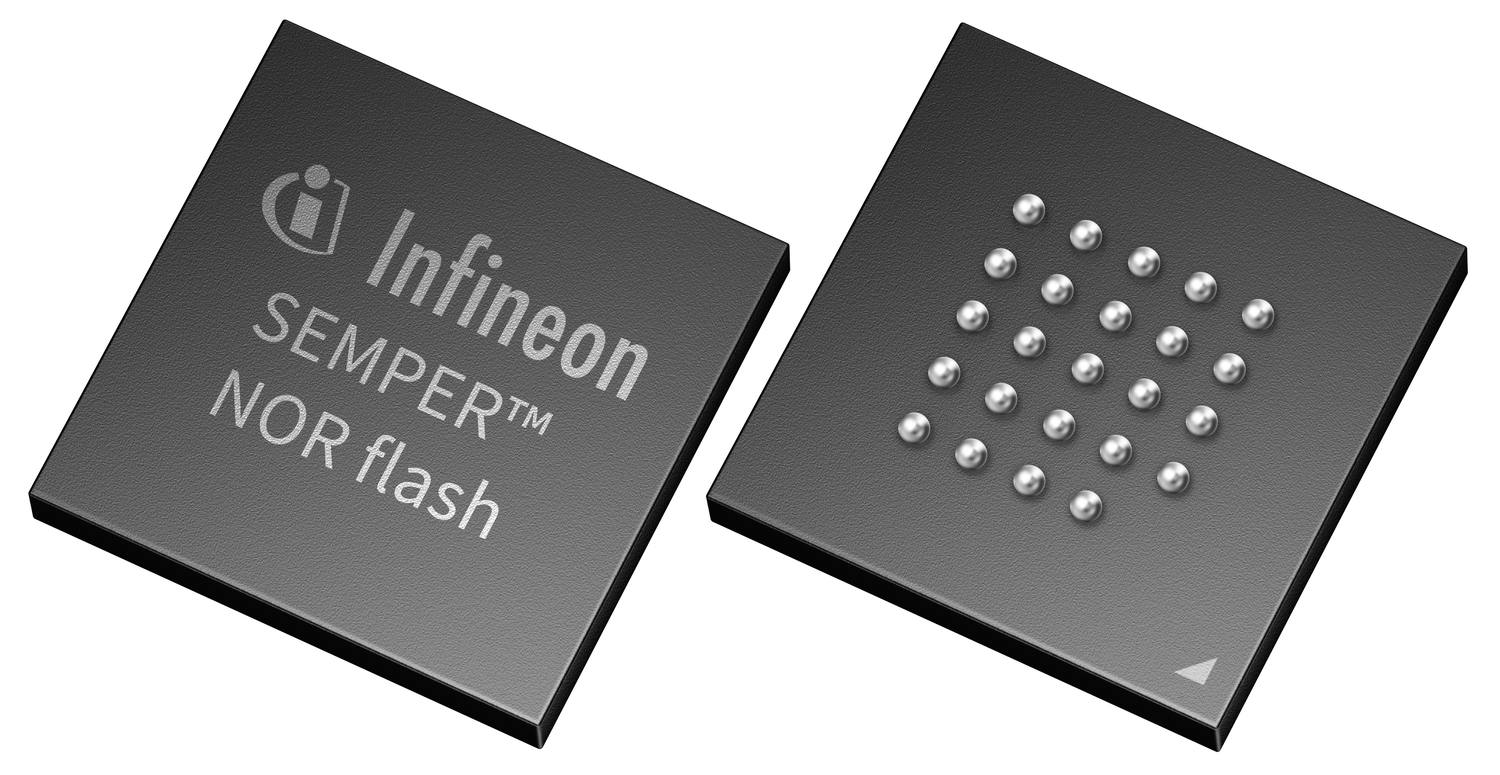
Infineon Technologies has agreed to sell its NOR Flash and F-RAM business to Winbond Electronics in a $1.12 billion all-cash transaction, separating a substantial embedded-memory portfolio from Infineon’s remaining specialty memory activities.
The agreement covers NOR Flash and ferroelectric RAM products supplied into automotive, industrial and infrastructure markets. The purchase price is stated on a cash and debt free basis, with completion targeted for the second half of 2027 subject to the required regulatory approvals.
Winbond plans to operate the acquired business as a standalone entity headquartered in Silicon Valley. The structure will place the transferred portfolio under a company already focused on semiconductor memory while retaining a distinct operating organisation for the acquired products.
NOR Flash remains widely used for boot code, firmware, configuration data and recovery images in embedded systems. Automotive and industrial products can remain in manufacture for considerably longer than consumer electronics, making qualification, product longevity and supply continuity central considerations around any ownership transition.
Those requirements are visible in Infineon’s current automotive business. In August, MediaTek qualified Infineon’s 512Mb QSPI NOR Flash for its Dimensity Auto Cockpit C-X1 platform, providing a validated external memory option for boot and firmware storage.
The Winbond transaction changes the eventual ownership of that wider memory activity rather than removing the underlying qualification requirements. Replacing a non-volatile memory device in a long-lived platform can involve firmware, timing, electrical, security and thermal work even when a nominally similar capacity remains available.
F-RAM addresses a different set of non-volatile storage requirements. Ferroelectric memory supports frequent writes and data retention without the erase cycles associated with conventional Flash, making it suitable for logging, metering and industrial applications where information may need to be updated repeatedly.
Combining Infineon’s NOR Flash and F-RAM portfolios with Winbond’s existing memory business will therefore expand the range of non-volatile technologies available from the Taiwanese supplier. The companies have not yet detailed future product roadmaps or manufacturing changes following completion.
Infineon will retain other specialist memory products, including SRAM, HYPERRAM, nvSRAM and SONOS-based radiation-hardened memory. The company says those technologies will continue to address automotive, industrial, infrastructure, aerospace and defence applications, including high-reliability memory for space systems.
The retained portfolio also shows that the transaction is not a complete exit from memory semiconductors. Instead, Infineon is narrowing its exposure while maintaining technologies aligned with particular high-reliability or system-level applications.
The move sits alongside a wider reshaping of Infineon’s portfolio. In August, the company agreed to acquire C2i Semiconductors, adding digital multiphase controller technology for AI data-centre power systems. The two transactions move capital in different directions, reducing exposure to some embedded memory products while adding capability around power management.
Winbond, meanwhile, gains products used in markets where lifecycle support can be as important as density or headline interface speed. Automotive and industrial programmes can run for many years after initial qualification, so the handling of existing product commitments will be closely tied to the eventual integration of the business.
The planned second-half 2027 completion gives both companies an extended period to obtain approval and separate the operation. Until the transaction closes, Infineon remains responsible for the NOR Flash and F-RAM business and its existing customer relationships.
Further detail on manufacturing arrangements, product longevity, support channels and roadmaps is likely to become more important as the closing date approaches. No individual device cancellations or availability changes were announced with the transaction.
The $1.12 billion deal will ultimately leave Infineon with a narrower specialty-memory portfolio while giving Winbond a larger position across embedded NOR Flash and F-RAM. The operational significance will emerge through product continuity and integration rather than from an immediate change to devices already designed into customer systems.