IN Brief:
- IQE now forecasts more than 40% revenue growth in 2026, up from guidance of over 30%.
- The company attributes the improvement partly to optical communications demand linked to data centres and AI infrastructure.
- Adjusted EBITDA is forecast in the mid-teens of millions of pounds; £41.5 million cash and no bank debt were reported.
IQE has increased its guidance for the year ending 31 December 2026 after optical communications opportunities linked to data centres and artificial intelligence infrastructure began contributing to revenue. The Cardiff-based compound semiconductor manufacturer now expects revenue growth of more than 40% year on year and adjusted earnings before interest, tax, depreciation and amortisation (EBITDA) in the mid-teens of millions of pounds. Both figures are forecasts, not reported full-year results.
The 17 November trading update raises an outlook that had already been upgraded in September, when the company expected revenue growth above 30% and adjusted EBITDA in the low-teens of millions of pounds. IQE attributed the further increase to momentum across its core segments and the conversion of identified optical communications opportunities into revenue. It did not provide a revised absolute revenue forecast or isolate the contribution from any individual data centre customer.
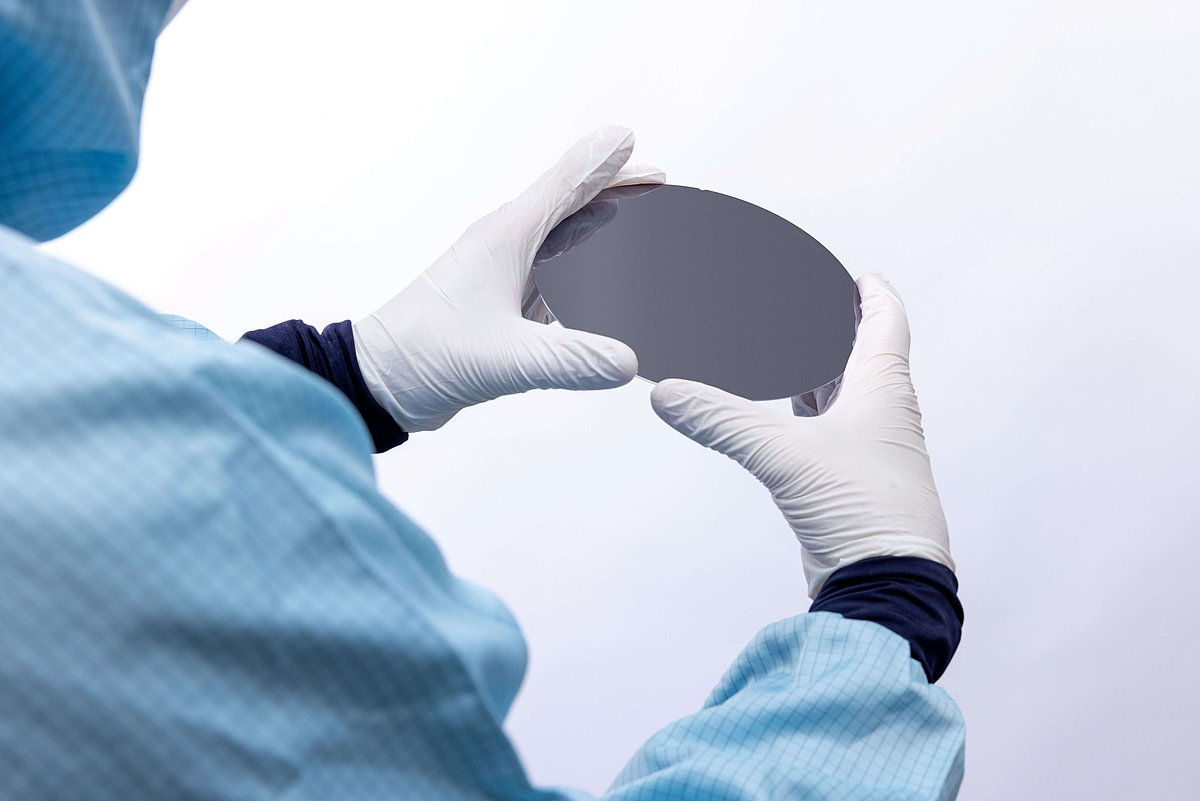
IQE manufactures compound semiconductor wafer products and engineered materials used by customers making electronic and optoelectronic devices. Such substrates and epitaxial structures sit upstream of finished components, and their characteristics influence what can subsequently be fabricated. In optoelectronics, control of deposited semiconductor layers helps determine the performance of light-emitting and light-detecting devices incorporated into optical communications systems.
The rise in demand for optical connectivity accompanies investment in high-density computing infrastructure, where data must be transferred between processors, accelerators, memory and network equipment. Electrical connections remain important, but optical systems are used where bandwidth, distance or power requirements favour the transmission of light. Those systems incorporate multiple components, including light sources, photodetectors, control electronics and optical assemblies. IQE supplies material inputs rather than claiming to manufacture every finished element of a data centre transceiver.
In this part of the supply chain, changes in the volumes and specifications requested by optical component manufacturers can affect epitaxial wafer production before the corresponding modules are deployed in a network. IQE says previously identified optical communications opportunities have converted into revenue, but it has not disclosed the order volumes, product mix or individual customers behind that change. The upgraded group forecast cannot therefore be treated as a separate measure of semiconductor content sold into AI systems.
The revised guidance follows September’s interim results, which described demand across core product segments and potential upside from optical communications supply agreements. The latest update indicates that part of that upside has been realised during the second half. It does not state that all anticipated orders have shipped or that the revenue profile will continue at the same rate beyond the current financial year.
IQE reported £41.5 million of cash and said it remained free of bank debt at the time of the update. Bank debt is a narrower measure than total liabilities, and the figure is a current cash balance rather than a forecast year-end position. The company operates processes that require specialised epitaxy equipment, quality controls and capacity planning, so cash and working capital remain relevant when assessing how higher volumes translate into manufacturing activity.
Customer demand alone does not determine the economics of a compound semiconductor supply business. Product mix, yields, manufacturing throughput and production costs influence how revenue translates into operating earnings. IQE’s adjusted EBITDA guidance has risen alongside its sales forecast, but the November update gives no new detailed breakdown of factory utilisation or profit contribution by segment. Those measures will need to be judged against the full-year results when available.
The company also described its order book coverage for 2027 as strong, without specifying the value or percentage of expected sales already covered. Full-year results will determine whether revenue growth exceeds the updated threshold and how much adjusted EBITDA is ultimately delivered. IQE’s 17 November statement establishes an improved expectation for 2026; it does not yet provide audited sales, segment margins or a detailed 2027 trading forecast.