IN Brief:
- AAA Technologies approved plans for four wholly owned subsidiaries on 7 November 2026, including a new Indian semiconductor design business.
- AAA Semiconductor Private Limited is proposed with share capital of up to ₹20 lakh and a remit spanning SoCs, edge AI processors, embedded systems, and testing.
- The original filing and subsequent company account say the entities are not yet incorporated or operational; no named chip design or foundry contract has been disclosed.
AAA Technologies has approved the proposed incorporation of an Indian semiconductor design business, extending its intended activities beyond information systems auditing and cybersecurity. The Mumbai-based company plans to establish AAA Semiconductor Private Limited to work on integrated circuits, systems on chips, edge AI processors, embedded systems, and associated research. Its board approved the proposal on 7 November 2026, before a company account of the expansion was circulated on 16 November.
The proposed subsidiary would have share capital of up to ₹20 lakh, equivalent to ₹2 million. The figure sets an upper limit for the initial share subscription described in the stock-exchange filing; it is not a disclosed research budget or evidence of money already spent on a semiconductor programme. The board also authorised the possibility of additional financial support in tranches, but has not fixed the amounts, timetable, or conditions of those future decisions.
The filing describes a broad technical remit: semiconductor research, circuit design, development, testing, validation, potential commercialisation, and semiconductor-related intellectual property. It also includes embedded hardware and software, image and video processing, and AI-enabled applications in industry and surveillance. Such a remit permits several possible development models, from designing components for outside fabrication to supplying engineering services, but the company has not disclosed which commercial route it intends to pursue.
AAA’s existing business is principally in information security, compliance, IT audit, and associated consulting, rather than a publicly established semiconductor product range. Santosh Pandey, whole-time director of AAA Technologies, linked the proposal to device security: “As AI processing shifts directly onto edge devices, cybersecurity must be engineered at the silicon level, not patched after a product ships.” The statement sets out the company’s ambition; it does not identify a security architecture or a processor already under development.
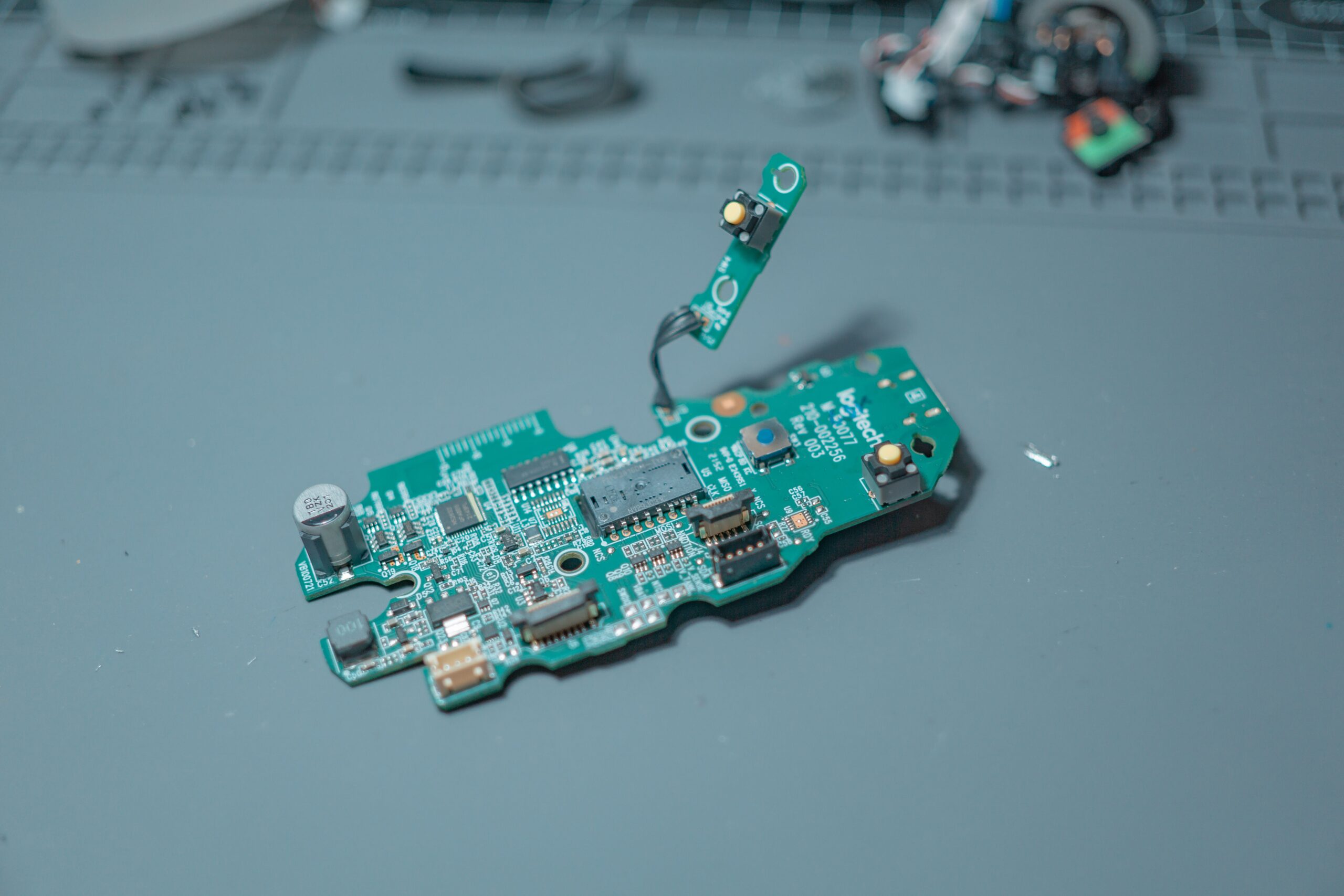
A system on a chip can combine general-purpose processor cores with memory, peripheral interfaces, and application-specific acceleration on one semiconductor device. Decisions about how these blocks share data and privileges affect the security boundary as well as performance and power consumption. A design intended to process sensitive data locally would need to consider its boot sequence, trusted code, memory isolation, and firmware update path before the register-transfer-level design and verification strategy are settled.
Silicon-supported security can include authenticated boot, device-unique identities, protected key storage, and cryptographic acceleration. Their value depends on implementation: debug ports, external memory, manufacturing provisioning, and update mechanisms can weaken protections provided by an otherwise capable silicon block. AAA has not announced that any of these features will appear in a product. They are established engineering choices that any proposed secure edge processor programme would need to evaluate against its intended threat model and production arrangements.
Local AI inference introduces additional constraints because compute throughput, memory traffic, and power consumption must all fit the deployment environment. A neural-processing accelerator may run arithmetic efficiently while still being limited by model storage, data movement, or sensor throughput. Quantisation, memory hierarchy, interface bandwidth, and software tool support influence the practical result. None of those parameters has yet been disclosed for a proposed AAA device, so there is no basis for comparing it with established embedded processors.
Image and video processing, specifically included in the intended remit, places sustained demands on input interfaces and memory bandwidth. An industrial vision system might need predictable frame processing and bounded latency alongside local storage or network functions. The architecture and validation programme would follow from an identified workload, not from the term edge AI alone. AAA has not named a camera interface, processor instruction set, accelerator, performance target, development board, or customer application.
A physical chip programme would require design and verification work before the first silicon could be manufactured. Logic design, functional verification, physical implementation, timing and power analysis, design-for-test preparation, and foundry sign-off are separate steps. Packaging, laboratory characterisation, firmware bring-up, and reliability testing follow fabrication. The 7 November filing reports none of these milestones as complete, and no wafer fabrication, assembly, test, or intellectual-property licensing partner has been identified.
The same board decision covers three proposed overseas subsidiaries intended for cybersecurity and IT assurance services. AAA Technologies Singapore Pte. Ltd. has proposed capital of up to SGD500,000; AAA Technologies Mauritius Limited, up to US$500,000; and AAA Technologies MENA FZCO, to be located in Dubai’s DMCC Free Zone, up to AED1 million. Their planned activities include information security audits, IT governance, consulting, software development, and digital forensics, distinct from the Indian company’s semiconductor remit.
None of the four subsidiaries had been incorporated or begun operations according to the board filing and the company’s subsequent account. The Mauritius entity would also need a Global Business Licence from the Financial Services Commission, while the other proposed businesses require their respective registrations and applicable approvals. Initial capital ceilings do not establish that the sums have been invested, and the wider financial-support approval does not set a committed aggregate expenditure.
The board decision establishes an intended new line of activity, but leaves the engineering programme to be defined. Incorporation of AAA Semiconductor Private Limited, subsequent funding approvals, named design personnel, customer work, or a verified silicon development milestone would provide evidence of implementation. For now, the company has a formal plan to enter semiconductor design, rather than an operating chip business with a qualified product.