IN Brief:
- Mendaera’s FDA-cleared Focalist is now commercially available with Butterfly’s Ultrasound-on-Chip platform.
- Handheld robotics, live ultrasound, and software guidance are combined for vascular access and other needle procedures.
- The launch is the first commercial product from Butterfly’s Embedded licensing and co-development programme.
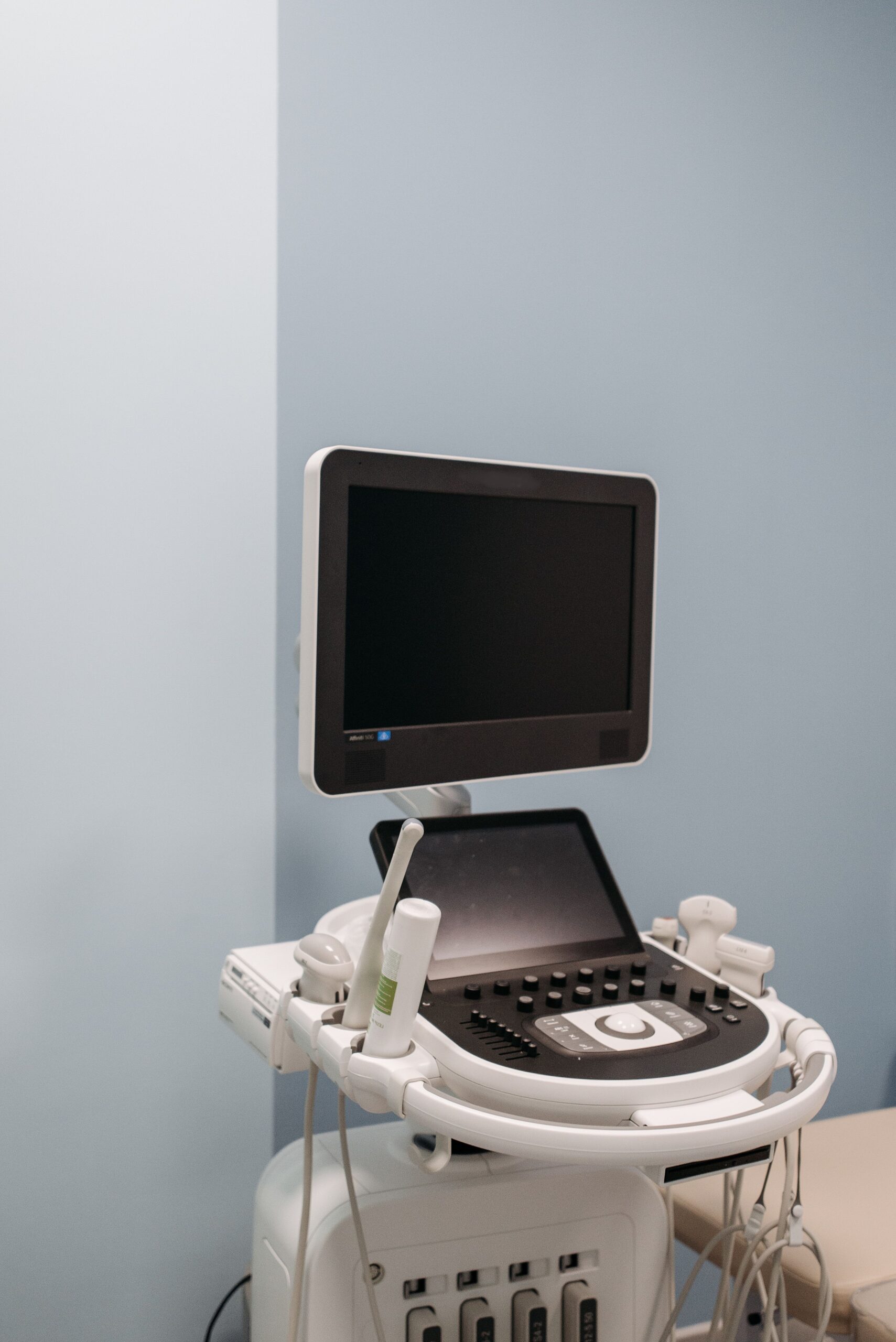
Mendaera has made its Focalist handheld robotic system commercially available with Butterfly Network Ultrasound-on-Chip technology, taking a semiconductor-based imaging platform into an FDA-cleared product for image-guided needle procedures. Focalist combines live ultrasound, handheld robotic control, and guidance software to help position common interventional devices relative to the transducer and the anatomy displayed on screen, with vascular access, regional nerve blocks, and organ access among its intended procedures.
The launch is the first commercial product to emerge from Butterfly Embedded, the company’s licensing and co-development programme for integrating its ultrasound platform into third-party systems. Butterfly’s architecture implements the transducer technology at semiconductor scale and relies heavily on software-defined imaging, allowing the sensing platform to be incorporated into another manufacturer’s equipment rather than remaining tied to a finished Butterfly scanner.
For Mendaera, the resulting engineering problem extends well beyond acquiring a usable ultrasound image because the robot has to maintain a reliable spatial relationship between the anatomy, transducer, instrument, and guidance software throughout the procedure. Imaging latency, calibration, physical positioning, and control therefore have to remain aligned; image quality alone does little to improve procedural guidance if the mechanical system and displayed anatomy drift out of registration.
Josh DeFonzo, co-founder and CEO of Mendaera, has described ultrasound as fundamental to how Focalist sees and guides intervention, reflecting the degree to which imaging is embedded in the control architecture rather than supplied as a separate diagnostic function. The companies first announced their collaboration in 2023, when Mendaera selected Butterfly’s semiconductor platform, and commercial availability now moves that work from component integration into a regulated product expected to perform consistently outside a development environment.
Focalist’s current FDA clearance covers guidance for placement of common interventional devices by positioning them relative to an ultrasound transducer and its corresponding image, with the system intended for adult and paediatric patients using selected compatible FDA-cleared probes. That definition is narrower than the autonomous intervention concepts often associated with medical robotics, and it leaves the clinician within the procedure rather than presenting the current product as a self-directing system.
Butterfly and Mendaera have discussed future AI-assisted image interpretation and robotic functions, but those prospective capabilities sit beyond the present commercial milestone, which already presents substantial electronics and systems-integration challenges. Imaging data has to remain synchronised with mechanical movement, guidance software has to run with predictable timing, and the complete device has to meet medical electrical, software, usability, and regulatory requirements while incorporating technology supplied by two independent engineering organisations.
The commercial product also broadens the role of semiconductor ultrasound beyond standalone scanners, something Butterfly is pursuing through other applications as well. Its separate licensing work around ultrasound-based neural interfaces uses the same broad platform in a very different medical setting, showing how the value of the semiconductor architecture increasingly lies in being adapted to sensing systems rather than being defined by one finished device format.
Supplying an embedded imaging platform into another manufacturer’s regulated product imposes different obligations from selling a complete scanner directly, since interfaces, documentation, software changes, component revisions, and performance validation all have to survive somebody else’s development and regulatory process. Mendaera, in turn, has to ensure that the imaging subsystem remains predictable when combined with robotics, guidance algorithms, mechanical tolerances, and the clinical workflow around the finished device.
No production volumes or commercial pricing have been disclosed, leaving deployment rather than shipment forecasts as the more useful measure of the programme. If Focalist can preserve imaging consistency and positional accuracy through routine clinical use, Butterfly will have demonstrated that its semiconductor ultrasound technology can function as a reusable embedded sensing platform inside another company’s medical system, a considerably more demanding test than the partnership announcement that began the project three years ago.