IN Brief:
- Microchip has introduced 3.3kV SiC power modules in a 62mm HV-D3 package.
- The modules target solid-state transformers, AI data centres, megawatt charging, rail, and medium-voltage drives.
- Higher-voltage SiC devices can reduce series device count and support more compact converter architectures.
Microchip has launched 3.3kV silicon carbide power modules for medium-voltage conversion, targeting solid-state transformers, AI hyperscale data centres, megawatt charging, rail systems, medium-voltage drives, and industrial power equipment.
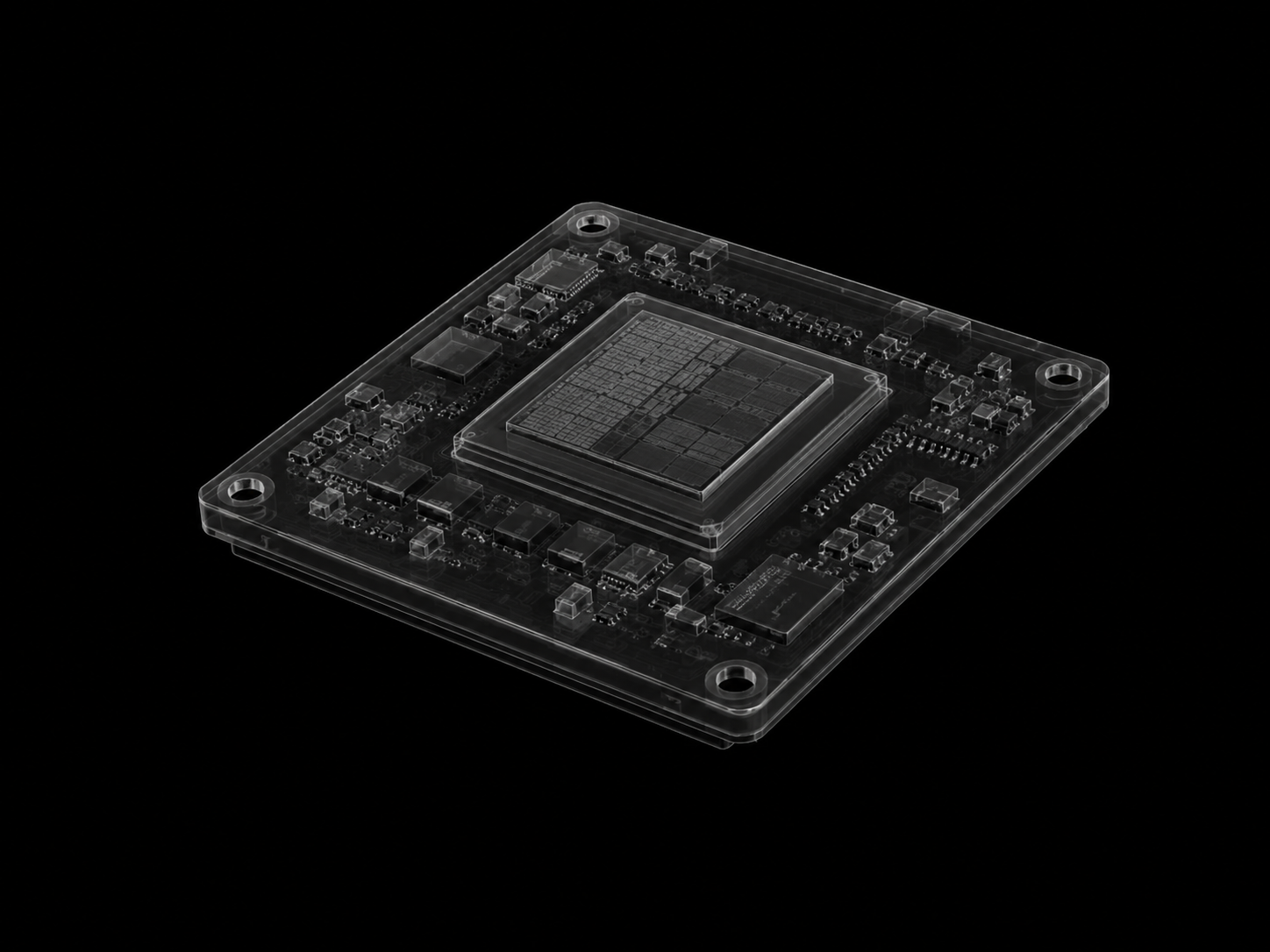
The HV-D3 mSiC modules integrate 3.3kV SiC MOSFETs and Schottky diodes in an industry-standard 62mm package. The family covers applications in the 100A to 300A range and is offered in half-bridge and common-source configurations, with options that include anti-parallel Schottky diodes.
The modules are built with 6kV isolation, CTI 600-rated materials, extended creepage distances, and silicon nitride substrates. Those features are central to medium-voltage conversion, where insulation coordination, thermal cycling, and long-term reliability can carry as much weight as switching speed.
Solid-state transformers are a central target application. In AI data centres, they offer a route to moving power from the medium-voltage grid closer to the rack with fewer conversion stages, improving efficiency and reducing the size and losses associated with conventional low-frequency transformer-based architectures.
Higher-voltage SiC modules can also reduce the number of series-connected devices needed when interfacing with 13.8kV or 34.5kV grids. Fewer series devices can simplify gate-drive coordination, voltage balancing, protection, and mechanical integration, although the complete system still requires careful control of isolation, fault handling, and electromagnetic behaviour.
The launch arrives in a market where 3.3kV silicon carbide is gathering momentum. Wolfspeed’s 3.3kV SiC modules point to similar demand in high-voltage power conversion, while Infineon’s AI data-centre and robotics power activity shows how power infrastructure is becoming a competitive focus for major semiconductor suppliers.
AI infrastructure is forcing power engineers to rethink distribution and conversion at a scale closer to industrial plant design than conventional server-room planning. As rack power rises, losses in each conversion stage become more expensive, thermal management becomes more constrained, and traditional distribution architectures face tougher efficiency limits.
Medium-voltage power electronics can reduce some of those losses, but higher-voltage distribution also changes protection strategies, insulation systems, service practices, and regulatory requirements. Component suppliers must therefore provide modules that support practical system qualification, not only high device ratings.
Beyond data centres, the same class of module is relevant to megawatt charging, rail traction, heavy transport, and industrial drives. These applications share a need for high efficiency, reduced system volume, and robust operation under demanding electrical and thermal conditions.
Microchip’s 3.3kV modules add another production option for designers building medium-voltage converters. As silicon carbide moves higher in voltage, its role is expanding from efficient switching device to architectural building block for electrified infrastructure.