IN Brief:
- Nokia is deploying Cadence AuraStack on the Millennium M2000 supercomputer, using NVIDIA Blackwell GPUs.
- Cadence reports fivefold acceleration in selected engineering workflows; no independent benchmark specification was provided.
- The platform coordinates design tasks with simulation of electrical, thermal and electromagnetic behaviour while keeping engineering IP on premises.
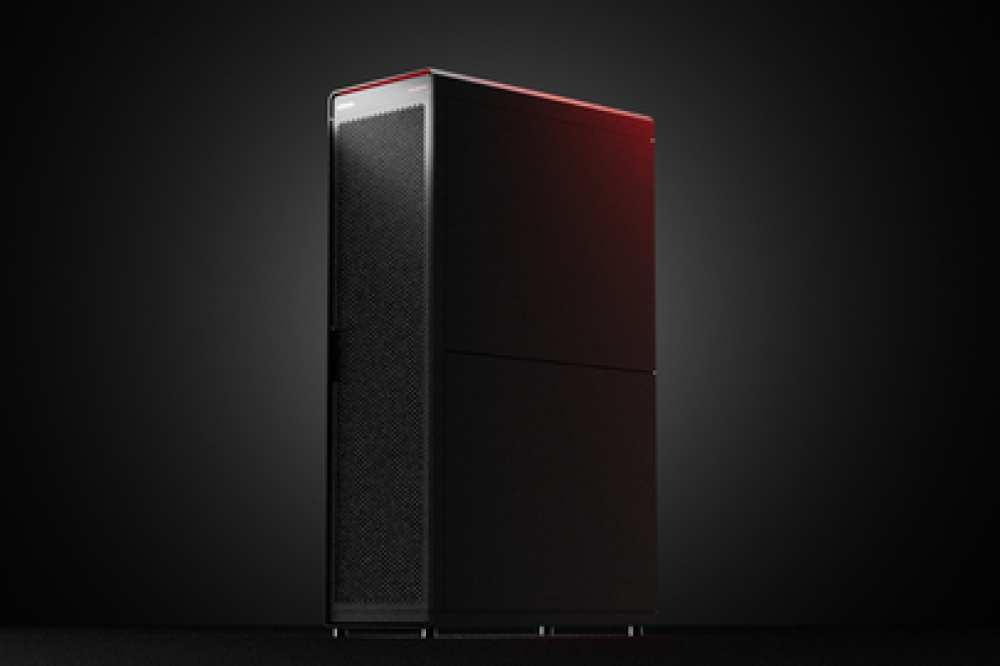
Nokia is deploying Cadence AuraStack AI agents on a Millennium M2000 supercomputer to accelerate electronic system development. The arrangement combines automated design tasks with power integrity, thermal, electromagnetic and circuit simulation using computing hardware based on NVIDIA Blackwell GPUs. Cadence reports a fivefold acceleration in selected Nokia design and analysis workflows, rather than a measured improvement across the company’s entire engineering operation.
The system is configured for deployment on Nokia’s own premises, allowing engineering data and intellectual property to remain within its controlled computing environment. Cadence describes a modular architecture capable of supporting several engineering workloads in parallel and adding computing capacity as demand increases. The announcement does not identify the location of the installation or specify particular Nokia products that have entered production through the new workflow.
AuraStack AI Super Agent coordinates tasks including schematic capture, component placement, routing and exploration of competing design objectives. Those activities cannot be judged in isolation when an electronic system combines densely packed components, high-speed connections and substantial electrical power. Changes to placement or interconnection geometry can affect signal behaviour, heat distribution and the integrity of the power supply network, requiring further engineering analysis.
Cadence’s software connects that coordination layer with specialist simulation and optimisation tools. The platform uses NVIDIA CUDA-X accelerated libraries, including the cuDSS sparse solver, and incorporates NVIDIA Omniverse technology. Cadence lists Celsius Thermal Solver, Clarity 3D Solver, Quantus FS and EMX parasitic extractors, Spectre X circuit simulation and Voltus IC power integrity analysis among the available applications on the Millennium M2000 system.
Each software tool addresses a different part of the engineering model. Thermal analysis examines how heat moves through components and structures, while electromagnetic and parasitic extraction tools help characterise the electrical effects of physical interconnections. Circuit simulation and power integrity analysis can then be used to assess whether the proposed arrangement behaves within its intended operating limits. The accuracy of these results depends on the assumptions, input data and models used for the particular design.
The AI agent does not replace those numerical solvers with a language model prediction. Instead, it can help organise a sequence of design changes, launch analysis and use the reported results to inform another iteration. This makes it possible to explore more alternatives without manually coordinating every step, provided the workflow correctly preserves engineering constraints and records which conditions each result applies to.
Automated exploration has practical limits where simulations are computationally demanding or require specialist review. A proposed layout may satisfy one objective yet increase losses or create thermal concentrations elsewhere. Human engineers must still decide which trade-offs are acceptable and determine whether the simulation evidence is sufficient for the design stage. Cadence’s announcement does not claim that agent-generated designs are automatically validated for manufacture or compliance.
The Millennium M2000 provides the accelerated computing foundation for this work. NVIDIA Blackwell GPUs execute compatible numerical workloads and support the AI models used by AuraStack, which Cadence says are built with NVIDIA Nemotron open models. Using shared computing resources can make repeated analysis more practical, although the performance achieved will vary with model size, available hardware and the balance between simulation and other engineering tasks.
Cadence and Nokia say the combined system can compress selected design and analysis cycles from months to days. The fivefold improvement is a reported result for key workflows, with no detailed public comparison covering all tasks, software configurations or hardware utilisation. It should not be applied indiscriminately to a specific solver, a complete product programme or the throughput of the Nokia design organisation.
The platform is also intended to protect proprietary engineering information by keeping the computing stack on premises. That arrangement addresses where the design data are processed; it does not establish that every operational or cybersecurity risk is removed. Access control, model governance and software integration remain part of operating such a system within an organisation’s normal engineering environment.
Cadence introduced AuraStack earlier in 2026 for printed circuit board and advanced packaging design. Nokia’s announcement supplies a named industrial deployment of the agent on the Millennium M2000 platform, linking design coordination to established computational tools. Further evidence of benefit will depend on reproducible results for clearly specified workloads and on whether the accelerated design iterations translate into qualified products.