IN Brief:
- Global LED video display shipments increased 3.3% year on year in the second quarter of 2026, while revenue declined 0.2%.
- Manufacturers have implemented several rounds of product price adjustments, ranging from 3% to 30% cumulatively in cases identified by Omdia.
- Omdia forecasts an 11.6% compound annual increase in global LED video display revenue between 2026 and 2030.
Omdia has identified rising electronic component costs and changing product requirements as pressures on global LED video display manufacturing. Its latest industry research shows that shipments increased during the second quarter of 2026 while revenue declined, with manufacturers facing higher costs for LED chips, driver integrated circuits, printed circuit boards and power supplies.
The research group’s LED Video Display Market Tracker recorded a 3.3% year-on-year increase in shipments during the quarter, accompanied by a 0.2% decline in revenue. The figures indicate that growth in shipment volume has not produced a corresponding increase in industry revenue, while suppliers and display manufacturers have been adjusting their pricing arrangements.
According to Omdia, component suppliers have introduced successive price increases since late 2025. Several display manufacturers have subsequently implemented three or four rounds of increases to finished product prices, with cumulative adjustments ranging from 3% to 30% in the cases identified. The figures describe reported changes across different products and suppliers rather than a uniform increase in every LED component price.
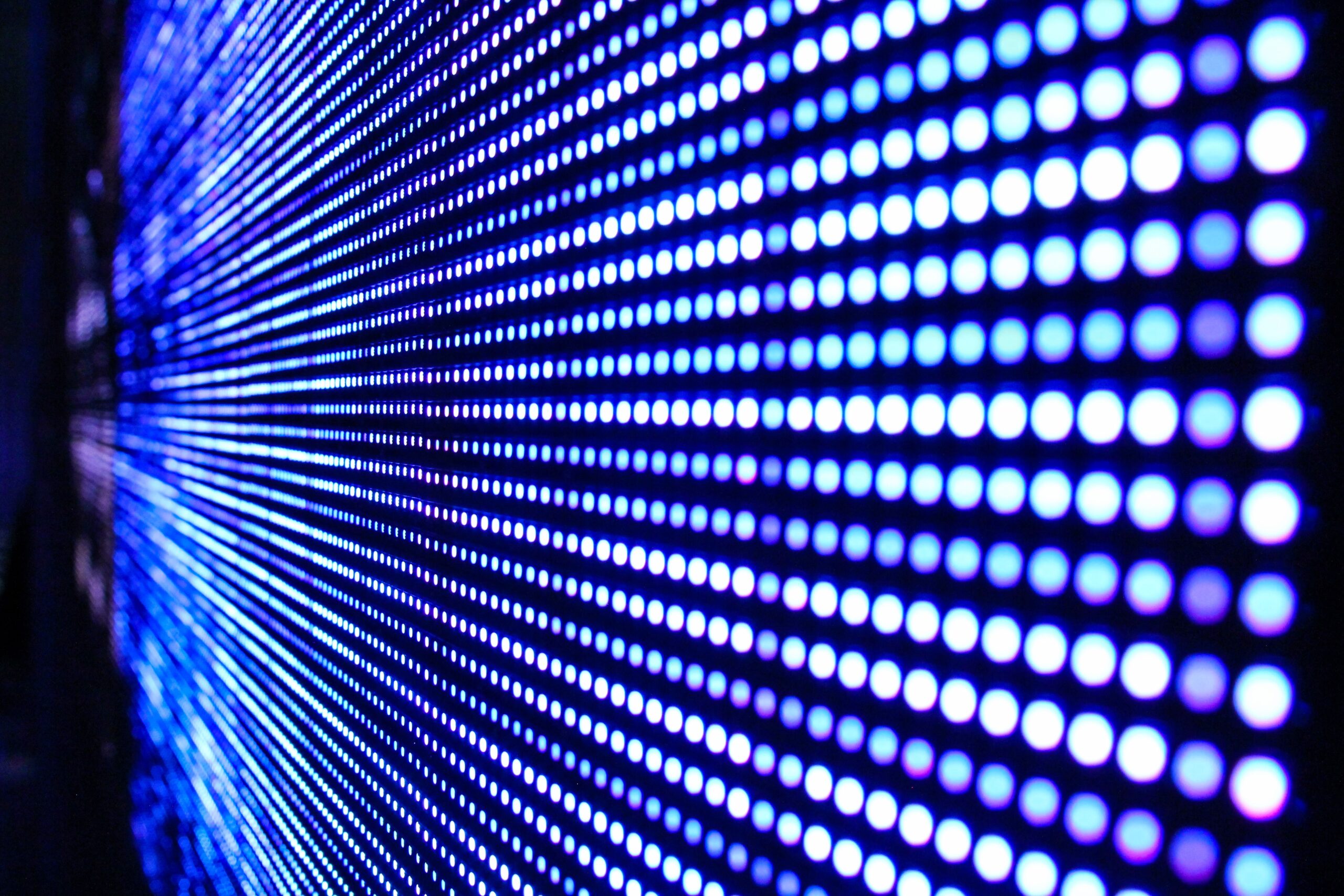
An LED video display consists of many light-emitting devices arranged into modules, with semiconductor drivers regulating the light output required to form an image. Printed circuit boards carry electrical connections between those devices and their supporting circuitry, while power supplies provide the regulated electrical energy needed by the display system.
The design of a display therefore determines its component requirements. Pixel pitch, the centre-to-centre spacing between adjacent pixels, influences how densely light-emitting devices must be arranged. Reducing that spacing increases the number of emitters and associated electrical connections within a given display area, placing greater demands on component placement, circuit routing and manufacturing inspection.
Driver ICs must deliver appropriate electrical signals to the LED devices while maintaining consistent image reproduction across the display. Their design influences factors including current control, refresh behaviour and the management of different brightness levels. The selected architecture also affects the amount of control circuitry, data distribution and electrical interconnection required across the modules.
Printed circuit board manufacturing becomes more demanding as the available space between components decreases. Fine-pitch assemblies can require tighter placement tolerances and denser interconnections, while soldering defects or damaged connections may affect the operation of individual pixels. Rework and inspection arrangements must accommodate both the dimensions of the components and the accessibility of their electrical connections.
Chip-on-board packaging offers a different arrangement from assemblies using individually packaged LEDs. Semiconductor dies can be attached and interconnected directly on a substrate, reducing some of the physical spacing associated with conventional packages. The approach can support fine-pitch designs, but its manufacturing performance depends on die placement, interconnection quality, encapsulation and defect management.
Micro LED technology introduces further requirements for handling and transferring small emitting devices. A manufacturing process must place large numbers of dies accurately while maintaining acceptable optical and electrical consistency. Defects become more difficult to manage as emitter dimensions and pixel spacing decrease, making process yield an important factor in the cost of finished displays.
Higher-resolution products also place demands on their control systems. Large displays may contain many modules that must reproduce image information consistently, requiring coordinated data distribution and calibration. Differences in brightness or colour response between modules can become visible across an assembled installation, particularly where individual panels are intended to form a continuous image.
Power conversion and thermal management are part of the same engineering problem. Electrical losses occur in LED devices, drivers, conductors and power conversion equipment, generating heat that must be removed from the system. Operating temperature can influence semiconductor performance, reliability and the consistency of emitted light, while cooling arrangements affect the mechanical design and energy consumption of the installation.
Omdia identifies improved energy efficiency, reliability and more sophisticated product designs as areas receiving greater attention from manufacturers. Such developments can support higher-value products, although improved electrical performance must be assessed against the complete system rather than inferred from a change in an individual component.
Demand is also developing across applications that require more complex display assemblies. Omdia highlights sports venues, cultural attractions, virtual production, public spaces and immersive installations as markets for higher-specification LED systems. Curved and spherical structures, for example, require mechanical arrangements and calibration processes that differ from those used in conventional flat displays.
Multi-sided LED CAVE systems create surrounding visual environments through several coordinated display surfaces. Their operation depends on consistent image timing, geometry and alignment between the panels. The complexity of these installations can increase the engineering and manufacturing content of a display project, although commercial adoption depends on application requirements and available investment.
Regional manufacturing arrangements are changing alongside product development. Omdia identifies Daktronics’ investment in a manufacturing facility at Saltillo, Mexico, as an example of production being developed closer to regional markets. The company is seeking greater flexibility in managing manufacturing costs, tariffs and customer requirements.
Leyard is also expanding its manufacturing presence in Saudi Arabia following an agreement reached in 2024 with Saudi Engineer Holding Group Establish. Production was originally scheduled to begin during the second quarter of 2026, but that timetable should not be presented as confirmation that every planned manufacturing activity has entered commercial operation.
Regional production can alter transport arrangements, inventory requirements and exposure to trade measures. Establishing a factory near a target market does not necessarily localise its entire supply chain, however, because semiconductor devices, specialist materials and production equipment may continue to be sourced internationally.
Omdia expects further opportunities across Asia and Oceania, Latin America, the Middle East, Africa and Eastern Europe. Infrastructure programmes, commercial investment and changing applications are among the factors supporting its outlook, although the timing and scale of demand remain dependent on regional economic and operating conditions.
The research group forecasts an 11.6% compound annual growth rate in global LED video display revenue between 2026 and 2030. Within that projection, corporate signage revenue is expected to grow at 14.7% annually, while public space applications are forecast to achieve 10.0% growth.
These projections concern future market revenue, not confirmed orders or semiconductor manufacturing capacity. The extent to which they are realised will depend partly on whether higher-value products can offset weak demand in traditional applications and the cost increases affecting display components.
Further quarterly results will establish whether manufacturers are recovering higher input costs through pricing and product mix, or whether increased component costs continue to constrain margins. Changes in LED packaging, driver electronics, power conversion and regional production will influence the balance between manufacturing expense and the performance offered by finished displays.