IN Brief:
- Saxony Trade & Invest and the Arizona Commerce Authority expanded industry contacts during SEMICON West on 13–15 October 2026.
- Cooperation covers semiconductor manufacturing, equipment and materials suppliers, research, workforce development and supporting infrastructure.
- Arizona's reported $314 billion investment pipeline and Dresden's major fabrication projects are existing regional developments, not investments agreed through the October meetings.
Saxony Trade & Invest and the Arizona Commerce Authority have expanded contacts between their semiconductor industries following meetings at SEMICON West in San Francisco. The organisations are seeking closer relationships between chip manufacturers, equipment suppliers, research institutions and workforce development organisations in two regions undergoing substantial investment in semiconductor production.
The initiative was announced by Saxony’s economic development agency on 18 October, following SEMICON West on 13–15 October. It builds on discussions held during Silicon Saxony Days in June, rather than establishing a new formal bilateral investment programme. Neither organisation has disclosed a binding manufacturing agreement, jointly funded research project or new semiconductor facility resulting from the latest meetings.
Representatives from both regions participated in a Transatlantic Executive Dinner ahead of the exhibition, bringing together businesses, research organisations and public institutions. Discussions covered industrial developments in the two regions and possible connections between companies operating at different points in the semiconductor supply chain.
Arizona has attracted substantial chipmaking investment in recent years. Saxony Trade & Invest reports that the US state has secured more than 70 semiconductor expansion and new-site projects since 2020, representing an announced investment value exceeding $314 billion. The total includes activity involving fabrication, equipment, materials, advanced packaging and research. It is a regional investment figure, not funding committed to the Saxony–Arizona cooperation initiative.
Dresden is undergoing a comparable period of industrial expansion. Infineon opened its Smart Power Fab in July 2026 as part of a €5 billion investment, while GlobalFoundries is expanding its existing manufacturing operations through a further €1.1 billion programme. European Semiconductor Manufacturing Company, the joint venture involving TSMC, Bosch, Infineon and NXP, is also developing a semiconductor factory in Dresden with investment of approximately €10 billion.
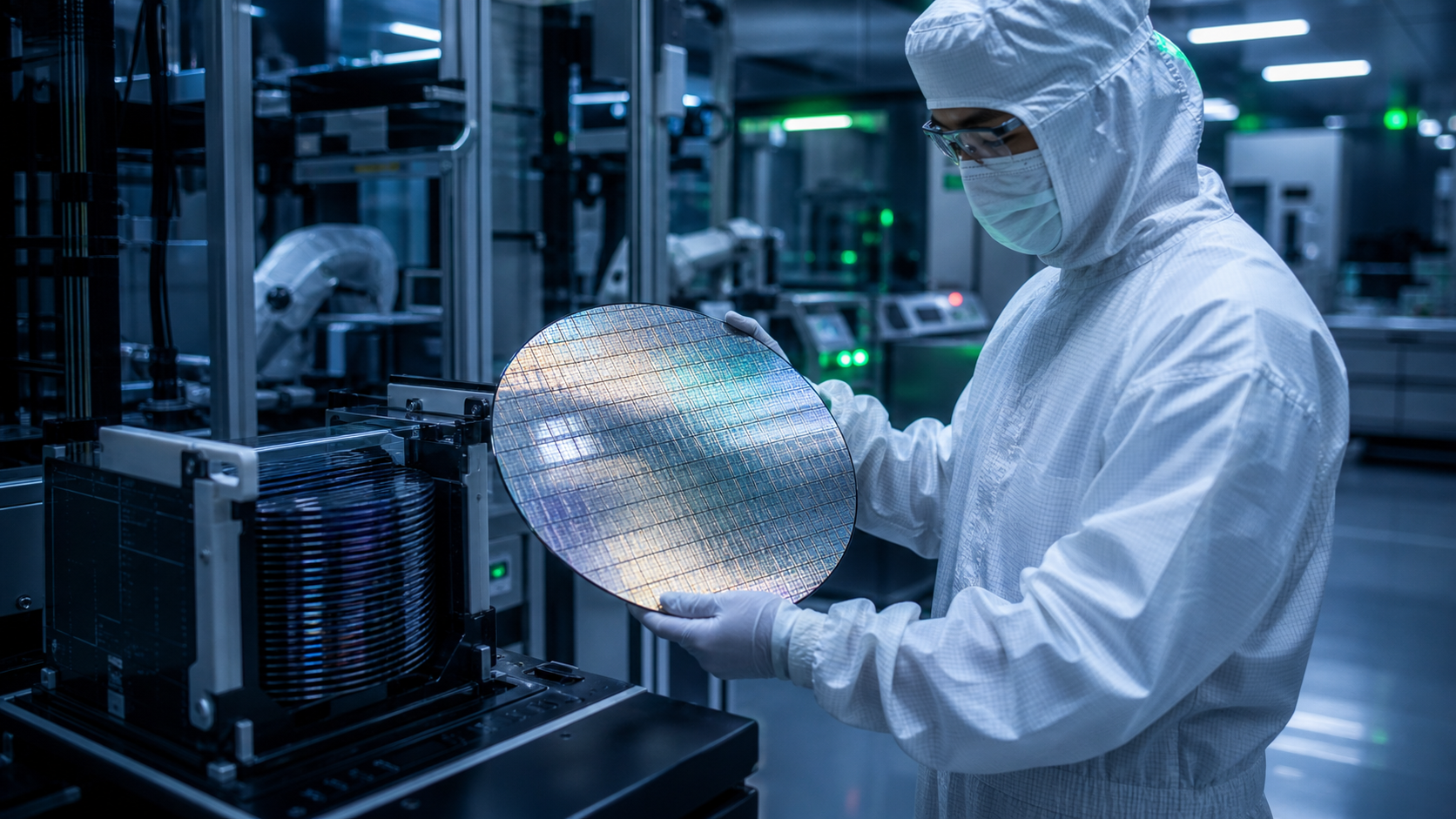
These developments increase demand for the equipment and materials required to manufacture semiconductor devices. Wafer fabrication involves successive operations including deposition, lithography, etching, cleaning, thermal treatment and inspection. Each process depends on controlled interactions between equipment, materials and the semiconductor structures being manufactured.
Deposition systems, for example, must produce films with the required composition, thickness and uniformity, while lithography equipment transfers patterns that define semiconductor features. Etching removes selected material without damaging structures that must remain intact. Variations in any of these operations can affect electrical performance and manufacturing yield, making process consistency central to supplier selection.
Equipment manufacturers rely on their own networks of precision engineering suppliers. Pumps, valves, gas delivery components, vacuum systems, sensors, temperature controllers and specialist materials must operate within tightly specified conditions. Semiconductor manufacturing expansion consequently creates opportunities for companies supplying equipment subsystems as well as businesses producing complete fabrication tools.
Entering a new semiconductor supply chain nevertheless involves extensive qualification. A component suitable for one deposition process may not meet the contamination, temperature or chemical compatibility requirements of another. Manufacturers must establish how materials behave under operating conditions and whether changes introduce unacceptable variation into the production process.
Qualification can involve testing across multiple manufacturing runs, inspection of finished wafers and analysis of equipment reliability. Process recipes are often developed around particular equipment configurations, so replacing a supplier may require additional validation even where the proposed component appears mechanically or electrically compatible.
Closer relationships between Saxony and Arizona could help companies identify prospective customers and technical partners earlier in that process. Saxon equipment suppliers may gain additional contacts within the expanding Arizona market, while businesses in Arizona could develop connections with European manufacturers and research organisations. The October meetings do not guarantee that any particular supplier will secure a contract or pass the qualification procedures required by a semiconductor customer.
Advanced packaging provides another potential area for cooperation. Modern semiconductor assemblies increasingly combine several dies, substrates and interconnect technologies within a single package. Manufacturing those assemblies can require precision placement, bonding, thermal management, inspection and electrical testing alongside the processes used in conventional wafer fabrication.
The requirements vary according to the architecture being manufactured. High-density interconnections must maintain electrical performance and mechanical reliability, while thermal expansion and heat dissipation can affect the integrity of packages containing several semiconductor devices. Suppliers developing equipment for these processes face different constraints from those encountered in front-end transistor fabrication.
Manufacturing investment is also placing pressure on specialist engineering skills. New factories require process engineers, equipment technicians, maintenance personnel, automation specialists and staff trained in production quality systems. The skills needed to establish a fabrication line differ in some respects from those required to maintain mature production, particularly as equipment moves from installation and qualification into routine operation.
Research institutions contribute through semiconductor process development, metrology, materials analysis and manufacturing technology. Collaboration between industrial and academic organisations can support development work, but transferring a laboratory process into production requires repeatability, suitable equipment and evidence that it can deliver acceptable yields under commercial manufacturing conditions.
Saxony Trade & Invest says it wants to improve access for Saxon businesses to the US semiconductor market while helping Arizona-based companies establish stronger relationships with European industry. The Arizona Commerce Authority has similarly identified connections between manufacturers, research organisations and skilled personnel as objectives of the initiative.
Phoenix is scheduled to become the permanent host city for SEMICON West from 2027, bringing a major industry exhibition directly into Arizona’s semiconductor manufacturing region. Further progress in the Saxony–Arizona relationship will depend on identifiable supplier agreements, research collaborations, workforce arrangements or investments emerging from the contacts established during October.