IN Brief:
- Pragmatic used IOTE Shenzhen to introduce its Chinese identity and demonstrate its flexible NFC portfolio.
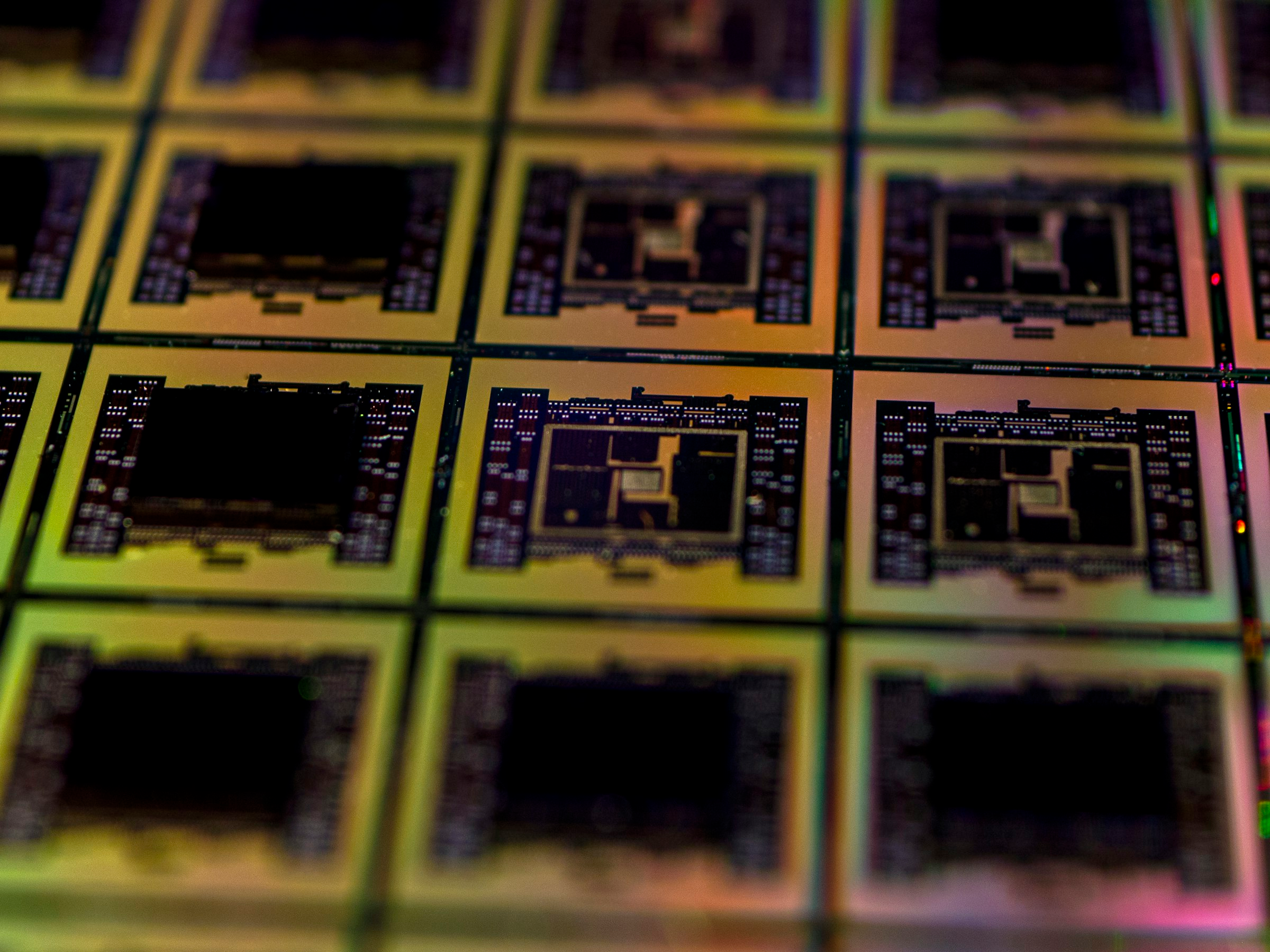
- Its 600nm IGZO thin-film process produces approximately 37µm-thick FlexICs on 300mm wafer carriers.
- Further Durham manufacturing capacity is being installed as the company seeks additional capital to scale production.
Pragmatic Semiconductor is increasing its commercial focus on China as the UK flexible-chip manufacturer expands both its NFC product activity and production capability at Pragmatic Park in County Durham.
The company introduced the Chinese identity Pragmatic 湃 during IOTE Shenzhen, where it demonstrated flexible integrated circuits alongside customer and partner applications. The event ran from 26 to 28 August and centred Pragmatic’s current commercial offer on NFC Connect and NFC Protect devices for applications including product authentication, traceability, smart packaging, and tamper detection.
NFC Connect PR1301 is a passive high-frequency RFID device operating through a 13.56MHz interface. It uses the NFC Forum Type 5 standard and ISO/IEC 15693 protocol, with the chip intended to sit inside paper or plastic inlays and operate from the energy supplied by an NFC reader rather than a battery. Pragmatic specifies a device thickness of about 37µm, allowing the semiconductor to be integrated into labels and curved packaging with considerably less mechanical bulk than a conventional packaged silicon IC.
NFC Protect PR1311 extends the same general approach into tamper detection. The device is intended to combine a digital product identity with evidence that packaging has been opened or interfered with, allowing status to be checked using an NFC-capable phone. The product entered an early-access programme earlier this summer through assembly partners rather than arriving at IOTE as an entirely new component.
The more distinctive part of Pragmatic’s proposition remains the manufacturing technology beneath those NFC products. Its third-generation FlexIC platform uses a 600nm indium gallium zinc oxide metal-oxide thin-film transistor process rather than conventional crystalline silicon CMOS. The process is implemented on 300mm wafer carriers using semiconductor fabrication equipment including photolithography, while the finished flexible devices have a minimum specified bend radius of 5mm.
The platform supports standard ASIC design flows and includes compatibility with Cadence and Siemens electronic-design-automation tools. Pragmatic specifies four metal routing layers, a dedicated resistor layer, metal-insulator-metal capacitors, and standard-cell libraries intended to make the technology usable through familiar digital and mixed-signal design methods rather than requiring every customer to develop a bespoke flexible-electronics flow.
The trade-off is deliberate. Pragmatic does not position FlexICs as replacements for high-performance silicon processors. Their value lies instead in simple connect, sense, and compute functions where semiconductor cost, physical flexibility, thickness, manufacturing time, or deployment volume matter more than raw logic density.
That puts the company into a different part of the semiconductor market from the leading-edge foundries dominating discussions around AI processors. An NFC identifier fitted to a bottle, pharmaceutical pack, clothing label, or industrial component only needs modest computing capability, but conventional packaged silicon can be economically and mechanically excessive when multiplied across very high item volumes.
Manufacturing scale is therefore central to Pragmatic’s model. Pragmatic Park is the UK’s first 300mm semiconductor fabrication site and has space for as many as nine production lines, each designed for annual output measured in billions of FlexICs. The company says its lower-temperature process also uses fewer fabrication steps than conventional silicon manufacturing, shortening production cycles while reducing energy, water, and process-chemical requirements.
Reporting published at the end of the Shenzhen event indicates that a further high-volume line has now been installed at the Durham operation, with the additional capacity intended to support continuing scale-up. Pragmatic is simultaneously seeking new equity investment after its previous large funding round, while existing investors have provided bridge financing during the expansion programme.
The capital requirement is a reminder that low-cost chips still need expensive industrial infrastructure when production is measured in billions. Pragmatic must qualify new lines, improve yield, support assembly partners, and win applications in sufficient volume to keep that equipment loaded. Establishing a Chinese-facing commercial identity is one route towards that demand rather than an engineering milestone by itself.
China gives the company access to a deep RFID, packaging, electronics, and manufacturing ecosystem, but it also exposes the FlexIC proposition to customers accustomed to aggressive component pricing and rapid product qualification. The technical case will consequently be tested less by exhibition demonstrations than by whether 37µm flexible devices can move through inlay assembly and product-conversion processes consistently at commercial scale.
The company’s latest China push therefore connects two parts of the same problem: finding high-volume applications for flexible semiconductor technology while building enough UK production capacity to supply them. The Shenzhen activity has established the commercial route; the harder measure will be wafer output, qualified applications, and repeat orders from the customers that follow it.