IN Brief:
- RIGOLETTO is a €65.2 million European automotive RISC-V programme running from July 2025 to June 2028.
- Comcores is contributing scalable IEEE 802.1AE MACsec and a RISC-V-based hardware root-of-trust implementation.
- The security IP targets future domain and zonal controllers as vehicle electronics consolidate functions into fewer computing nodes.
Comcores is contributing scalable MACsec and a RISC-V-based hardware root of trust to RIGOLETTO, the European programme developing processor and computing-platform technology for future software-defined vehicles.
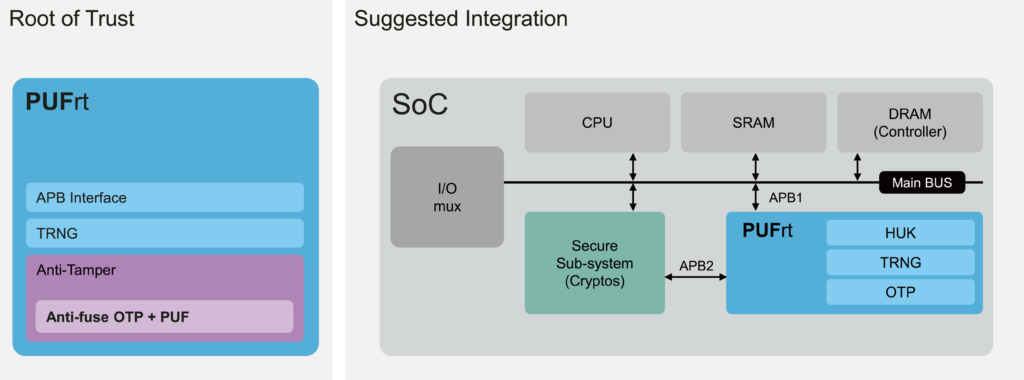
The Danish IP supplier is providing IEEE 802.1AE MACsec technology designed to scale from 10Mbit/s automotive end nodes to multi-gigabit zonal and central-compute links. Its second contribution is a hardware security module built around a secure RISC-V processor, isolated memories, and dedicated cryptographic engines.
The hardware root of trust is intended to support secure boot, protected key generation and management, secure storage, authenticated code execution, and accelerated cryptographic operations. Those functions sit beneath increasingly consolidated vehicle software architectures, where more applications are being moved from numerous dedicated electronic control units into fewer domain and zonal computers.
RIGOLETTO runs from July 2025 to June 2028 and has a total project cost of approximately €65.16 million, including €18.74 million of EU funding. Infineon Technologies coordinates the 64-participant project, which includes semiconductor companies, automotive suppliers, research organisations, and universities.
The programme is developing a next-generation automotive hardware platform around the open RISC-V instruction-set architecture. Its technical scope includes processor cores, accelerators, interconnects, memory hierarchies, and peripheral subsystems spanning different performance classes for domain and zonal control units.
That consolidation changes the security model inside the vehicle. A traditional ECU may control a relatively narrow function, while a zonal or domain controller can sit between numerous sensors, actuators, gateways, and software workloads. Compromise of one higher-level controller can therefore expose a larger part of the vehicle architecture.
MACsec addresses the network side by authenticating and encrypting Ethernet frames between connected nodes. Automotive implementations have to cover markedly different hardware classes, however, from small edge controllers carrying modest amounts of traffic to central computers handling multiple high-bandwidth links.
Comcores is using configurability to avoid applying the same implementation overhead to every node. Cipher capacity, channel count, memory, throughput, and logic footprint can be matched more closely to the target device, preserving security functions without burdening a low-cost end node with resources intended for a central computer.
The hardware root of trust operates at a different layer. Sensitive code, key material, and cryptographic operations can be separated from the main application environment, establishing a controlled starting point for boot and software authentication before higher-level functions are allowed to run.
Using RISC-V inside that security block also keeps the implementation aligned with the architecture being developed across the wider programme. Open instruction-set licensing can reduce dependence on a single proprietary processor architecture, but it does not remove the qualification work surrounding functional safety, cybersecurity, timing behaviour, software compatibility, manufacturing test, and long automotive product lifecycles.
Those constraints become sharper as centralisation increases. More computing performance raises memory, power, and thermal demands, while a broader software stack increases the number of interfaces requiring protection. Security logic has to fit within those limits without creating another bottleneck in network throughput or processor operation.
RIGOLETTO’s three-year programme gives the partners until June 2028 to turn the various processor, accelerator, networking, and security blocks into a coherent automotive hardware platform. The practical test will be integration: scalable IP has little value if individual blocks cannot be verified, qualified, and supported together across the different performance classes required inside a production vehicle.