IN Brief:
- SEMI reported a 13.1% year-on-year rise in Q1 2026 silicon wafer shipments.
- AI demand is supporting advanced logic, memory, and power-management devices.
- The figures point to a semiconductor recovery shaped by uneven demand across AI, industrial, PC, and smartphone markets.
SEMI has reported a 13.1% year-on-year rise in worldwide silicon wafer shipments for the first quarter of 2026, with AI-related demand supporting advanced logic, memory, and power-management devices.
Shipments reached 3,275 million square inches in Q1 2026, up from 2,896 million square inches in the same quarter of 2025. Sequentially, shipments declined 4.7% from 3,437 million square inches in the fourth quarter of 2025, in line with normal seasonal patterns.
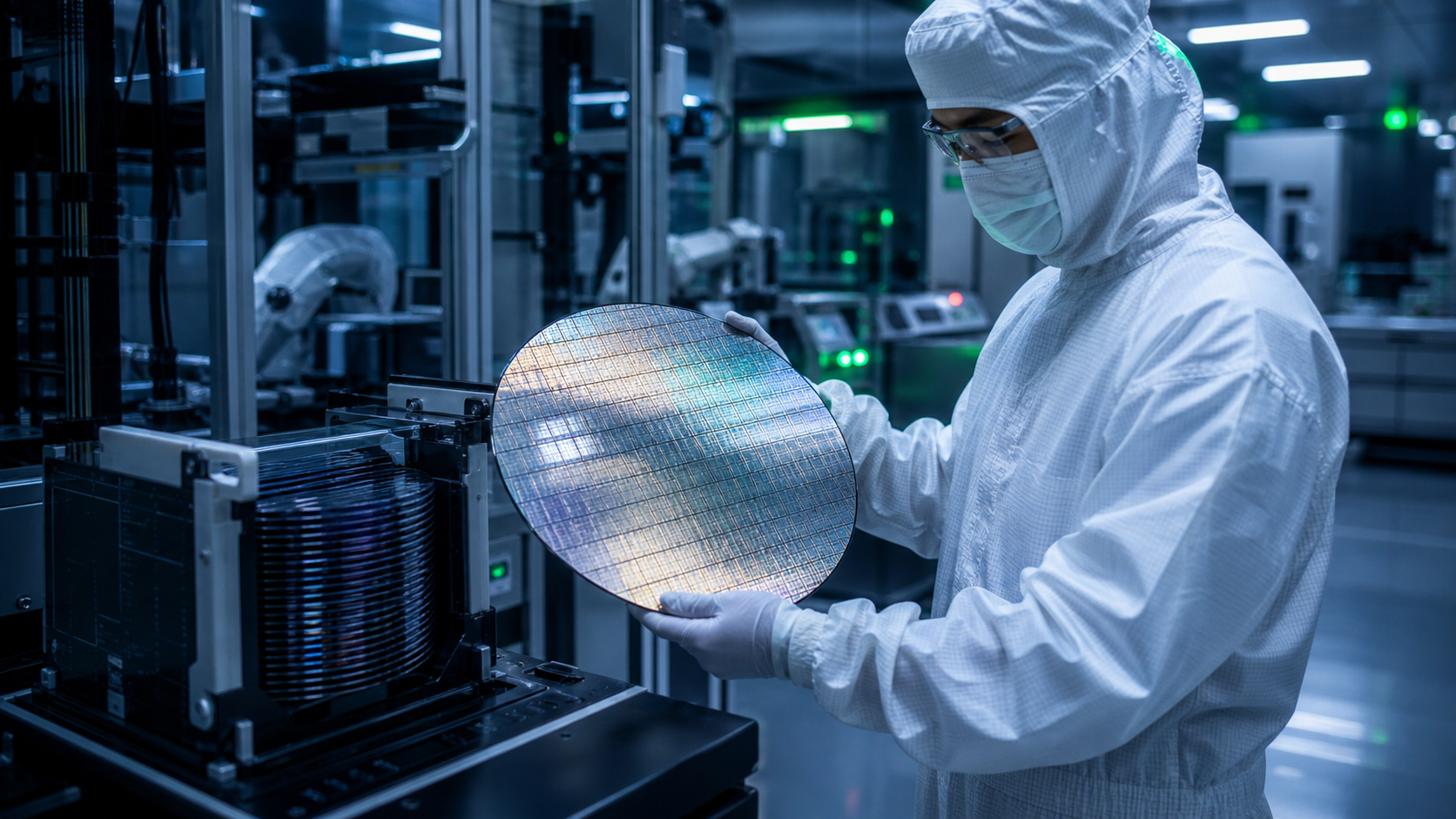
The figures were published by SEMI’s Silicon Manufacturers Group, which tracks quarterly wafer industry trends. Silicon wafers remain the base material for the majority of semiconductor devices, with diameters extending up to 300mm for advanced production. They underpin logic, memory, analogue, power, sensor, and mixed-signal manufacturing.
The year-on-year increase follows continued investment in AI infrastructure. Accelerator processors, high-bandwidth memory, networking silicon, optical interfaces, and power-management devices all require wafer starts across multiple technology classes. AI demand now reaches beyond the most advanced logic nodes into the supporting silicon required to build dense compute platforms.
That wider demand profile affects component availability across the electronics supply chain. High-bandwidth memory has placed pressure on parts of the memory market. Power-management ICs, silicon photonics, retimers, high-speed interfaces, and advanced substrates are taking on greater strategic weight as rack-level systems grow in density and power consumption.
Industrial semiconductor demand is also improving, although recovery remains uneven. Smartphone and PC demand weighed on parts of the first quarter, while industrial, AI, and infrastructure markets provided a stronger base. Component availability is increasingly shaped by competing end markets rather than a single semiconductor cycle.
Design and procurement planning now sits closer to wafer-capacity decisions made around AI and high-performance computing. A product may not contain an advanced AI processor, but it can still rely on the same fabs, wafer starts, packaging equipment, materials, or memory supply chains affected by the expansion of AI infrastructure.
The shipment data points to a recovery with clear imbalances. Capacity tied to AI, memory, and advanced computing is being pulled forward, while mature industrial and consumer segments recover at different speeds. Those differences can produce localised supply tightness even when headline semiconductor conditions appear more stable.
For electronics manufacturers, second-source planning, lifecycle visibility, and early procurement input remain central to keeping programmes on schedule. Wafer supply is only one layer of the chain, but it sets the production base for almost every component class used in modern electronic systems.