
IN Brief:
- Stackpole’s RMWA series is an automotive-grade thick-film chip resistor range.
- Wide terminations improve heat spreading into the PCB copper area.
- The parts target automotive electronics, industrial controls, and power supplies.
Stackpole Electronics has introduced the RMWA series of automotive-grade wide-termination thick-film chip resistors for high power density and long-term reliability in harsh operating environments.
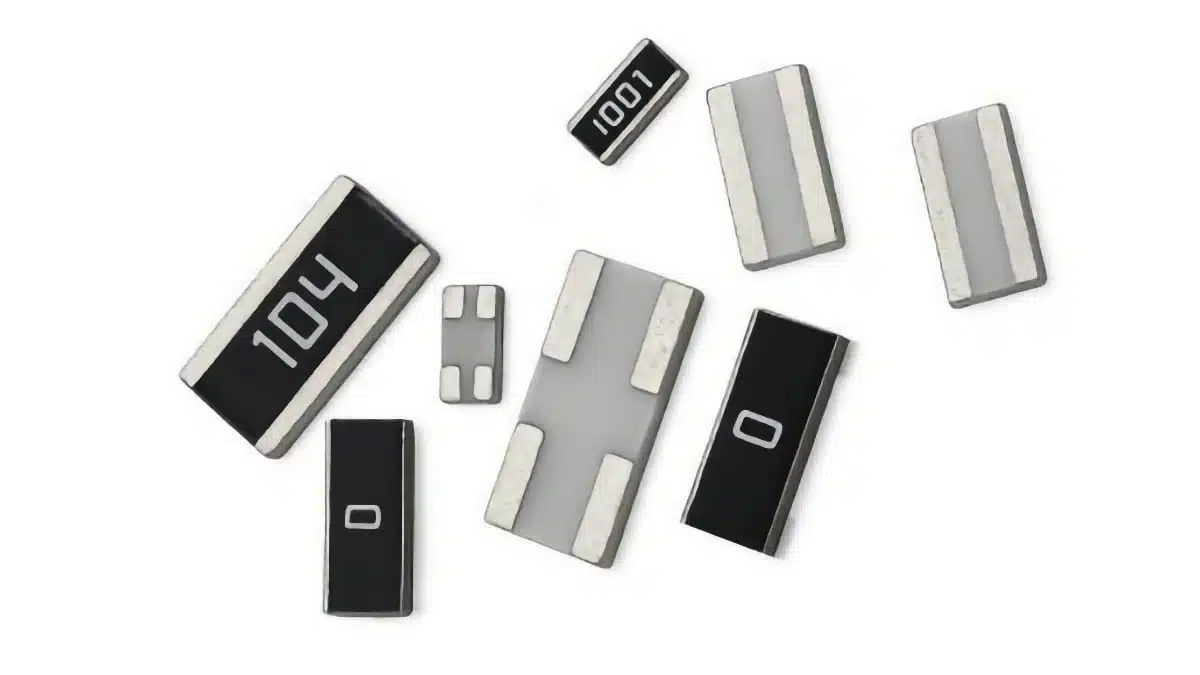
The series uses long-side terminations to increase the contact area between the resistor and the PCB, improving heat transfer into the copper area and reducing localised temperature rise. That construction supports designs where conventional chip resistor layouts can become thermally constrained, particularly in compact power and control electronics.
Stackpole is targeting automotive electronics, industrial controls, and high-reliability power supplies. Selected high-power versions, including the RMWA1225-HP, are rated up to 3 W, giving designers a route to reduce the number of parallel components or move to smaller case sizes while maintaining the required dissipation capability.
The RMWA series is qualified to AEC-Q200, with stability checks covering load life, temperature cycling, biased humidity, and short-time overload performance. For safety-related control units and harsh-environment assemblies, resistor drift, solder-joint stress, and local board heating can affect system reliability over the full service life.
Wide-termination resistors are becoming more useful as control electronics move into denser packages and higher-temperature locations. Electrified vehicles require compact sensing, gate-drive, battery-management, and power-conversion circuitry, while each of those functions increases pressure on the passive components surrounding the main semiconductors.
Industrial electronics are moving in the same direction. Motor drives, distributed I/O modules, automation controllers, power supplies, and protection circuits are being packed into smaller enclosures, often with limited airflow. In those assemblies, heat generated by passive components can become a board-level design constraint, especially where resistors are used for current sensing, snubbing, discharge, or voltage division near power stages.
The RMWA series combines thermal spreading, mechanical robustness, and automotive-grade qualification in a component type that is often treated as routine. Long-side terminations help move heat away from the resistive element, while the broader solder interface can improve resistance to board flex and thermal cycling.
As more electronic control moves closer to motors, batteries, converters, and actuators, passive components are being exposed to the same environmental stresses as the power devices they support. The chip resistor is increasingly part of the thermal and mechanical design, not a late-stage commodity selection.
For engineers working on compact automotive and industrial hardware, that makes derating, board copper design, and package selection more closely linked. A resistor with greater thermal contact and qualified stability can reduce the need for conservative layout decisions elsewhere in the circuit, particularly where space has already been consumed by isolation, sensing, and power-stage requirements.

