IN Brief:
- Each Pickering 65-217 plug-in provides a 64×8 one-pole matrix for the 65-200 LXI chassis.
- Six modules can form a 384×8 matrix inside a 19-inch, 2U enclosure.
- Front access, relay cycle counting, BIRST, and optional eBIRST support expansion and preventative maintenance.
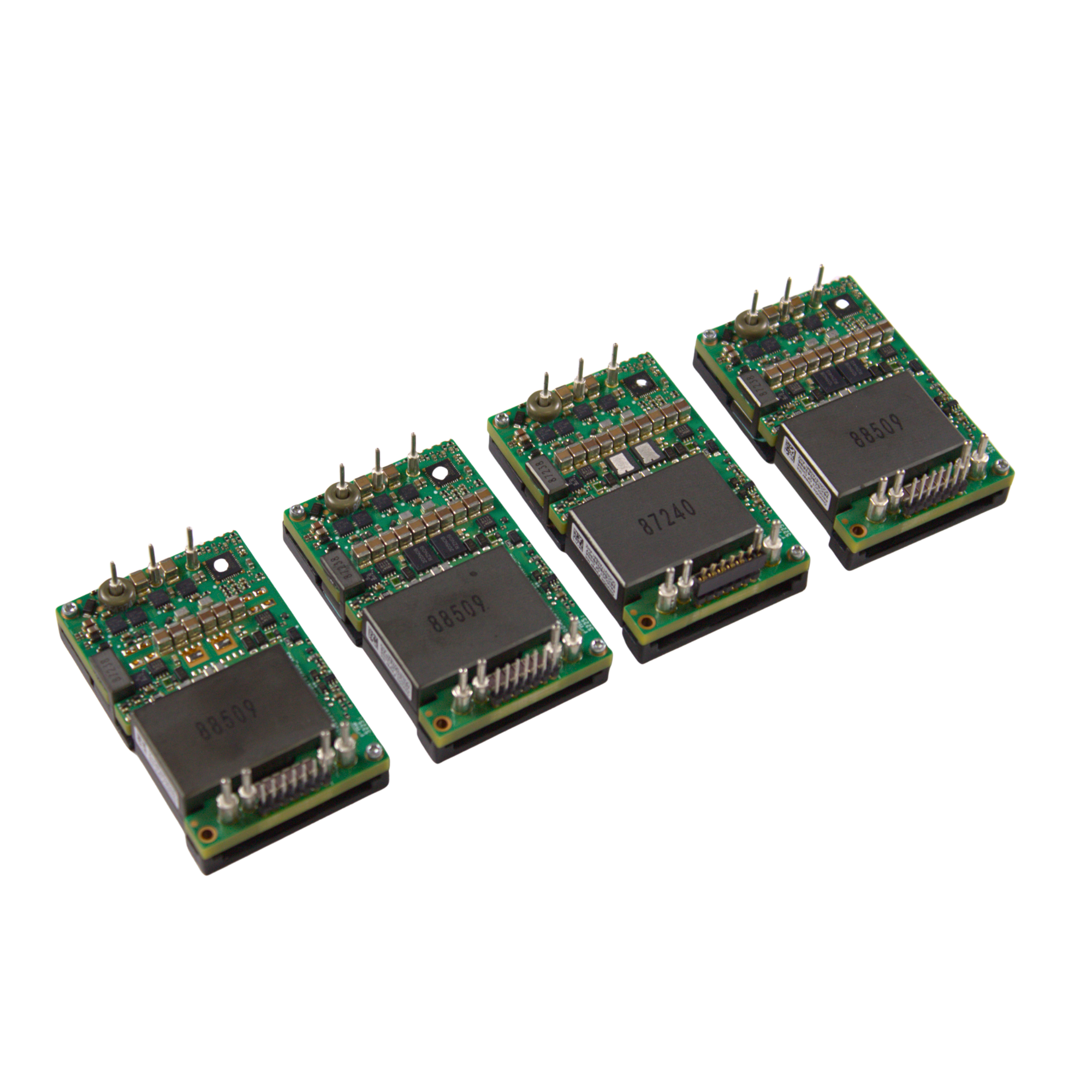
Pickering Interfaces has introduced the 65-217, a modular 2A Ethernet-controlled LXI switching matrix designed to let automated test systems add capacity without replacing the complete switching chassis. Each front-loading plug-in provides a 64×8 one-pole matrix, with six modules combining into a maximum 384×8 configuration inside the company’s 19-inch, 2U 65-200 chassis.
Modules can be installed or replaced from the front of the rack, avoiding the need to remove the chassis when a system is expanded or serviced. Pickering offers versions with and without front-panel Y-axis access, while switched Y-axis loop-through connections allow matrices to extend across more than one chassis.
The control software handles path identification offsets between the modules so a populated chassis can operate as one matrix rather than a collection of independent 64×8 elements. A dual Y-axis analogue bus also allows external instruments to access different sections of the matrix or divide the system into two independent matrices.
That modularity addresses a recurring problem in automated test. Systems are often designed around the number of devices, channels, and instruments required at programme launch, but channel counts can increase as additional product variants or measurements are introduced. Replacing a complete matrix can then require new rack hardware, cabling, software configuration, and regression testing even when the original switching technology remains adequate.
The 65-217 provides a more incremental route by adding switching capacity inside an existing LXI platform. Switched Y-axis points can disconnect unused portions of the matrix to help preserve bandwidth, while cross-chassis expansion gives systems a route beyond the six-module capacity of one enclosure.
Pickering has also designed the hardware to support RF crosstalk measurements on unterminated signal paths. The company identifies automotive and aerospace testing among the applications where that capability can be required. Measuring crosstalk under unterminated conditions can expose coupling between signal paths without the loading effect introduced by a conventional termination, although the relevance of the method depends on the equipment and test specification.
The matrix switches up to 300VDC or 250VAC and 2A, with maximum switched power of 60W or 62.5VA. Those ratings allow the platform to cover more than low-level instrumentation signals, but engineers still have to consider contact life, switching frequency, load type, isolation, and the effect of the matrix on the measurement path when configuring an automated test system.
Maintenance functions are integrated into the module. Relay cycle counting records switching activity so heavily used routes can be identified before failures begin affecting test availability. Built-In Relay Self-Test, or BIRST, can identify failed or worn relays, while Pickering’s optional eBIRST equipment extends diagnostic coverage. Spare relays mounted on each plug-in are intended to shorten repair work once a device reaches the end of its service life.
Switching elements can influence precision measurements well before a contact fails completely. Pickering has separately published thermal EMF measurements for dense relay switching, illustrating how relay construction and coil heating can become part of the error budget when signal levels reach the microvolt range. A larger switching matrix therefore has to be assessed as part of the measurement chain rather than treated as an electrically invisible routing layer.
The engineering trade-off becomes more pronounced as channel density rises. More relays reduce rack space per signal path, but they also increase the concentration of contacts, coils, traces, connectors, and heat within the same volume. Signal integrity, crosstalk, resistance, and thermal behaviour can consequently change as a system expands towards the full 384×8 configuration.
Pickering backs the 65-217 with its standard three-year warranty and long-term product support. The useful measure for test-system designers will be whether the modular approach maintains electrical performance as modules and chassis are added over the life of a programme. The architecture gives them a defined expansion route without rebuilding the switching system every time channel requirements grow.