IN Brief:
- Five coaxial NTS models offer upper frequency limits from 18GHz to 67GHz; a separate waveguide version covers 110–170GHz.
- The passive thermoelectric design is intended for RF power reference and transfer measurements in suitable calibration systems.
- Rohde & Schwarz positions NTS as an alternative to ageing thermistor mounts, not a universal replacement for every standard.
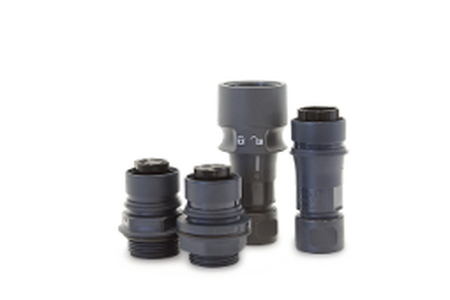
Rohde & Schwarz has introduced the NTS family of thermoelectric RF power reference sensors for metrology laboratories and industrial calibration systems. The products include coaxial models covering frequencies from DC to a series of upper limits between 18GHz and 67GHz, and a waveguide reference covering 110GHz to 170GHz. The company positions them as a modern option for laboratories seeking alternatives to established thermistor mount standards.
RF power measurement depends on a traceability chain linking an instrument’s reading to recognised references through calibrated procedures and stated uncertainties. A transfer standard allows a reference value to be conveyed between systems or laboratories. The quality of the result depends not only on the sensor but also on the calibration arrangement, environmental conditions, connectors and measurement method. Rohde & Schwarz claims that the NTS design can be used at a high metrological level in appropriate systems.
Thermistor mounts have long been used in RF power calibration, including arrangements based on microcalorimeters. These instruments compare absorbed RF energy with an electrical substitution measurement, helping establish a traceable reference. Ageing hardware and limited replacement availability create practical concerns for laboratories that maintain older standards. The NTS family is intended to provide another route for particular measurement ranges and procedures, rather than eliminate the need for all existing thermistor references.
The new sensors use a passive thermoelectric detector and analogue output. Rohde & Schwarz says their design is suitable for use as a primary standard in appropriate microcalorimeter configurations or as a transfer reference in other calibrated measurement chains. Whether either role is valid for a particular laboratory depends on the complete procedure, established correction factors and uncertainty analysis. The company’s suitability statement does not itself certify every measurement arrangement.
Connector and frequency selection differ across the family. The coaxial units have specified upper limits of 18GHz, 33GHz, 40GHz, 50GHz and 67GHz, with connector geometries selected for their operating ranges. A separate waveguide design, identified as the NTS170TWG, operates in the 110GHz to 170GHz band. No single model spans the complete range from DC to 170GHz, and the announcement does not establish continuous coverage of the intervening frequencies using one sensor.
Rohde & Schwarz attributes low noise, rapid settling and comparatively flat frequency response to the detector construction. These characteristics could help reduce the number of calibration readings or the time required to establish stable measurements, but the benefits will vary with power level, frequency and laboratory procedure. The uncertainty of a completed calibration cannot be inferred from an individual detector characteristic without considering all other error contributions.
Mismatch between the source and reference sensor is one such contribution. RF energy can be reflected at a connector or waveguide interface, so the power delivered to a sensor may differ from the incident power. Repeatability of the connection, cable stability and the reflection characteristics of the devices must be evaluated. Thermal gradients and ambient changes can also affect measurements that rely on very small voltage outputs.
The product family is designed for integration into existing microcalorimeter systems and for connection to sensitive DC measurement equipment. Rohde & Schwarz also offers model-specific variants to support correction-factor determination, together with identification features intended to assist automated calibration workflows. Such details can simplify procedures only when the receiving system supports the required interfaces and the calibration method has been validated.
High-frequency calibration demand is increasing as component work extends into millimetre-wave communications, radar and materials research. At these frequencies, obtaining repeatable connections and robust uncertainty estimates becomes more difficult, particularly when waveguide components are used. The NTS170TWG extends the manufacturer’s reference offering into the D-band, but traceability still requires suitable supporting standards and procedures at the relevant frequencies.
The NTS introduction provides laboratories with a new choice of reference hardware for defined ranges. Rohde & Schwarz’s performance and traceability descriptions remain manufacturer claims until demonstrated within each laboratory’s accredited measurement process and stated uncertainty budget.