IN Brief:
- LG Electronics has added 12, 14 and 16 kW models to its R290 Monobloc S range, supplementing the earlier 5, 7 and 9 kW units.
- A separate standard R290 Monobloc range with indoor hydraulic equipment offers capacities from 5 to 16 kW and cascade control for up to eight units.
- The portfolio includes a 6.8-inch touchscreen interface and manufacturer-stated water temperatures of up to 75°C, subject to model-specific operating conditions.
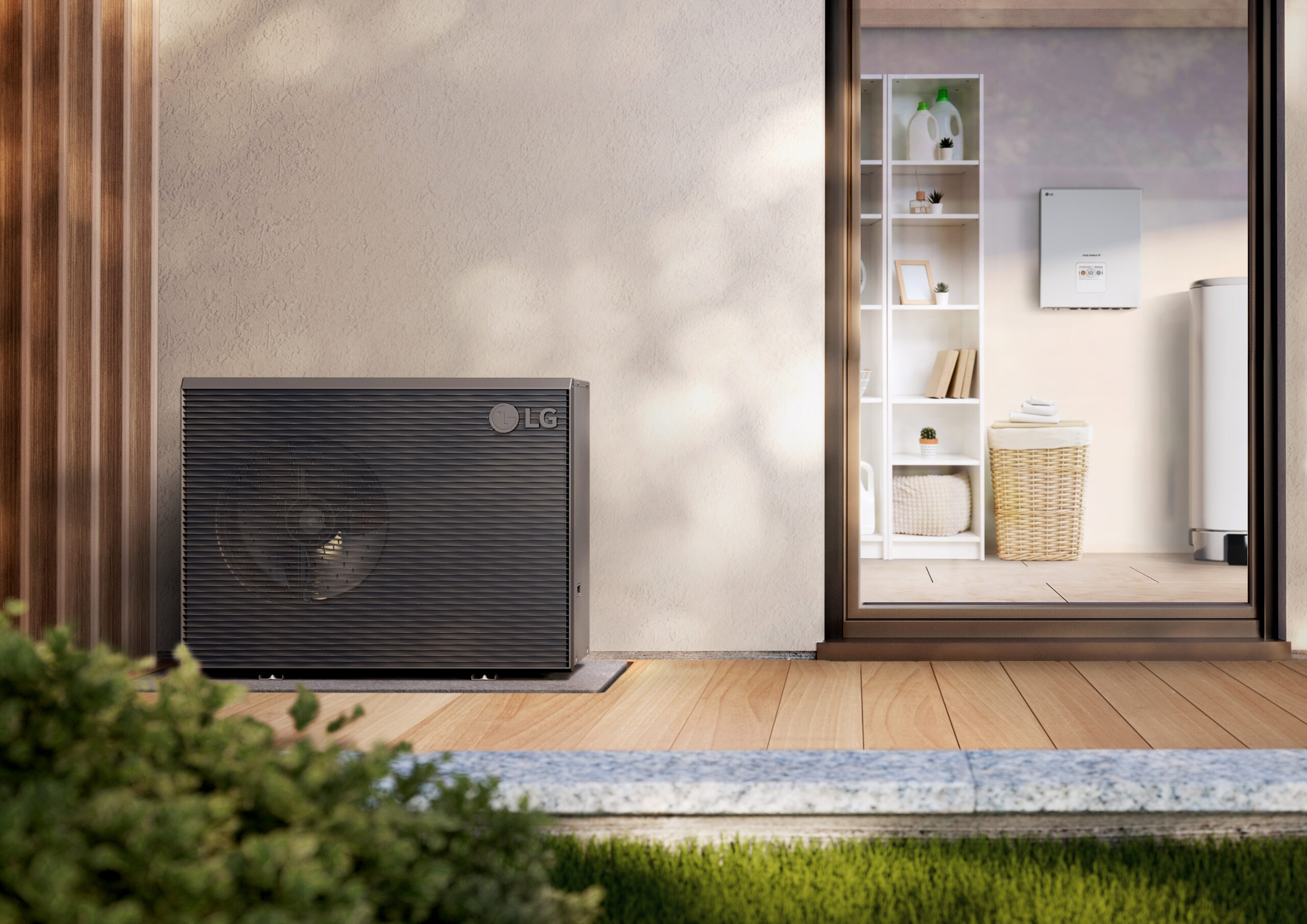
LG Electronics has extended its R290 Monobloc air-to-water heat pump portfolio with larger capacity equipment and a separate standard range incorporating indoor hydraulic components. The expansion adds 12, 14 and 16 kW models to the Monobloc S family, alongside standard Monobloc units offering capacities between 5 and 16 kW.
The additions were detailed on 20 October, extending a product family that already included 5, 7 and 9 kW Monobloc S models launched earlier in 2026. The latest development provides additional heating capacities and a standard configuration with integrated hydraulic equipment, including provision for controlling several units within a larger installation.
The R290 Monobloc architecture uses propane refrigerant within a packaged outdoor heat pump. Thermal energy is extracted from the outside air and transferred to water circulating through the building’s heating system. The refrigeration circuit and its controls coordinate compression, expansion and heat exchange to deliver the required water temperature.
During operation, the refrigerant absorbs heat at a relatively low temperature and pressure before being compressed. Compression increases the refrigerant’s pressure and temperature, allowing heat to be transferred into the water circuit. The refrigerant then passes through an expansion stage before returning to absorb further thermal energy.
Propane has a low global warming potential compared with many synthetic refrigerants used in earlier heating equipment. It is nevertheless flammable, making refrigerant containment, equipment positioning, ventilation conditions and applicable installation requirements important elements of the complete design.
Using R290 does not independently establish the efficiency of a heat pump. Electrical consumption depends on the refrigeration system, compressor and fan operation, control strategy, outdoor conditions and the temperature required by the water circuit.
LG states that its expanded Monobloc portfolio can produce heating water temperatures of up to 75°C, including operation in outdoor temperatures reaching -25°C. These figures describe advertised operating capabilities, not a guarantee that every model will deliver its full nominal heating output at the maximum water temperature and minimum outdoor temperature simultaneously.
The difference matters because the required temperature lift affects the work performed by the refrigeration system. When colder outdoor air supplies the heat source or higher water temperatures are demanded, the compressor generally needs to work against a greater temperature difference.
Consequently, a model rated at 12, 14 or 16 kW under specified test conditions may provide a different heating output at another combination of outdoor temperature and leaving-water temperature. Engineering selection requires the relevant capacity and efficiency tables rather than relying on nominal output alone.
The new standard Monobloc arrangement incorporates an indoor hydraulic unit containing a backup heater, three-way valve and expansion tank. These components perform functions associated with water distribution, changes in system volume and supplementary heating.
As water temperature changes, its volume also changes. The expansion tank accommodates the resulting variation within the hydraulic system, helping maintain suitable operating pressure when correctly sized and installed.
The three-way valve can direct water between supported heating functions according to the installation configuration. Its actual operating sequence depends on the selected hydraulic arrangement and controller settings, including any provision for domestic hot water or separate heating circuits.
An integrated electrical backup heater provides an additional source of thermal energy when the control system calls for supplementary heating. Its contribution must be included in energy consumption calculations because resistance heating has different electrical characteristics from heat generated through the refrigeration cycle.
The indoor equipment is combined with electronic control functions designed to coordinate the heat pump and hydraulic system. LG identifies a 6.8-inch full-colour touchscreen human-machine interface and built-in Wi-Fi connectivity within the expanded range.
Those features provide access to operating settings and supported monitoring functions, while the precise remote-control capabilities depend on the product configuration and associated services. Connectivity also introduces requirements for maintaining reliable communications and managing access to system settings.
The standard range supports cascade management for up to eight heat pumps. Rather than operating one large machine, a cascade installation combines several units connected to an appropriately designed heating circuit, with a controller coordinating their contribution to the required load.
When heating demand changes, the control system can determine which units operate and how the available capacity is distributed. Appropriate sequencing may help a multi-unit installation respond to variations in demand, although actual efficiency depends on the characteristics of each machine and the way the hydraulic circuit is designed.
A cascade system must account for water flow, temperature sensing, communication between units and the operating limits of individual heat pumps. The combined capacity of eight machines cannot be assumed to equal eight times the nominal rating under every weather and water-temperature condition.
Multiple units also create additional requirements for electrical supply and protection. Compressors, fans, pumps and associated controls impose connected loads that must be considered alongside auxiliary heaters and other equipment, particularly when several machines are permitted to operate simultaneously.
LG identifies sound and vibration reduction measures within the range, together with enclosure designs intended for installation near residential and commercial buildings. The actual acoustic effect depends on operating load, mounting arrangements, surrounding surfaces and the location of the equipment.
Manufacturer sound ratings must therefore be considered with the proposed installation geometry rather than treated as a universal indication of noise at neighbouring properties. Clearance requirements, airflow and access for servicing can also influence the suitability of a particular location.
The expanded range illustrates the connection between refrigeration hardware and embedded controls in modern heating systems. Sensors measure relevant temperatures and operating conditions, while electronic control functions regulate compressor output, fan operation and hydraulic equipment according to demand.
Reliable operation depends on the interaction between those components. A controller cannot compensate for insufficient heat exchanger capacity or an unsuitable hydraulic design simply by altering software settings, while the available operating envelope must be respected when selecting the equipment.
The larger Monobloc S capacities and separate standard indoor-unit configuration constitute the October product additions. Earlier specifications associated with the existing R290 family should not be presented as new introductions across every variant.
Model-specific technical documentation will be required to establish heating capacity, seasonal efficiency, maximum operating temperature, acoustic characteristics, electrical requirements and hydraulic limits. Those figures will determine how the new equipment can be incorporated into individual installations and larger cascade systems.