IN Brief:
- Rohde & Schwarz and ZES ZIMMER will exhibit together at SPS 2026, Booth 4A-464, from 24 to 26 November.
- Planned demonstrations include LMG671 drivetrain power analysis, MXO 5 three-phase inverter diagnostics and Scope Rider RTH isolated measurements.
- MXO oscilloscope protocol decoding for Quad SPI and Octo SPI is among the capabilities on show; the programme is not a new instrument launch.
Rohde & Schwarz and its subsidiary ZES ZIMMER will exhibit together at SPS 2026 in Nuremberg from 24 to 26 November, presenting demonstrations of electrical power analysis, industrial drive testing and electronic fault diagnosis. The companies will share Booth 4A-464, where established equipment will be used to show measurement techniques across development, validation and plant maintenance. This will be their first joint appearance at SPS.
The planned demonstrations cover several measurements within an industrial motor-drive system. Electrical input and output, mechanical shaft power, converter switching and control communications describe different aspects of how a drive operates. Power analysers quantify energy transfer and losses, while oscilloscopes allow engineers to examine waveforms and transient events. The joint stand will show how the separate measurements can inform diagnosis; the companies have not presented the exhibition as the launch of a new combined instrument.
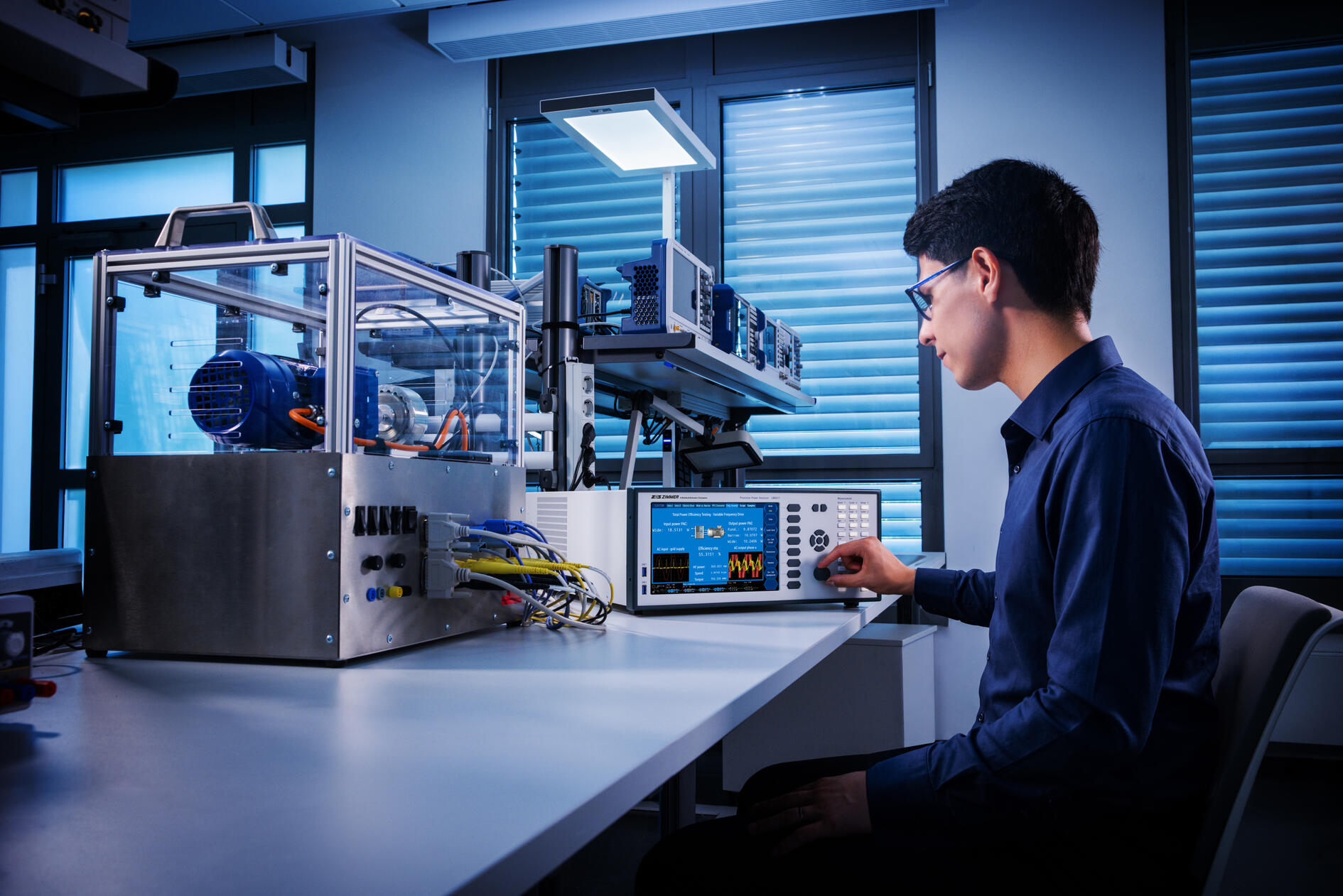
ZES ZIMMER will demonstrate the LMG671 power analyser in an electric drivetrain efficiency test. Alongside electrical input and output power, the setup will include motor speed and torque so that mechanical output power can be assessed. Measuring both sides of the drivetrain allows the efficiency of the overall system to be distinguished from the electrical performance of the inverter alone. The analyser provides continuous power measurement over a wide dynamic range, according to the companies.
The LMG671 demonstration will also examine inverter output power using fundamental, narrowband and wideband measurements. These views can help separate power associated with the main operating frequency from contributions at other frequencies, including switching-related harmonics. A configured display will bring readings and graphs together. The exhibition programme does not set out a revised LMG671 accuracy specification or comparative test results; it describes how the existing analyser will be used.
Rohde & Schwarz plans to use the MXO 5 oscilloscope with its MXO-K333 three-phase analysis option for drive and inverter testing. The option supports measurement of RMS values, power factor, active and reactive power, efficiency and total harmonic distortion. The instrument can retain the voltage and current waveforms alongside these calculations, enabling a change in a power measurement to be examined against switching behaviour, phase imbalance or distortion visible in the captured signals.
Three-phase inverter measurements place demands on the acquisition setup. Probe selection, correct channel assignment, timing alignment and the relationship between the measurement bandwidth and switching frequency affect the result. The booth demonstration will illustrate available analysis functions under the configured test conditions, rather than claim that the same measurement approach automatically verifies the performance or safety of every industrial drive.
The companies will also show the Rohde & Schwarz Scope Rider RTH handheld oscilloscope for measurements in industrial control cabinets and machinery. Its independently isolated inputs allow channels to be connected to signals at different electrical potentials, subject to the instrument’s ratings and appropriate test procedures. The planned display includes floating-signal capture, remote access and scripting for repeatable diagnostic sequences in automated equipment.
Serial communications testing will provide another part of the programme. I²C, SPI, UART and CAN interfaces carry commands, device status and test data between control electronics. By combining the captured electrical waveform with protocol decoding, an oscilloscope can identify the address or data associated with a fault rather than leaving the technician to interpret a sequence of voltage transitions. Triggering on relevant events can support repeatable manufacturing checks and troubleshooting.
Rohde & Schwarz will highlight extended trigger and decode support for Quad SPI and Octo SPI on its MXO oscilloscopes. These variants use multiple data lines to carry information at greater throughput than conventional single-data-line SPI operation. The company says the functionality can be used to isolate relevant protocol events, including address and data patterns. The capability is part of the measurement programme being previewed; the SPS release does not identify a separate new oscilloscope or a launch date for an additional product.
Drive efficiency testing, inverter waveform analysis and serial bus diagnosis will therefore be shown as separate, complementary tasks on the joint stand. A mismatch between expected and measured motor efficiency may prompt closer examination of inverter switching or electrical loading, while intermittent equipment faults can require isolated measurements and checks of the control data exchanged between devices. Each instrument has a different measurement role, and the test configuration determines which conclusions the collected readings support.
SPS 2026 runs at the Nuremberg Exhibition Centre from 24 to 26 November. Rohde & Schwarz and ZES ZIMMER are scheduled to present their industrial test and measurement demonstrations at Booth 4A-464. The programme is an advance exhibition preview of the equipment and measurement techniques visitors can expect to see, not a report of completed demonstrations or newly launched products.