IN Brief:
- Birch Technical Services has become the first installation contractor in EMEA to acquire Anritsu's MT9100A.
- The four-channel OTDR measures optical loss, reflections, and inter-core crosstalk along multi-core fibre.
- Single-ended testing and automated pass/fail assessment support installation, fault investigation, and fibre characterisation.
Birch Technical Services has expanded its optical testing capability with Anritsu’s MT9100A Multi Channel Fiber Tester, becoming the first installation contractor in EMEA to own the instrument. The UK specialist will use the equipment to develop testing procedures for multi-core fibre, extending its existing network design, installation, fusion splicing, and certification activities into optical infrastructure carrying several transmission paths within a single fibre.
Multi-core fibre contains separate optical cores within a common cladding, allowing information to be transmitted through several spatial paths without increasing the number of physical fibre strands in the same proportion. The approach is being investigated for high-capacity communications infrastructure, but each optical path must meet the performance requirements of the intended transmission system. Measuring the behaviour of one core alone is insufficient where signals can also interfere with neighbouring cores.
That interference is described as inter-core crosstalk. Light travelling through one core can couple into another, creating unwanted signal energy that may affect the quality of the transmitted information. Its magnitude depends on the fibre design and physical conditions, while the distribution of crosstalk along a cable can provide information about particular sections of the link. Loss and reflection measurements remain necessary alongside crosstalk characterisation.
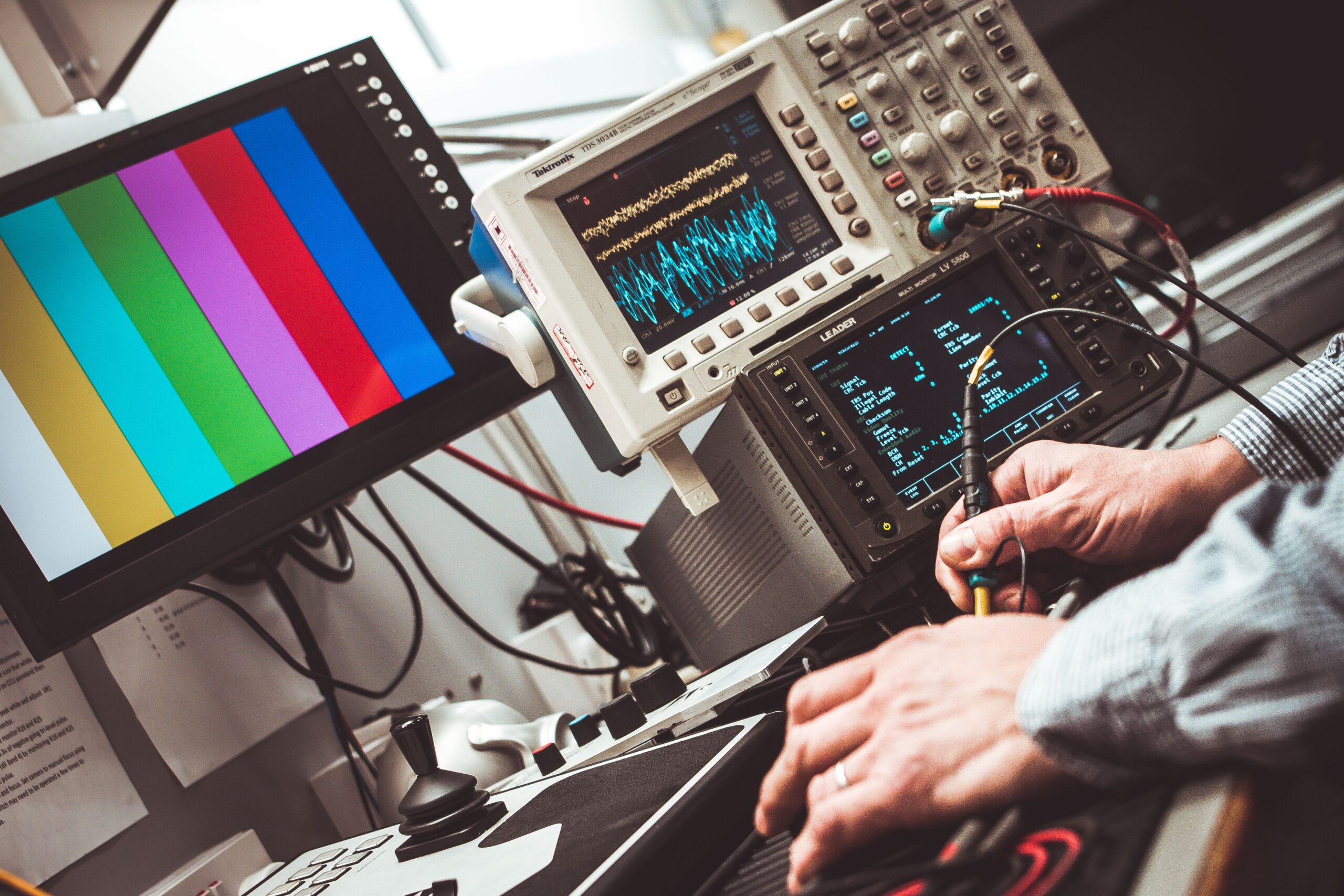
The MT9100A combines these measurements in a four-channel optical time-domain reflectometer, or OTDR. It launches test light into the connected cores and analyses returned signals to determine optical characteristics along the fibre. By relating the response to distance, the instrument can show where transmission loss, reflective events, or changes in inter-core crosstalk occur, supporting investigation of the installed cable rather than providing only an aggregate measurement.
Up to four cores can be measured simultaneously, removing the need to reconnect the tester to each individual path for a separate measurement sequence. The instrument also eliminates the need for an external optical switch to move between the connected channels during its supported test operation. These capabilities simplify the measurement arrangement where the same cable must be characterised repeatedly during installation or maintenance.
Testing can be performed from one end of the fibre link. A second operator or measuring instrument is therefore not required at the remote endpoint for the supported OTDR measurements, reducing coordination between technicians working at separated locations. The approach is particularly useful when access to one end of an installed cable is restricted or when measurements must be repeated after work on connectors, splices, or cable sections.
Conventional optical power measurements can establish the total attenuation between two points, but they do not necessarily identify where a loss or reflection originates. Distance-resolved OTDR measurements provide additional information about the position of events within the link. For multi-core fibre, the ability to examine inter-core crosstalk alongside those characteristics introduces another diagnostic measurement relevant to the operation of the complete cable.
Anritsu has incorporated automatic pass/fail assessment into the MT9100A. The tester compares measurement results with configured acceptance thresholds, allowing a completed test to identify characteristics outside the selected limits. Those thresholds must be appropriate to the fibre and network under examination; an automatic result does not replace the need to establish the requirements against which the installation is assessed.
The equipment is portable and battery powered, allowing measurements to be performed in laboratories, production facilities, and locations where a permanent electrical supply is unavailable. Its use in the field also depends on appropriate fibre connections, correct measurement settings, and procedures for interpreting the resulting traces. Different cable lengths and fibre characteristics can influence the measurement configuration required.
Birch’s investment was facilitated by Frame Communications, Anritsu’s distributor for the UK and Ireland, which provided technical sales assistance and on-site support. The acquisition gives Birch direct access to the instrument while its engineers develop practical familiarity with multi-core measurement methods. This includes establishing repeatable test arrangements and relating the instrument’s results to the condition of installed infrastructure.
Fusion splicing and connectorisation present particular challenges for multi-core systems because several optical paths must retain suitable alignment through the connection. Manufacturing tolerances, component positioning, and the physical condition of the installed fibre can affect optical performance. Measurements taken before and after installation work can help identify changes in loss or crosstalk that require further investigation.
As multi-core fibre is introduced into more network applications, measurement procedures will need to accommodate the characteristics of the selected fibre type and the transmission equipment connected to it. The MT9100A provides a method of examining four cores together, although the acceptance criteria and broader certification requirements remain specific to the installation.
Birch will incorporate the instrument into its optical engineering activities as customer requirements develop. Its immediate capability is the measurement of multi-core transmission characteristics using a single-ended, four-channel OTDR; wider deployment of the technology will depend on compatible cabling, connection hardware, network equipment, and established installation procedures.