IN Brief:
- CTX offers cut-to-size thermal interface materials for heatsinks from different manufacturers.
- Pads, gap fillers and graphite foils have different conductivity, compliance and insulation properties.
- Installation thickness, contact pressure and measured thermal resistance govern application performance.
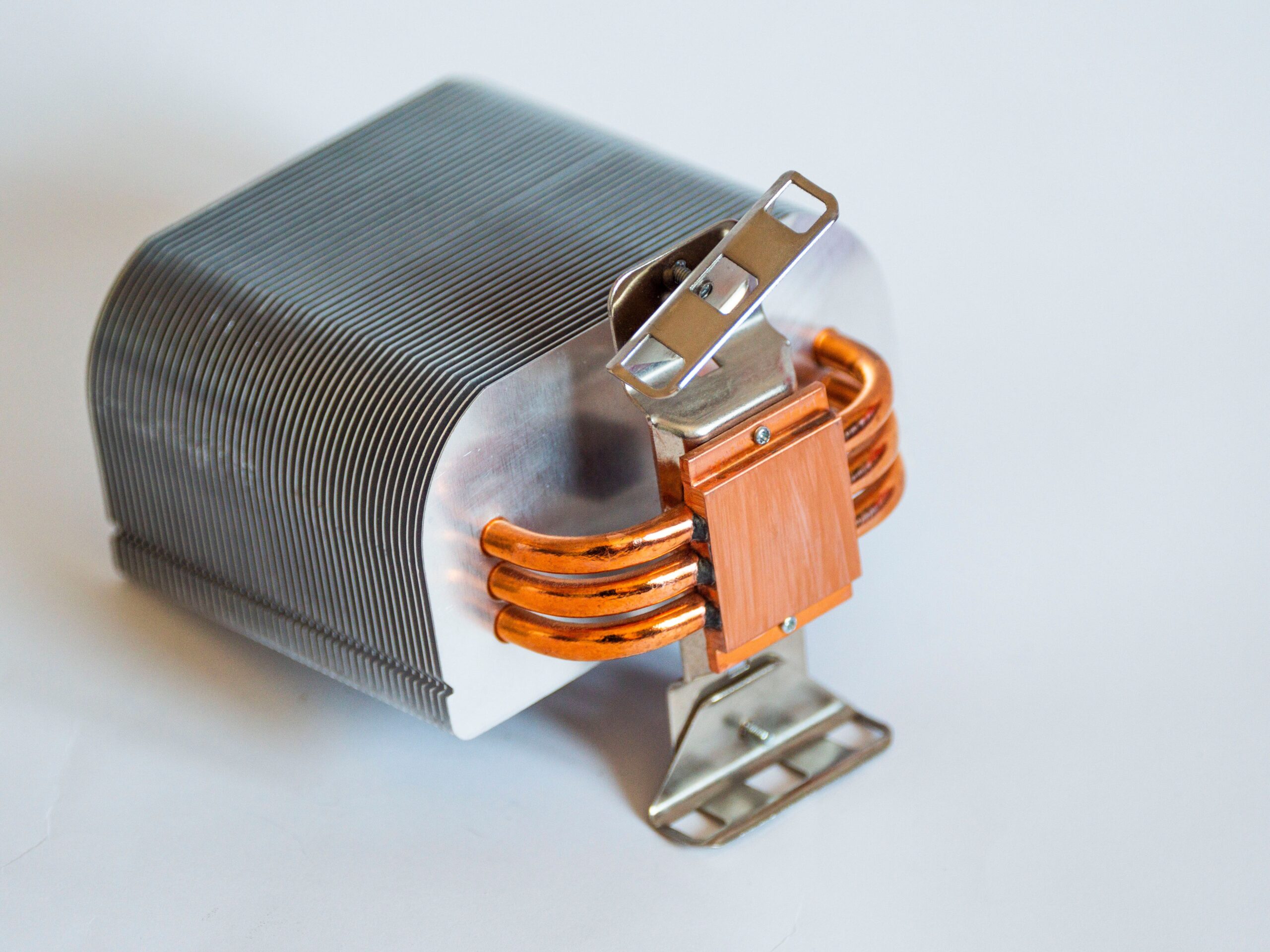
CTX Thermal Solutions has expanded its thermal interface materials offering for electronics cooling, supplying cut-to-size pads, gap fillers and graphite foils that can also be preassembled with heatsinks.
The German company offers materials for heatsinks from different manufacturers and selects interface types according to factors including installation thickness, thermal conductivity, dielectric strength and mechanical compliance. Its expanded service allows pieces to be prepared to individual drawings rather than cut and positioned entirely during final equipment assembly.
Thermal interfaces are required because apparently flat solid surfaces contain microscopic irregularities. When a semiconductor package is mounted against a heatsink, only part of the visible surface may make direct contact. Air in the remaining gaps adds resistance to heat transfer, even when the two principal materials are good thermal conductors.
A suitable interface layer fills those gaps and provides a more continuous thermal path. The result depends on the material’s properties and how it behaves when compressed between the actual surfaces. Choosing the material solely by its quoted thermal conductivity can therefore lead to a poor design decision.
Conductivity, commonly expressed in W/mK, describes heat flow through a material under a temperature gradient. The thermal resistance of an installed interface is also affected by its thickness, contact area and the contact resistance on either side. A thick layer of a relatively conductive material may perform worse than a thinner, more compliant alternative under particular mounting conditions.
CTX supplies silicone-based thermal pads that are generally electrically insulating and able to conform to uneven surfaces. Published material conductivities range from around 1W/mK to more than 10W/mK across different products. These figures describe the broader catalogue, not one newly announced material with a universal performance rating.
Compression helps a pad fill the gap between the heatsink and component. CTX gives a typical compression range of about 10% to nearly 50% of the material’s initial thickness, depending on the selected pad. The design must provide enough pressure to establish contact without overloading a semiconductor package or printed circuit board.
Mechanical tolerances become more challenging when a heatsink spans several components of different heights. Gap fillers can bridge clearances of several millimetres while applying relatively low force to sensitive parts. CTX offers silicone-containing and silicone-free materials for these conditions, with selected products achieving area-specific thermal impedance below 0.66 K cm²/W.
That impedance figure is not directly interchangeable with thermal conductivity. A comparison must use consistent test methods, thickness and contact pressure; otherwise two published values can describe different properties or different installed conditions. Interface performance must be evaluated for the complete assembly.
Graphite foils offer another set of characteristics. Selected products can conduct heat particularly effectively along their plane, with CTX reporting conductivity above 1,500W/mK in the x/y direction. Graphite is anisotropic, so that figure cannot be used as the through-thickness conductivity of the same foil.
Graphite is also electrically conductive. A layer intended to spread heat across an enclosure or cooling plate may therefore need insulating features or different clearances from a silicone-based pad used between a live semiconductor surface and a grounded heatsink.
Electrical properties are part of the materials choice in power converters and other densely packaged electronics. Semiconductor switching and conduction losses generate heat that must move through the package and interface to the heatsink before being rejected to air or liquid coolant. The operating temperature depends on resistance across that entire route, rather than the interface layer alone.
Temperature changes and vibration can alter contact pressure over time. Materials must therefore be assessed for dimensional stability, compatibility with nearby components and their ability to maintain useful thermal contact throughout the intended operating life. A favourable initial laboratory measurement does not automatically demonstrate long-term performance.
CTX offers individual cutting and can supply the finished pieces loose, on mats or in blister trays, as well as preassembled with heatsinks. This can reduce material preparation during equipment assembly and standardise placement, although the company has not published measured savings in labour time or manufacturing yield.
Selection remains dependent on heat load, available mounting space, required electrical isolation and the materials used by the component and heatsink. The expanded CTX offering increases the available interface configurations, but final suitability must be established under representative compression, temperature and electrical operating conditions.