IN Brief:
- Four ST devices pair gyroscope and accelerometer functions in 24-pin QFN packages.
- The new combinations support stability, rollover and crash-related vehicle safety applications.
- All four devices are in production and include SafeSPI and internal diagnostic capabilities.
STMicroelectronics has introduced four automotive inertial sensing devices that combine gyroscope and accelerometer functions within individual packages, expanding its range of components for vehicle stability, rollover and crash-related safety systems.
All four devices are in production and incorporate SafeSPI communication and internal diagnostics for safety-related applications. The launch follows ST’s acquisition of NXP’s automotive and industrial MEMS sensors business in February 2026, extending the combined portfolio with different arrangements of rotational and linear acceleration measurement.
Vehicle safety systems depend on information about movement around the vehicle’s axes and changes in speed or direction. A gyroscope measures angular rate, while an accelerometer responds to linear acceleration. Processing their outputs together can help electronic controllers distinguish different aspects of vehicle motion, subject to calibration and the inputs obtained from other systems.
ST has assigned distinct axis combinations to the four products. The NCS1012BAEP pairs yaw-rate measurement around the vehicle’s vertical axis with low-g acceleration measurement along the x and y axes, an arrangement relevant to analysing lateral dynamics and changes in vehicle heading.
The NCS1012CAEP combines roll-rate sensing around the x axis with low-g acceleration along the y and z axes. A related device, NCS1012EAEP, also measures roll rate but uses medium-g acceleration sensing along the x and y axes to accommodate different acceleration conditions.
The NCS10135AEP combines yaw-rate measurement with low-g acceleration along all three axes. Its additional measurement axis provides more information from one package, although the receiving controller still needs suitable software to interpret that information in the context of a particular safety function.
Gyroscope measurement ranges can be configured for ±125, ±250 or ±350 degrees per second. Selecting the range involves balancing the rotational speeds that may be encountered against the resolution and behaviour required by the application. A measurement outside the selected operating range cannot simply be treated as an accurate indication of greater rotation.
The low-g accelerometer configurations have nominal full-scale ranges from ±1.50g to ±34g, while medium-g sensing extends from ±15.5g to ±150g. These options reflect different movement and impact conditions rather than providing interchangeable measurements for every vehicle safety application.
ST specifies operation over temperatures from −40°C to +105°C, with gyroscope characteristics intended to limit offset and drift. A controller must nevertheless account for the behaviour of the complete sensing assembly, including mounting conditions, calibration and the effect of vibration in the installed location.
The devices include low-pass filters with selectable 3dB frequencies between 12.5Hz and 400Hz and an optional single-pole high-pass filter. Filtering can reduce unwanted vibration or noise, but its selection must preserve the movement signals and response times needed by the safety function.
An overly restrictive filter may delay or attenuate information about a rapid event, while a wider response can admit more unwanted signal variation. Engineers must therefore validate the combination of sensor range, filter configuration, controller processing and required fault response against the application.
SafeSPI provides a communication interface with provisions for monitoring the integrity of sensor data. Such measures are important because a control system may need to identify invalid or corrupted information before using it to make a safety-related decision.
Internal diagnostic functions add further opportunities to detect selected faults. ST describes the sensors as compliant with ISO 26262 requirements, but component-level safety provisions do not establish compliance of the complete vehicle system. Power supply behaviour, wiring, communications, software and the system’s response to detected faults all remain part of the safety assessment.
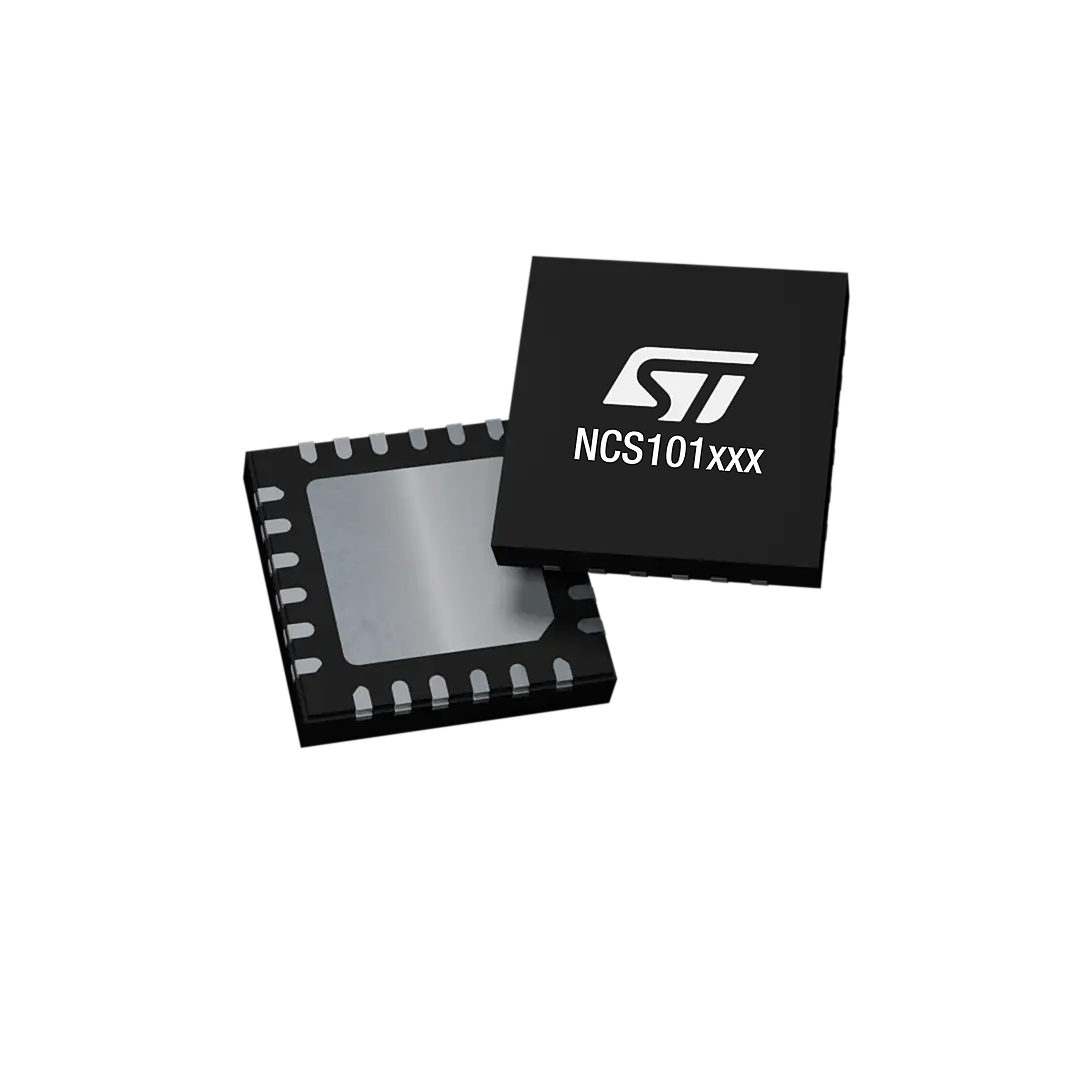
Each device uses a 24-pin QFN package measuring 6mm by 6mm by 1.90mm. Wettable flanks expose solder fillets along the package edges, giving optical inspection equipment better access to selected joint features during electronics assembly.
Wettable-flank construction can aid manufacturing inspection but does not replace the need to qualify board design, soldering conditions and long-term joint reliability. Automotive suppliers must also establish appropriate traceability and maintain consistent process control across production batches.
ST identifies product longevity commitments appropriate to automotive applications, where components may be needed through years of vehicle manufacture and service. Customers must still confirm the lifecycle and qualification arrangements associated with individual part selections.
The four devices are now available for integration into customer designs, with ST directing pricing and sample enquiries through its sales organisation. Their practical use will depend on matching the chosen sensing axes and ranges to the required vehicle function and validating the complete hardware and software implementation.