IN Brief:
- NXP S32K5 microcontrollers will provide processing for Volkswagen Group’s zonal controllers.
- RV Tech is developing an architecture that consolidates local control and communication functions.
- The first vehicle using the new architecture is planned for 2027; component volumes remain undisclosed.
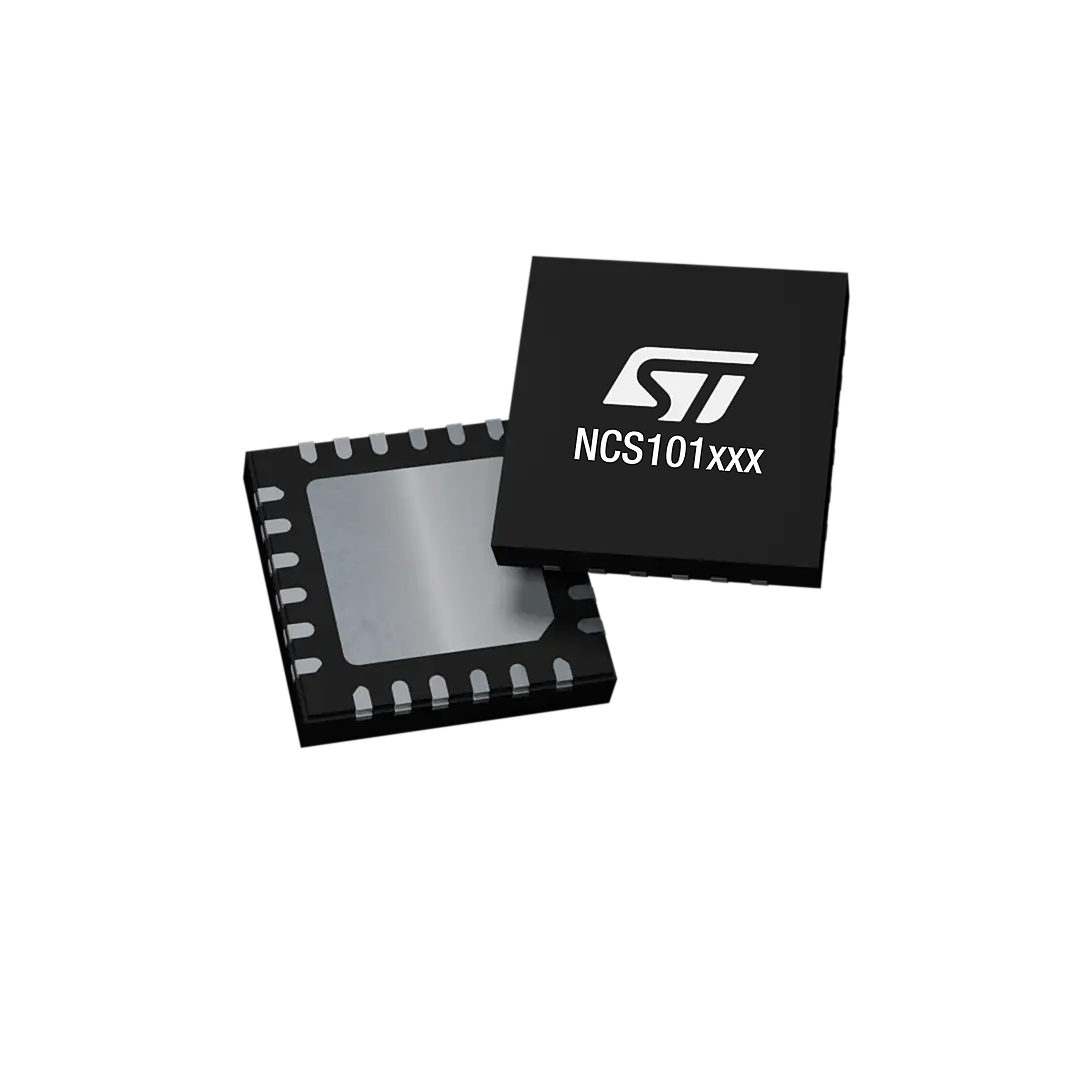
NXP Semiconductors has been selected by Volkswagen Group to supply S32K5 microcontrollers for a new zonal vehicle electronics architecture, providing a common processing platform for controllers intended for future models across the German automotive group’s brands.
Volkswagen’s agreement supports the architecture being developed by Rivian and Volkswagen Group Technologies, the joint venture known as RV Tech. Its first vehicle application is planned for 2027, although Volkswagen has not named the model, disclosed semiconductor purchase volumes or specified the processor configuration that the production controllers will use.
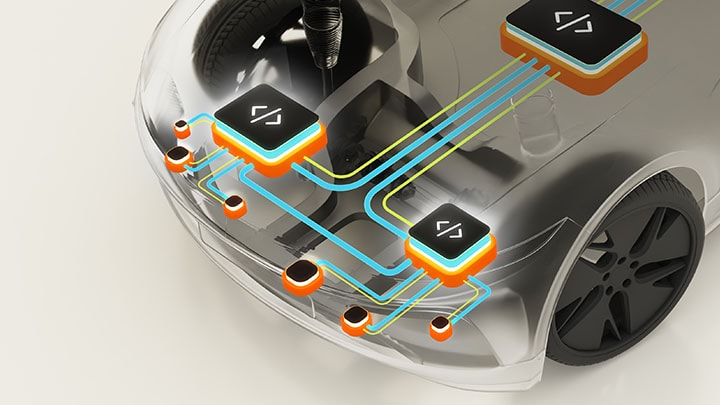
Within the proposed architecture, NXP’s S32K5 devices will process information from sensors and actuators located around the vehicle and exchange data with central computing systems. Local functions can include lighting, body electronics, comfort systems and selected chassis and safety-related operations, while more computationally demanding applications remain assigned to central platforms.
Conventional vehicle electrical architectures often distribute these responsibilities among numerous electronic control units. Each unit has its own processor, memory, connections and software, creating additional wiring and integration work as new vehicle features are added. A zonal controller instead groups interfaces by their physical location, so one processor can handle several local functions and forward relevant information through the vehicle network.
How much hardware can be consolidated depends on the electrical interfaces, response times and safety requirements of the functions involved. Grouping components by location does not mean that all software can share resources without restrictions: a controller handling several applications must preserve the response and fault behaviour required by each.
NXP’s S32K5 family addresses these demands through configurable real-time processing. Its published feature set includes Arm Cortex-M7 and Cortex-R52 cores, with arrangements intended to support different performance and fault-tolerance requirements. The exact core configuration selected by RV Tech has not been made public, so family capabilities should not be mistaken for specifications of the first vehicle.
S32K5 devices also include magnetoresistive random-access memory, with configurations offering up to 41MB of non-volatile storage. NXP describes an A/B firmware arrangement that can retain alternative software images and provide a recovery path after an unsuccessful update. Making that capability dependable in a vehicle also requires update authentication, rollback control and coordination with other electronic systems.
Networking is another element of the consolidation strategy. S32K5 devices support automotive Ethernet and CAN interfaces, including CAN FD and CAN XL, allowing local controllers to exchange information with central computers and peripheral electronics. Ethernet can carry aggregated traffic between processing domains, while CAN-based connections remain relevant to distributed devices with different bandwidth and timing demands.
Communication performance must be considered alongside processor timing. Several local applications can generate messages concurrently, and a delay in a shared communication path may have different consequences for a lighting command and a safety-related control signal. Network design, software scheduling and fault monitoring must therefore be assessed together; Volkswagen has not disclosed its final topology.
Functional safety requirements become more demanding when applications of different criticality share hardware. NXP provides isolation and monitoring features intended to support ISO 26262 development up to ASIL D, including mechanisms for detecting selected faults and separating execution environments. Those features are development resources, not independent certification of a completed controller or vehicle function.
Consolidation also creates cybersecurity considerations. If one controller communicates with multiple systems or accepts software updates, unauthorised code or compromised network traffic could affect more than one vehicle feature. NXP’s hardware security engine supports secure boot, protected updates, authentication and encrypted communication, while the manufacturer must establish how those mechanisms are configured and maintained throughout the vehicle’s life.
Using a common microcontroller family could help Volkswagen reuse drivers, diagnostics, communication software and development tools across different vehicle programmes. Such reuse may reduce repeated integration effort, but individual vehicles still require validation against their particular wiring, sensors, software functions and safety objectives.
The semiconductor agreement also gives Volkswagen a direct role in planning the electronic components that support its common architecture. NXP will work with the group as controller designs progress towards production, rather than providing a finished vehicle platform or determining every application implemented on its chips.
The first vehicle planned for 2027 remains the announced production milestone. Further deployment will depend on the qualification of specific S32K5 configurations, completion of the RV Tech software and networking architecture, and the development schedules of individual Volkswagen Group brands.