IN Brief:
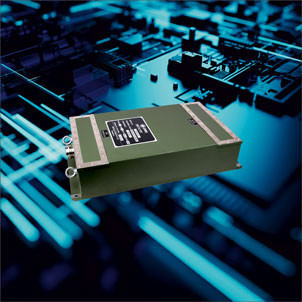
- SMF911 and TMF911 filters cover single- and three-phase systems from 6A to 3,000A.
- Standard filtering extends to 18GHz, with selected extended configurations reaching 40GHz.
- Earthing, enclosure bonding, cable routing, and installation geometry determine system-level attenuation.
EMIS has introduced single- and three-phase common-mode facility power-line filters for critical installations requiring broadband electromagnetic-interference and radio-frequency-interference suppression.
The SMF911 single-phase and TMF911 three-phase families cover current ratings from 6A to 3,000A. Standard configurations provide filtering from 100kHz to 18GHz, while extended designs cover frequencies from 10kHz to 40GHz.
Insertion-loss performance reaches as much as 100dB, depending on configuration and frequency. Target installations include magnetic-resonance-imaging rooms, radar systems, command-and-control facilities, military vehicles, data centres, telecommunications infrastructure, shielded rooms, and industrial automation plants.
Discharge resistors are incorporated within the filters, while metal-oxide-varistor surge protection rated at 40kA on an 8/20µs waveform is available as an option. Configurations are designed around requirements including MIL-STD-220C, MIL-PRF-15733J, UL 1283, and IEC 60939.
Facility filters sit where power conductors cross the electromagnetic boundary of a shielded room, cabinet, vehicle, or equipment system. They must carry the required mains current while presenting high impedance to unwanted common-mode energy across a broad frequency range.
Attenuation is required in both directions because transmitters, motor drives, and digital power converters must not conduct disruptive energy onto the incoming supply, while sensitive receivers and medical electronics need protection from interference entering through the same conductors.
Once suppression extends into microwave frequencies, the surrounding mechanical structure becomes inseparable from the electrical filter. Relatively short wires, enclosure gaps, fasteners, and earth connections behave as inductive or radiating elements, allowing energy to bypass the internal network through parasitic coupling.
Low-impedance bonding between the filter body and shielded enclosure is therefore essential. Paint, oxidation, gaskets, and uneven mounting surfaces can interrupt that path, while contaminated-side wiring must remain separated from protected-side conductors to prevent capacitive or inductive recoupling.
Protective-earth conductors also need radio-frequency treatment. A long wire may satisfy low-frequency safety requirements yet present excessive inductance at higher frequencies, so short, wide, mechanically secure bonds are required around the filter, gland plate, cable screens, and enclosure seams.
Published insertion loss is measured under defined source and load conditions, whereas practical mains networks seldom reproduce the same impedance across the full frequency range. Installation verification remains necessary where attenuation supports patient safety, communications integrity, classified operation, or mission-critical control.
The new families extend an existing focus on shielded medical environments. An earlier MF420 filter addressed interference entering MRI installations, while the SMF911 and TMF911 broaden the approach across higher currents and a larger set of industrial, defence, and communications systems.
Demand for broadband suppression is rising as power semiconductors switch faster. Silicon-carbide and gallium-nitride devices reduce switching loss and permit smaller converters, but their rapid voltage and current transitions generate high-frequency common-mode energy that couples through device capacitance, heatsinks, cables, and equipment structures.
Connected industrial systems add another layer of sensitivity. High-speed processors, precision analogue circuits, digital interfaces, and radios increasingly share an installation with drives, chargers, inverters, and high-current distribution, so conducted interference can corrupt measurements, interrupt communications, or reset control electronics.
Surge protection addresses a different disturbance and must be coordinated with upstream and downstream devices. A high-current MOV can divert transient energy, although its clamping level, ageing, thermal protection, and relationship with other surge-protective devices must be assessed across the complete installation.
Thermal performance also requires attention at the upper current ratings. Conductor resistance, terminal design, enclosure ventilation, ambient temperature, and harmonic currents determine heat rise, while service access and torque control affect long-term connection reliability.
The SMF911 and TMF911 supply the filtering hardware for large critical-power systems, but system-level attenuation will depend on the enclosure, earthing, cable routing, bonding, and installation geometry around them. Broadband electromagnetic control remains a property of the complete structure rather than a specification delivered by one component in isolation.