IN Brief:
- The U.S. International Trade Commission ruled in Infineon’s favour in a GaN patent dispute with Innoscience.
- The final decision and related import and sales bans remain subject to a 60-day U.S. presidential review period.
- Innoscience says its current GaN products are unaffected, leaving the practical supply position contested.
Infineon Technologies has secured a favourable ruling from the U.S. International Trade Commission in its gallium nitride patent dispute with Innoscience.
The Full Commission affirmed an initial determination from December 2025 that Innoscience infringed an Infineon patent covering GaN technology. The ITC ordered import and sales bans for affected Innoscience GaN products in the United States, with the Commission’s final decision and bans subject to a 60-day presidential review period.
Infineon is also pursuing parallel proceedings in Germany before the Munich District Court I, alleging infringement of three patents and one utility model. The Munich court found infringement of one Infineon patent in August 2025, with further hearings concerning another patent and a utility model scheduled for June 2026.
The case sits inside a fast-growing power semiconductor market. GaN devices are used where designers need higher switching speeds, greater power density, and lower losses than conventional silicon can provide. Applications include AI data-centre power systems, renewable energy equipment, industrial automation, electric vehicles, adapters, robotics, and communications infrastructure.
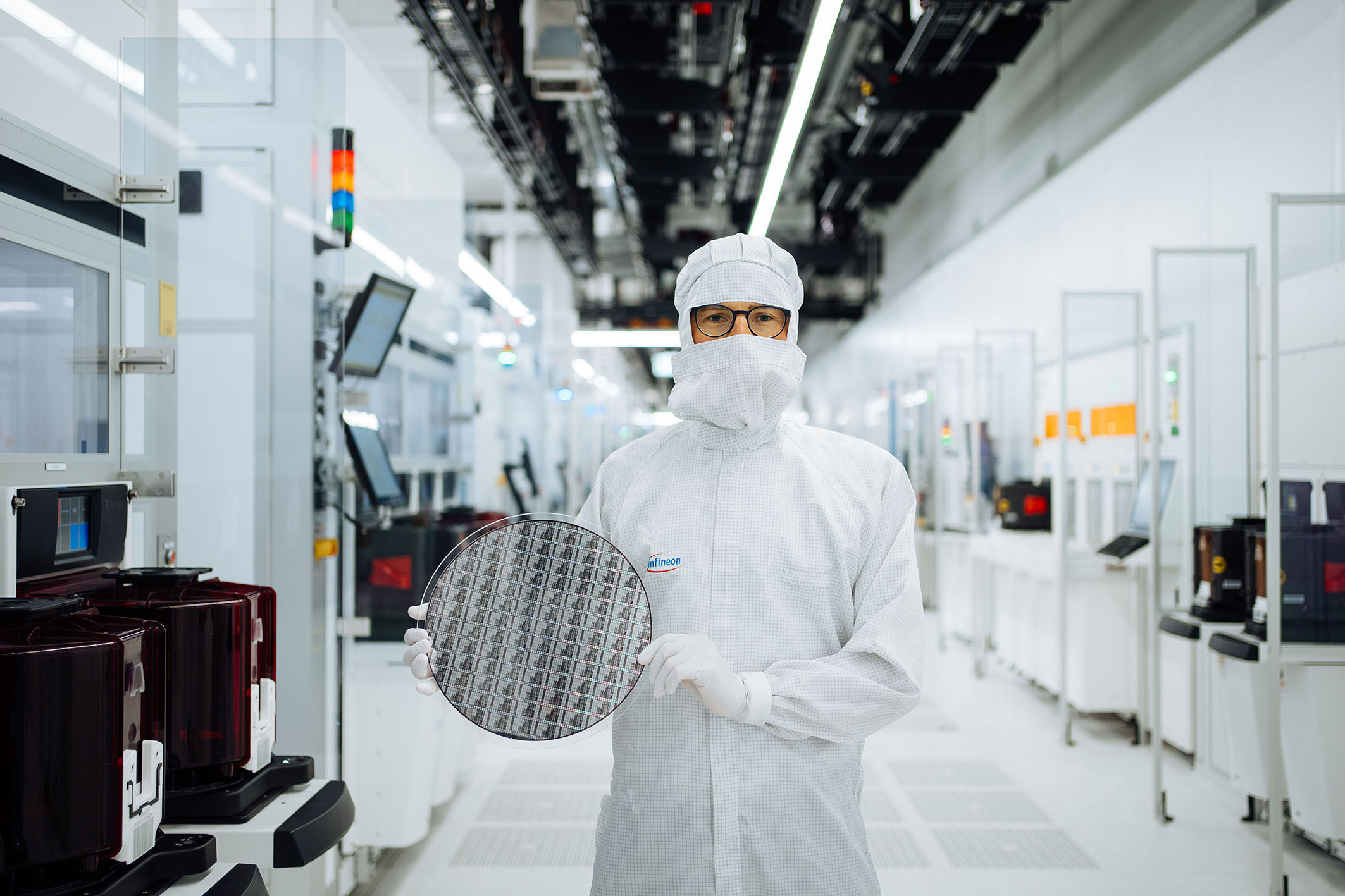
Infineon holds approximately 450 GaN patent families and is building GaN into a wider silicon and silicon carbide power semiconductor portfolio. The company has also been developing 300mm GaN manufacturing, intended to support scale, cost control, and process consistency for power devices.
Innoscience has disputed the practical impact on its current portfolio. The company says the ITC’s final determination confirms that its current commercial GaN power devices do not infringe Infineon’s patents and may continue to be imported and sold in the United States. Innoscience says only two claims of one patent were found valid and infringed, and only in relation to legacy products that are no longer manufactured or sold.
The commercial position is therefore more complex than a single product ban. The legal outcome strengthens Infineon’s position on the infringement finding and establishes restrictions against affected products, while Innoscience maintains that redesigned current products remain outside the restriction. Customers will have to consider product generation, qualification status, regional availability, and continuity risk during the review period.
GaN sourcing is becoming a strategic decision in power design. Device selection has traditionally centred on electrical performance, gate-drive behaviour, thermal resistance, package type, and application support. Patent exposure, manufacturing scale, long-term availability, second-source planning, and regional trade risk now sit much closer to the engineering decision, particularly in industrial and infrastructure equipment with long qualification cycles.
The pressure is rising as data-centre and electrification demand accelerates. AI infrastructure is driving denser power shelves and higher-efficiency conversion stages, while electric vehicles, renewable energy, industrial drives, and robotics continue to push wide-bandgap devices into harsher environments. GaN offers clear performance benefits, but commercial control of the technology is still being contested through patents, process scale, and market access.
The ITC ruling adds another constraint to a competitive supply landscape. Infineon has strengthened its legal position around GaN intellectual property, while Innoscience is seeking to preserve continuity for its current devices. The immediate engineering concern is access to qualified components without losing the efficiency, size, and switching-performance gains that led many power designs towards GaN in the first place.