IN Brief:
- The project is the first Glasgow City Region Investment Zone initiative to advance into delivery.
- Specialist ion beam etching equipment will support the manufacture of tunnelling magnetoresistance sensors.
- The wider programme is expected to create more than 100 skilled jobs over ten years.
Neuranics is advancing a £13.1m semiconductor manufacturing project in Glasgow following approval of its full business case by the Glasgow City Region Investment Zone’s Chief Executives’ Group.
The project, being delivered in partnership with the University of Glasgow’s James Watt Nanofabrication Centre and Kelvin Nanotechnology, is the first within the £190m investment zone to move into delivery. It will establish specialist manufacturing capabilities for advanced magnetic sensors, supporting the development of domestic fabrication processes for technologies currently dependent on overseas facilities.
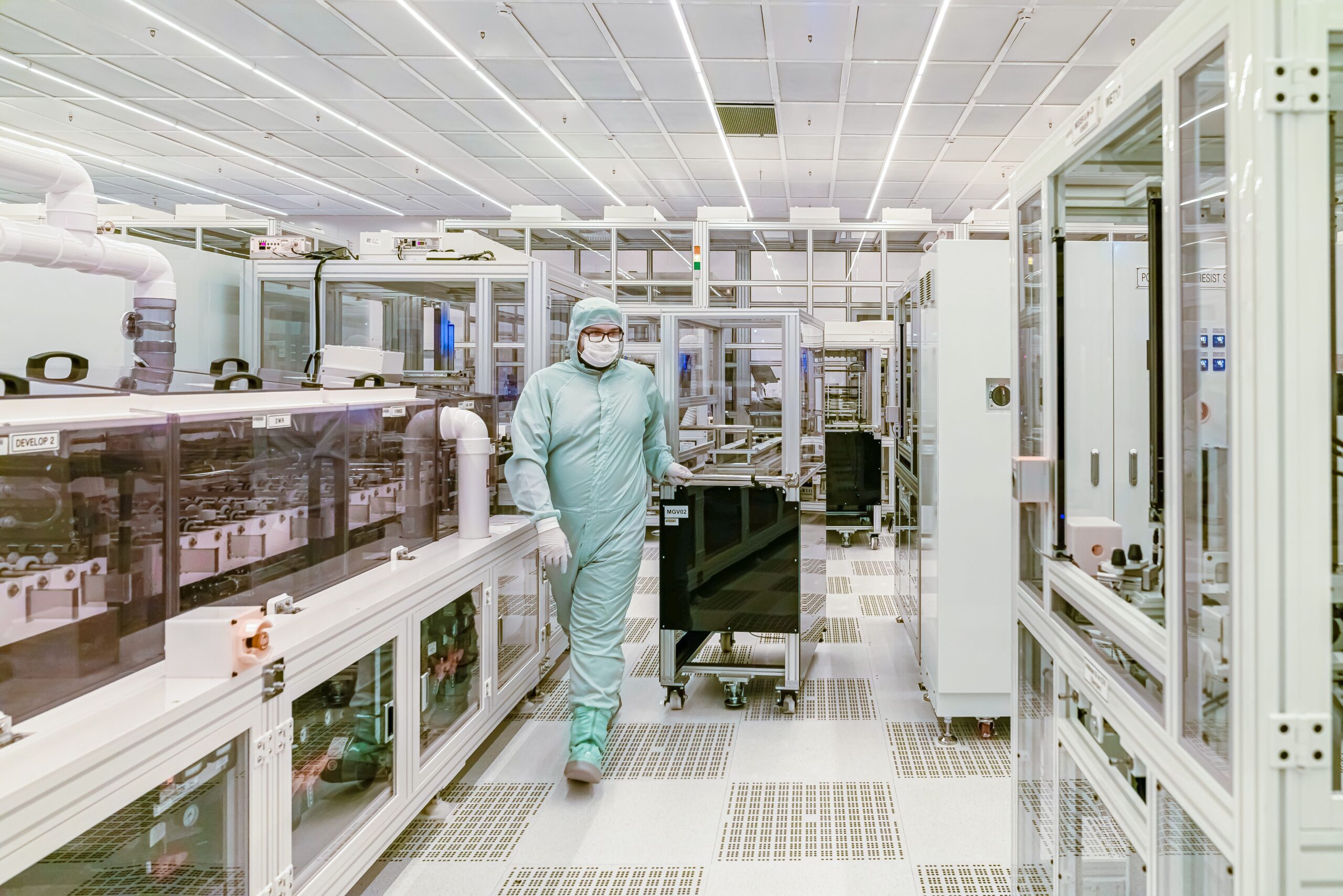
Central to the investment is the installation of an ion beam etching system at the James Watt Nanofabrication Centre. The equipment will support the manufacture of tunnelling magnetoresistance (TMR) sensors, while providing other semiconductor companies and research organisations with access to advanced fabrication infrastructure.
Neuranics, established in 2021 as a spinout from the universities of Glasgow and Edinburgh, has developed TMR technologies capable of detecting extremely weak magnetic fields. Its existing development platform includes a sensor evaluation kit capable of detecting signals at picotesla levels, with potential applications spanning medical monitoring, robotics, human-machine interfaces, and industrial instrumentation.
TMR devices exploit changes in electrical resistance across a magnetic tunnel junction, typically comprising two magnetic layers separated by a thin insulating barrier. Electrons can tunnel through this barrier, with the resulting electrical resistance influenced by the relative magnetic orientation of the surrounding layers. An external magnetic field alters the orientation of the sensing layer, allowing variations in field strength or direction to be translated into an electrical signal.
Manufacturing these structures requires precise control over material deposition, junction geometry, and the integrity of interfaces between successive layers. Variations in layer thickness or damage introduced during patterning can affect device resistance, sensitivity, noise characteristics, and production consistency.
Ion beam etching removes material through bombardment with energetic ions, enabling the patterning of structures containing materials that may be difficult to process using conventional chemically driven etching techniques. Magnetic multilayer devices are particularly demanding because their constituent materials can exhibit different etching characteristics, requiring careful process control to maintain the integrity of the completed junction.
Access to specialist etching infrastructure can shorten the development cycle between experimental devices and repeatable manufacturing processes. Prototype results must be reproduced across multiple devices and production batches before manufacturers can establish dependable component specifications, with fabrication parameters refined against electrical measurements and material characterisation.
The Glasgow project aims to bring more of these manufacturing activities within the UK, connecting research infrastructure with commercial sensor development and assembly capabilities.
Neuranics has also established a magnetism laboratory at the University of Glasgow to support investigations into biomagnetic sensing, including magnetomyography and magnetocardiography. These applications involve detecting magnetic fields associated with physiological activity, placing particular emphasis on sensor noise, environmental interference, and measurement stability.
Unlike sensing applications involving strong permanent magnets or deliberately generated electromagnetic fields, biomagnetic measurements may require devices to distinguish extremely small signals against substantially larger sources of background interference. Sensor performance must consequently be considered alongside signal conditioning, calibration, shielding, and the physical arrangement of the measurement system.
The investment builds on Scotland’s established capabilities in photonics, microelectronics, and specialist semiconductor manufacturing. The UK government’s 2026 semiconductor sector study identified a concentration of companies developing sensing devices, semiconductor process equipment, optical technologies, and application-specific integrated circuits.
Scotland’s photonics sector, largely concentrated around Glasgow, generates more than £1.2bn in annual turnover and employs approximately 6,400 people, according to the study.
The Neuranics project is expected to support more than 100 skilled jobs over a ten-year period. Installation and qualification of the specialist etching equipment will provide the manufacturing infrastructure required to translate magnetic sensor research into repeatable production processes, while extending access to advanced semiconductor fabrication capabilities beyond Neuranics’ own development programmes.