IN Brief:
- Robin Radar and TNO are industrialising a multi-mode airborne radar for large UAS platforms.
- The system combines SAR, ISAR, and GMTI modes with onboard signal processing.
- Defence sensing is moving towards payloads that reduce data-transfer bottlenecks and operate in degraded conditions.
Robin Radar Systems and TNO are developing a multi-mode airborne radar platform for large unmanned aircraft systems, targeting ground and sea surveillance, imaging, search-and-rescue, and intelligence missions.
The payload will combine synthetic aperture radar, inverse synthetic aperture radar, and ground moving target indication. It is being designed to process those modes onboard, reducing the amount of raw sensor data that must be transmitted to a ground station before operational decisions can be made.
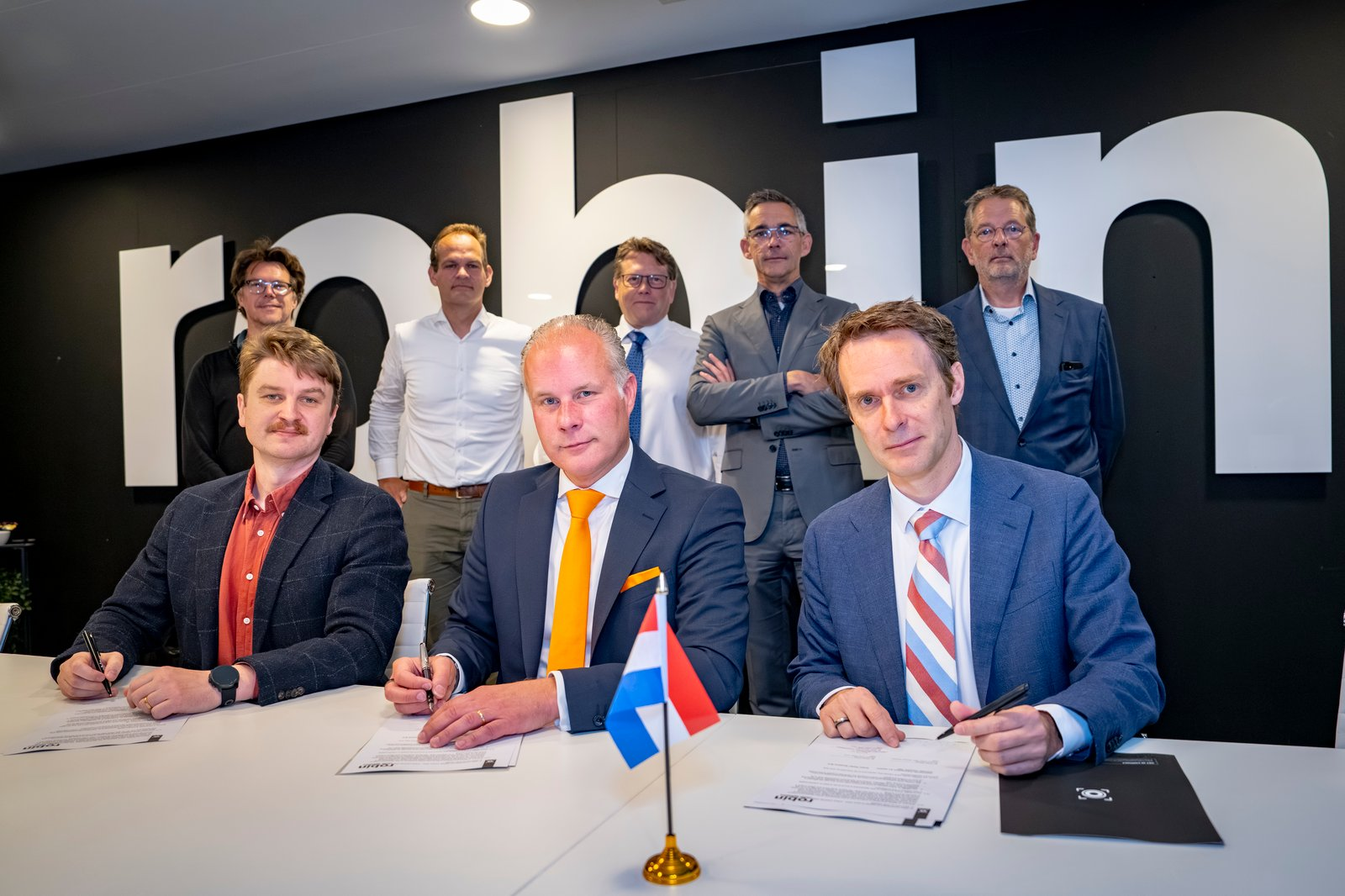
The partnership builds on work within the Dutch Multi-function Radar Intelligence Surveillance Reconnaissance programme. TNO is responsible for radar technology research and development, while Robin Radar will handle industrialisation and commercialisation. The Hague-based company was founded in 2010 as a TNO spin-out and is known for bird and drone detection radar systems.
The new payload extends Robin Radar’s work beyond ground-based airspace surveillance and counter-UAS applications. Planned use cases include defence, security, emergency response, government operations, ground imaging, sea surveillance, and search-and-rescue missions where optical sensors can be limited by darkness, weather, smoke, dust, or poor visibility.
Airborne radar payloads are becoming increasingly dependent on embedded processing. SAR, ISAR, and GMTI modes can generate large volumes of data, particularly when wide areas are monitored from moving platforms. Onboard processing reduces communications load and shortens the path between detection, interpretation, and response.
The electronics challenge spans RF front ends, antennas, digital signal processing, embedded compute, power management, thermal design, software architecture, and data reduction. A payload is no longer simply a sensor feeding raw information to the ground; it is a self-contained processing system operating under size, weight, power, and communications constraints.
Local sensing and interpretation are already reshaping edge electronics more broadly. STMicroelectronics has introduced a compact 3D LiDAR module for edge systems, reflecting the same movement towards perception close to the source. Radar, lidar, infrared, and optical systems are all being asked to deliver more usable data before wider system processing begins.
Defence and security applications sharpen that requirement. UAS platforms may operate beyond reliable high-bandwidth links, across maritime zones, or in radio environments where persistent transmission of raw data is inefficient or vulnerable. Onboard radar processing can reduce link dependency, support faster cueing, and make unmanned platforms more resilient during degraded communications.
The work also sits within a broader European push around radar and electronic sensing capacity. Thales Netherlands is expanding radar production and test infrastructure in Hengelo, while counter-drone systems, electronic warfare, and air-defence programmes are creating demand for sensors that can detect smaller, cheaper, and more numerous threats.
For Robin Radar, airborne radar payloads move the company into platform-integrated sensing. Commercial deployment will require ruggedisation, qualification, aircraft integration, data-interface work, support arrangements, and compatibility with mission systems. The payload will also have to prove that onboard processing can deliver operationally useful outputs without overwhelming aircraft power and cooling budgets.
The direction is clear across unmanned systems: payloads are expected to collect, process, and prioritise information rather than simply transmit it. Large UAS platforms used for surveillance, maritime security, disaster response, and defence missions will increasingly depend on sensors that can operate in degraded conditions and produce actionable outputs onboard.
Radar’s ability to work through darkness, weather, smoke, and dust gives it a durable role alongside optical and infrared sensing. The Robin Radar-TNO programme adds embedded intelligence to that capability, turning the radar payload into a more active part of the aircraft’s mission system.