IN Brief:
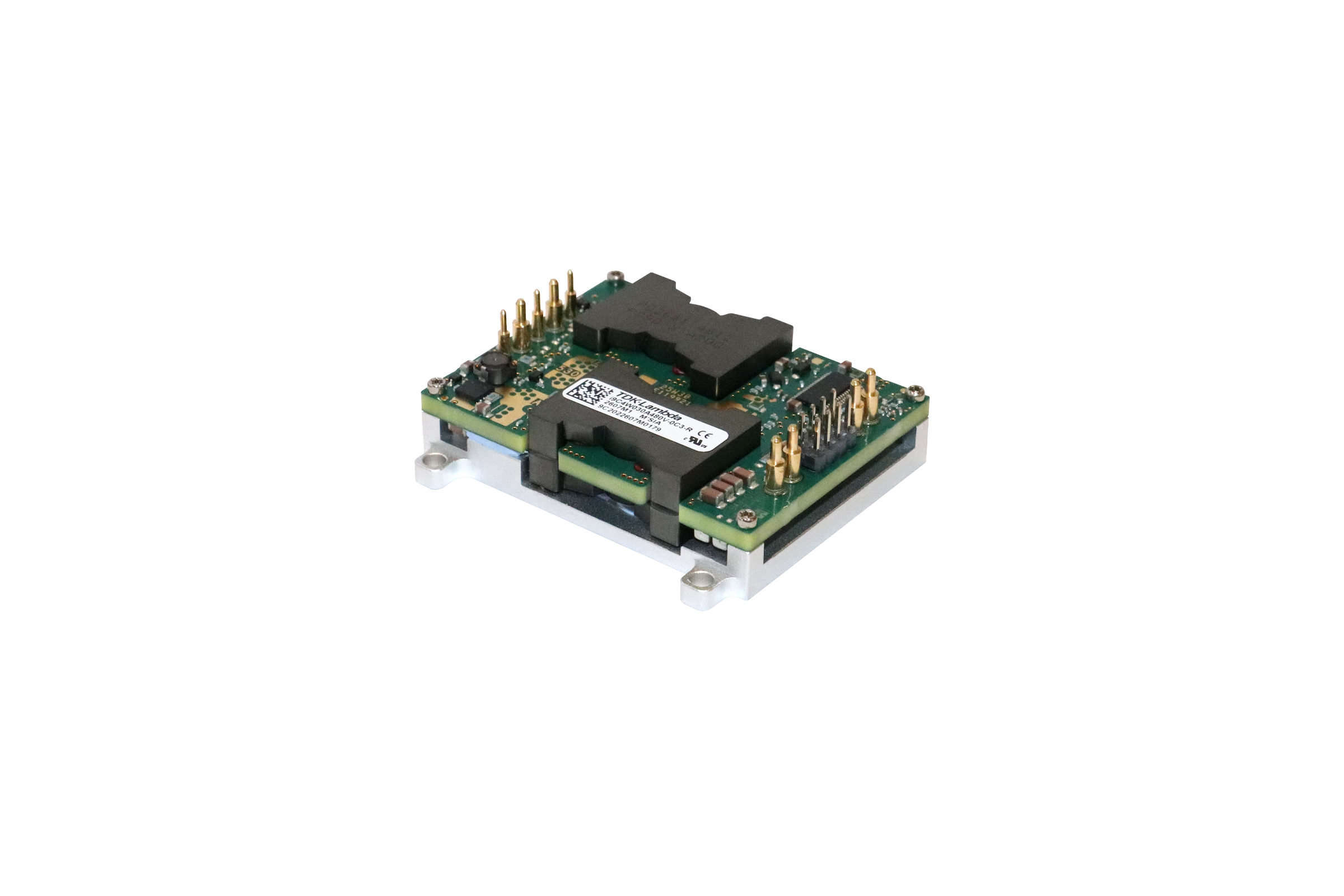
- TDK-Lambda’s i9C series is a 1500W non-isolated DC-DC buck-boost module.
- The converter uses programmable pass-through operation to reach up to 99% efficiency.
- Target applications include robotics, autonomous mobile systems, drones, communications, and test equipment.
TDK-Lambda has launched the i9C series, a 1500W non-isolated DC-DC buck-boost power module for industrial and battery-powered systems operating across variable voltage conditions.
The first i9C model supports a 9–80VDC input range and a 9.6–60VDC output range, delivering up to 30A. A second configuration is planned with a 9–40VDC input range, a 5–36VDC output range, and up to 50A output current.
At the centre of the design is TDK-Lambda’s programmable high-efficiency pass-through technology. Engineers can define an input-voltage window in which the module bypasses regulation and connects input directly to output, reducing conversion losses when system conditions allow.
In that pass-through operating region, efficiency can reach up to 99%. The module is supplied in a compact wide quarter-brick package with an integral baseplate, with cooling options covering convection, conduction, and forced air installations.
Standard functions include wide output adjustment, negative logic on/off control, power good, remote sense, user-adjustable overcurrent protection, low-power sleep mode, and auto-recovery protection. The series is intended for systems built around 12V, 24V, 48V, and 60V bus architectures.
Robotics, autonomous guided vehicles, autonomous mobile robots, drones, humanoid platforms, communications equipment, and test systems are among the target applications. Many of those platforms operate from battery packs or intermediate DC buses where voltage does not remain cleanly above or below the required output rail throughout the duty cycle.
Conventional buck-only or boost-only conversion can force additional power stages, wider design margins, or tighter limits on battery operation. A buck-boost architecture allows the input to move either side of the regulated output while maintaining continuity of operation, which is useful in mobile systems, battery-backed equipment, regenerative load environments, and long cable-run installations.
Efficiency has become a practical system constraint in these applications. At 1500W, even modest conversion losses generate heat that has to be removed from compact enclosures, mobile platforms, or sealed equipment. Pass-through operation gives engineers another way to reduce thermal stress when input and output conditions align, rather than converting power unnecessarily across the whole operating range.
The low-power sleep mode also addresses standby and low-load conditions, where idle consumption can have a measurable effect on battery runtime. In mobile industrial systems, energy lost during waiting, sensing, charging transition, or partial-operation states can erode system availability as much as peak-load inefficiency.
The i9C series sits within a broader move toward configurable power modules able to absorb wider operating conditions without requiring custom power-stage development for every platform. As electrified industrial equipment becomes more mobile and more densely packaged, DC-DC conversion is being pulled closer to the mechanical, thermal, and duty-cycle realities of the system itself.