IN Brief:
- Vision Engineering Group will exhibit at Smart Factory Expo 2026 in Birmingham.
- The showcase includes Edge, LVC 400, Mantis PIXO, Lynx EVO, Evo Cam HALO, and Proteq VISO.
- The group is linking inspection, metrology, digital collaboration, and contract manufacturing services.
Vision Engineering Group will use Smart Factory Expo 2026 to show a combined portfolio of metrology, optical inspection, digital inspection, 3D imaging, and technology partnership services for manufacturing and quality-control applications.
The UK-based company will exhibit at Stand F110 at the NEC in Birmingham from 3 to 4 June. Its showcase will bring together metrology systems, inspection equipment, and the group’s Technology Partnership division, presenting measurement, visual inspection, engineering collaboration, and production support as connected parts of the manufacturing workflow.
The metrology display will include Edge, a compact system developed for rapid and repeatable shop-floor measurement, and the LVC 400, a fully automated 3-axis video measurement system for large components and high-throughput multi-part inspection. Both systems are aimed at production environments where measurement has to sit close to the manufacturing process rather than in a remote inspection room.
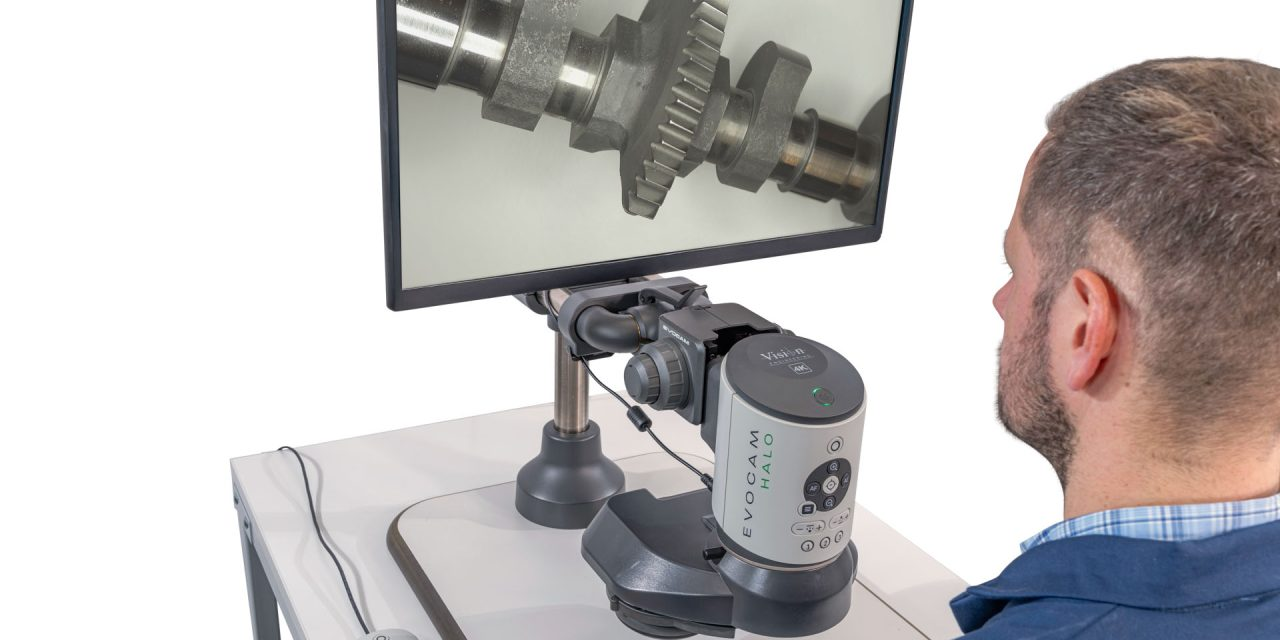
Inspection products on show will include Mantis PIXO, the latest version of Vision Engineering’s eyepiece-less stereo microscope range, and Lynx EVO, which provides ergonomic 3D stereo inspection for detailed electronics and precision engineering work. Digital inspection will be represented by Evo Cam HALO, an ultra-high-definition system supporting image capture and data sharing, and Proteq VISO, a compact digital 3D system capable of real-time digital 3D image streaming.
Vision Engineering will also present its Technology Partnership division, which provides certified UK contract manufacturing for companies requiring production support. The division works across medical, defence, and industrial programmes, taking products from prototype to repeat production with documentation, traceability, and quality controls. The operation is ISO 9001, ISO 13485, and JOSCAR registered.
Inspection equipment has moved well beyond final fault-finding. As component density rises and assemblies become more complex, manufacturers need systems that support operator comfort, repeatable measurement, image capture, data sharing, traceability, and production feedback. Visual inspection still depends on skilled operators, but the surrounding workflow is becoming increasingly digital.
Test and inspection software is following the same path. Emerson’s Nigel AI expansion across test software points to a wider shift towards systems that help engineering and production teams manage larger volumes of measurement, test, and diagnostic data.
Electronics manufacturing places particular strain on inspection processes. Fine-pitch components, dense boards, mixed assembly technologies, and tighter rework limits make it harder to rely on informal visual checks. Manufacturers need clear optical access, but they also need stored records, measurement data, shared images, and systems that can support documented quality procedures.
Ergonomics remains part of that equation. Long inspection and rework tasks can create fatigue, reduce consistency, and slow throughput. Eyepiece-less and digital systems address those pressures while allowing inspection results to be shared with engineering, quality, and production teams beyond a single workstation.
By placing metrology, optical inspection, digital 3D viewing, and contract manufacturing in one Smart Factory Expo display, Vision Engineering is presenting quality control as a continuous production function. Measurement and inspection are becoming part of the manufacturing data chain, rather than a final check after the value has already been built into the product.