IN Brief:
- TNO and ASML will collaborate on photonic chip industrialisation at High Tech Campus Eindhoven.
- The work centres on 6-inch InP photonic chip production, lithography, process control, and metrology.
- European photonics is moving from research strength towards pilot-scale manufacturing capacity.
TNO and ASML are to work together on scalable European manufacturing of photonic chips, using TNO’s Photonic Chip Pilot Line at High Tech Campus Eindhoven as the technical base for process development and industrialisation.
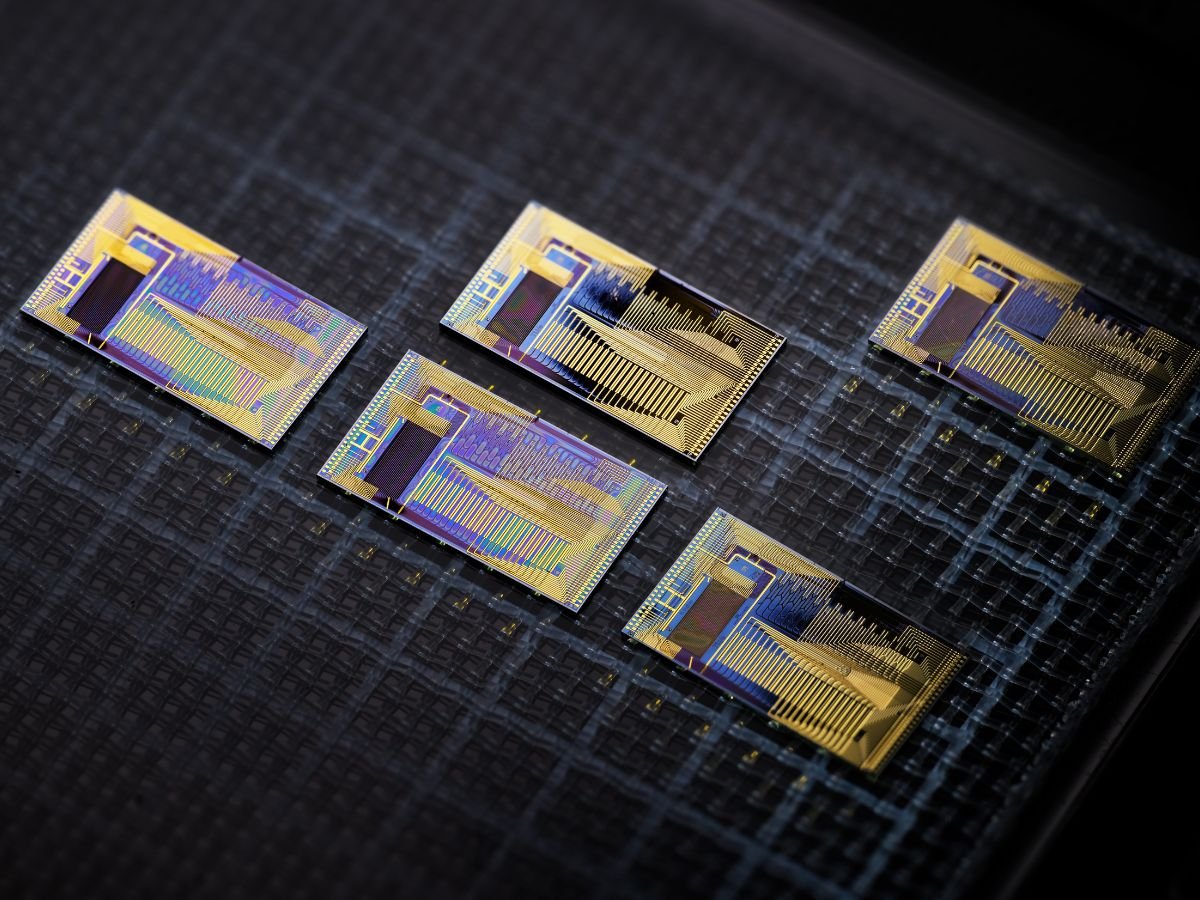
The collaboration will focus on indium phosphide photonic integrated circuits produced at 6-inch wafer scale. ASML will use I-line and DUV lithography equipment within the pilot-line environment, while the partners develop the process control, metrology, and manufacturing workflows needed to make advanced InP photonic chips more reproducible.
The Eindhoven facility is being built as part of the wider PIXEurope programme and is designed to bridge research, prototyping, and industrial manufacturing. Once operational, it will give companies a route to validate designs and processes before moving towards larger-scale production, reducing the gap between laboratory photonics and commercial deployment.
Integrated photonics uses light to move and process information across compact chip structures, making it increasingly central to high-bandwidth data links, AI infrastructure, quantum systems, 6G networks, sensing, medical diagnostics, and secure communications. InP is particularly valuable where active optical functions, including lasers and high-speed photonic devices, need to be integrated on-chip.
Manufacturing scale has remained one of photonics’ defining constraints. Many photonic devices have been produced through specialist, lower-volume routes, often on smaller wafer formats and with process flows that are less standardised than CMOS manufacturing. Moving to 6-inch wafers can improve throughput and unit economics, provided yield, uniformity, and process repeatability are maintained.
ASML’s involvement brings the collaboration closer to the disciplines that determine semiconductor manufacturing at scale. Lithography is only one part of a photonic chip flow, but alignment, pattern fidelity, inspection, and process feedback all become more demanding as devices move from prototypes into repeatable production.
The Dutch semiconductor equipment ecosystem is already strengthening around advanced process control. Nearfield Instruments has drawn major backing to scale semiconductor metrology, while Rapidus and the UK Semiconductor Centre have signed a manufacturing collaboration agreement covering advanced semiconductor capability. The TNO-ASML work adds photonics to that wider pattern of investment in manufacturing access, process control, and industrial readiness.
Europe has a strong research base in integrated photonics, with Dutch institutions and companies particularly active in InP technology. TNO, Eindhoven University of Technology, the University of Twente, the Photonic Integration Technology Centre, SMART Photonics, and PhotonDelta form part of a regional ecosystem that now needs more industrial-grade fabrication capacity to meet commercial demand.
Photonic chips will not replace electronic processors, memory, or power devices, but their role inside future systems is expanding. AI systems, optical interconnects, quantum architectures, and high-speed communications will increasingly depend on electronics and photonics being designed, packaged, and manufactured as connected technologies rather than isolated domains.
The Eindhoven pilot line therefore addresses more than wafer processing. It brings photonic device design into closer contact with lithography, metrology, packaging, and qualification, where commercial viability will ultimately be decided. Europe’s photonics sector has long had the research depth; the next test is whether it can build the manufacturing discipline around it.