IN Brief:
- Dialight will exhibit industrial LED lighting at Reuters Events: Downstream USA 2026.
- The company is targeting refining, petrochemical, and other demanding downstream environments.
- Hazardous-location lighting design is increasingly tied to energy efficiency, maintenance reduction, and site safety.
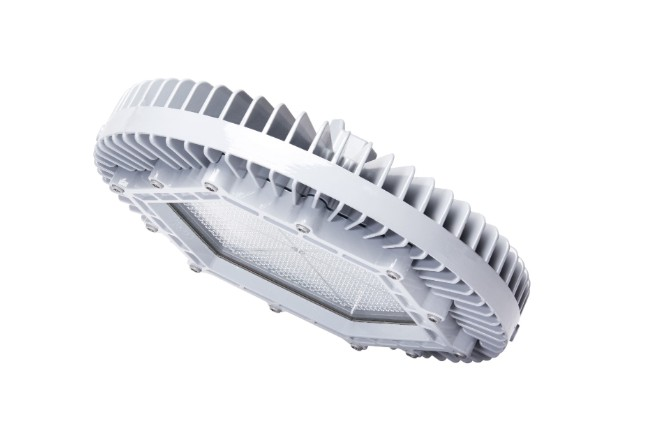
Dialight will showcase high-performance industrial and hazardous-location LED lighting at Reuters Events: Downstream USA 2026 in Houston, targeting refining, petrochemical, and other demanding process environments.
The event will take place in July and brings together senior leaders, engineers, project owners, and solution providers from across refining, chemicals, petrochemicals, EPCs, and related sectors. Dialight’s team will present lighting technologies designed to support safety, reliability, efficiency, and long-term durability in critical applications.
Industrial LED lighting is a mature category, but the operating environments targeted by Dialight remain technically demanding. Refining and petrochemical facilities need lighting that can operate in hazardous areas, handle heat, vibration, corrosion, moisture, dust, chemical exposure, and difficult maintenance conditions. A lighting failure can affect inspection, access, worker safety, and operational continuity.
Hazardous-location lighting adds certification and design complexity. Fixtures must be engineered to reduce ignition risk in areas where flammable gases, vapours, or dust may be present. That requires enclosure integrity, thermal control, electrical protection, sealing, optics, driver reliability, and compliance with relevant international standards.
The move from conventional lighting to LED systems has already reduced energy consumption and maintenance intervals in many industrial sites. The next stage is more focused on lifecycle performance. Plant operators are looking at total installed cost, access constraints, shutdown windows, lighting quality, emergency planning, and reliability under harsh conditions. Where maintenance can require permits, isolation, specialist access equipment, or scheduled downtime, fixture life has direct operational value.
Electronics design sits at the centre of that value. LED drivers must manage input variation, surge events, heat, power factor, electromagnetic compatibility, and long-term component stress. Thermal design determines lumen maintenance and electronics life. Optics influence glare, uniformity, and task visibility. Enclosure design affects both certification and field durability.
Energy efficiency remains important, although industrial lighting cannot be judged only by watts saved. Poorly specified lighting can create glare, shadows, insufficient vertical illumination, or colour-rendering issues that affect inspection and maintenance. In hazardous and downstream environments, the engineering objective is reliable visibility over a long service period, rather than a narrow reduction in energy consumption.
The same power-electronics discipline is visible in other infrastructure applications. Infineon’s GaN devices in BRC Solar power optimisers show how compact, efficient conversion is moving into field-deployed systems where reliability and power density both matter. Industrial lighting follows a related direction, with driver efficiency, thermal control, and component selection determining how effectively energy is converted into usable light over time.
Downstream facilities are also under pressure to improve sustainability while maintaining uptime. Lighting upgrades are among the more practical efficiency measures because they can reduce electricity use, maintenance travel, and replacement material while improving working conditions. The challenge is ensuring that upgraded systems are suitable for the actual environment rather than generic industrial use.
LED lighting also supports digitalisation, even where the fixture is not part of a smart network. Better illumination improves visual inspection, instrumentation reading, camera systems, safety patrols, and maintenance tasks. Where connected lighting is deployed, control protocols, cybersecurity, diagnostics, and integration with building or site-management systems become additional engineering considerations.
Dialight’s presence at Downstream USA keeps the focus on applications where lighting remains a safety-critical industrial system. The useful development is not novelty for its own sake, but lighting hardware that can combine certified operation, lower energy use, reduced maintenance, and dependable performance in environments that punish weak design.