IN Brief:
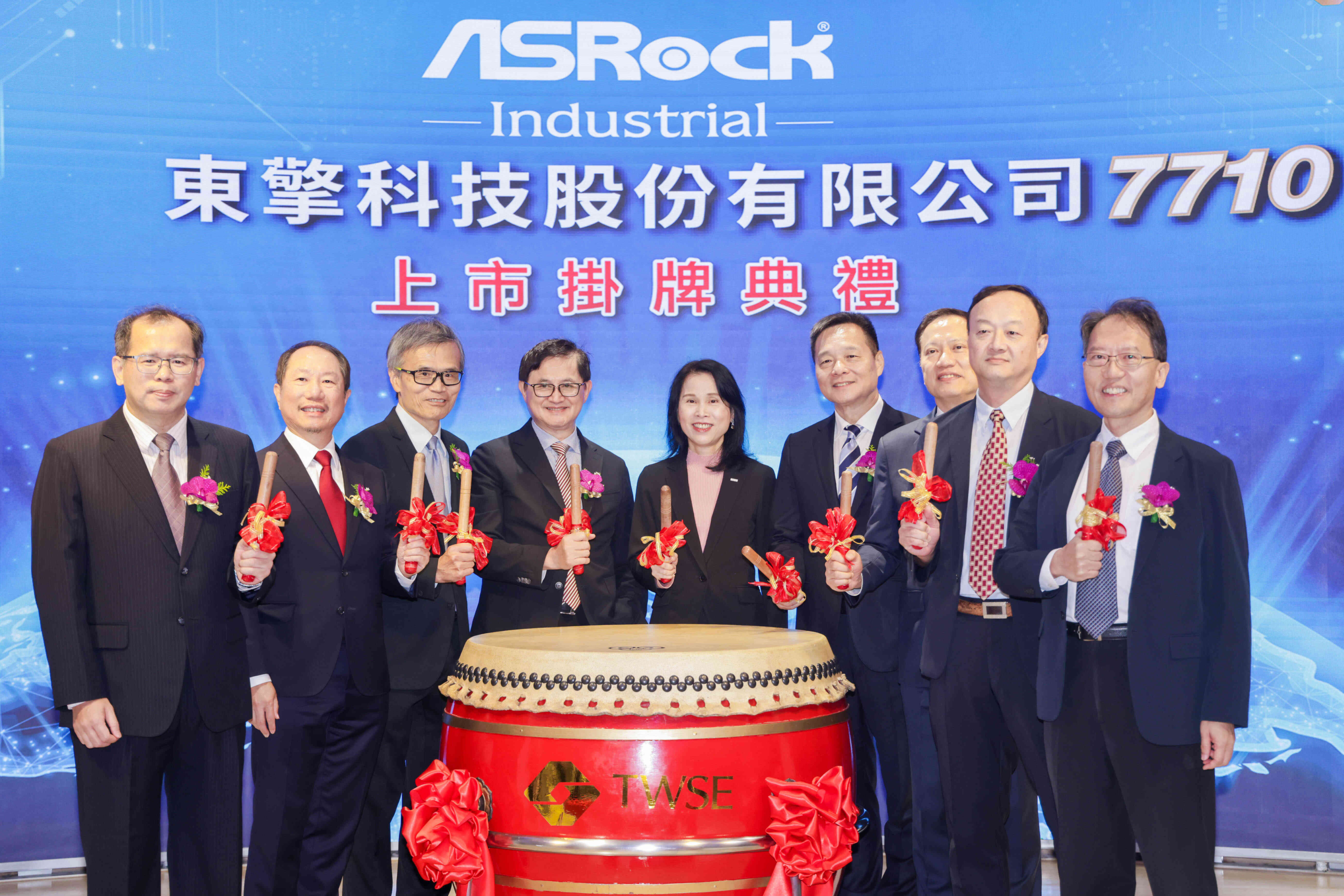
- ASRock Industrial listed on Taiwan’s stock market on 27 October.
- The company reports expansion in industrial computing and edge AI demand.
- Its priorities include industrial cybersecurity and more open hardware architectures.
ASRock Industrial has completed its Taiwan stock-market listing on 27 October, presenting the move as a platform for further growth in industrial computing, edge AI and cybersecurity-related products. The company supplies embedded boards and industrial systems used across automation, commercial and security applications. It reports first-half 2026 revenue of NT$1.758bn, an increase of 95.43% year on year, with net income increasing by 198% and earnings per share reaching NT$4.30. Those are company-reported comparisons and should not be extrapolated into full-year forecasts.
An industrial computing supplier operates in a market with requirements different from consumer PC production. Customers may need equipment that remains available and serviceable over many years, tolerates demanding temperatures and maintains compatibility with existing industrial interfaces. Embedded systems often run as unattended controllers or processing nodes in factories, infrastructure and remote installations. Their buyers therefore evaluate lifecycle support, firmware maintenance, environmental testing and predictable supply alongside benchmark processing performance.
ASRock Industrial identifies edge AI as one strategic area. Running inference close to cameras, sensors or machines can limit the need to send every data stream to a remote server, helping reduce communication dependence and latency. Yet edge deployment introduces constraints on heat, power and memory, and some acceleration hardware requires specialist software tools. A useful system supplier must provide a workable combination of compute module, operating-system support, drivers and interfaces rather than relying on a high processor-performance figure in isolation.
Cybersecurity is a second named priority. Industrial PCs may provide the bridge between operational networks and business systems, making firmware updates, secure boot and access controls relevant to deployment risk. Hardware capability can support security, but safe operation also depends on software configuration, patch processes and how a system is integrated into the wider network. Designers need to know the intended support period and whether security features are available throughout the product range, rather than assuming a corporate strategic statement guarantees them on every device.
The company also references open architecture. In industrial systems, this can mean customers want interfaces and software choices that limit dependence on a single proprietary platform. Interoperability can reduce integration costs, although compliance with a nominally open interface does not guarantee identical behaviour across all devices.
System integrators still need to test peripherals, expansion boards, timing and operating-system compatibility. Lifecycle and configuration control remain essential when hardware changes during a long-running product programme.
A market listing can provide a company with additional financing options and visibility, but the listing does not itself establish that any proposed product expansion has been completed. Growth figures may reflect demand cycles, customer concentration and comparisons with a lower previous-year base. Investors and industrial customers will examine different measures: profitability and governance on one side; delivery performance, warranties and engineering support on the other. An expanding balance sheet will matter to buyers only if it supports dependable products and services.
Growth in industrial computing should also be assessed against demand for specific system classes. High-performance edge AI computers, compact fanless controllers and industrial motherboards have different cost structures, engineering requirements and product lifecycles. Revenue growth across a supplier does not show that every segment is expanding at the same rate.
Customers planning a long-term deployment should seek product-level availability and service data, rather than infer supply security from the group’s most recent financial performance. These distinctions matter particularly when equipment is embedded into regulated or difficult-to-access installations. For a new product line, prospective customers should ask how replacements and software updates will be handled when a processor or network interface reaches end of life.
ASRock Industrial’s new listing is consequently a corporate development with a practical electronics-supply dimension. It draws attention to the market for robust computing and AI-capable industrial platforms without constituting a new hardware launch. The test of its stated priorities will come through product availability, security maintenance, validated integration options and the company’s ability to support deployments across multiple customer lifecycles.